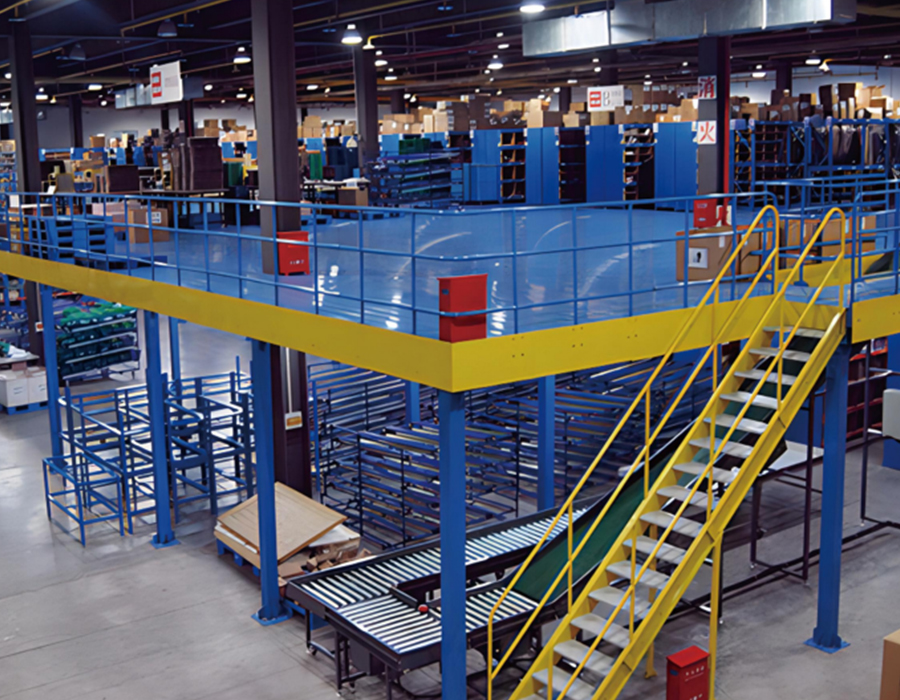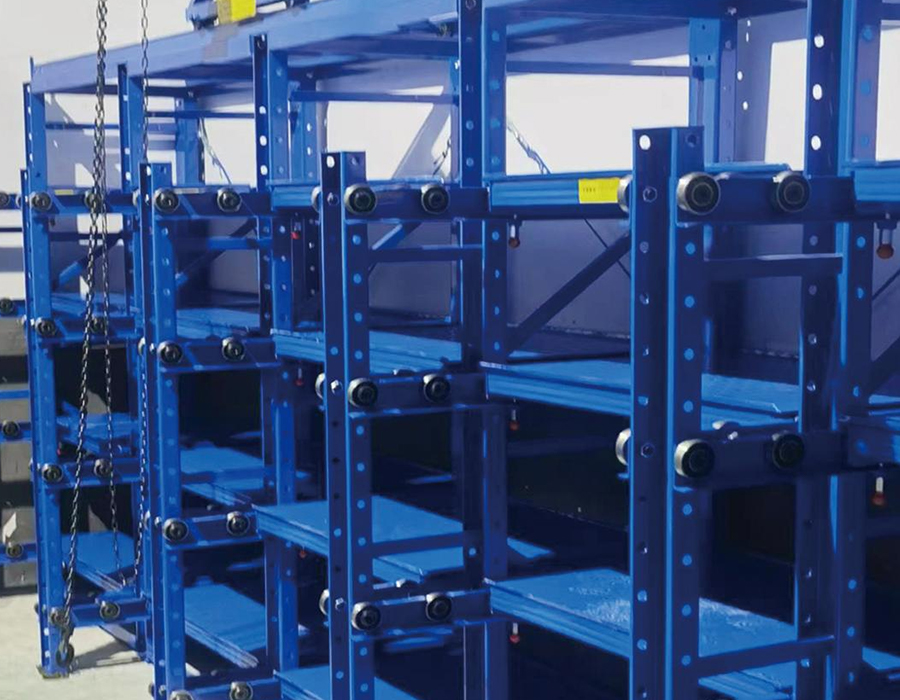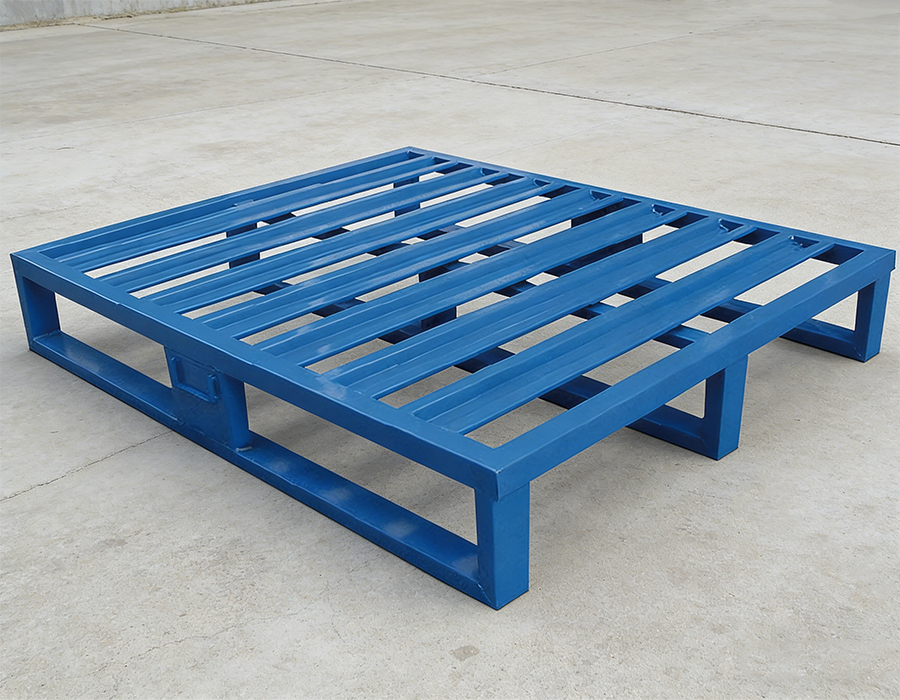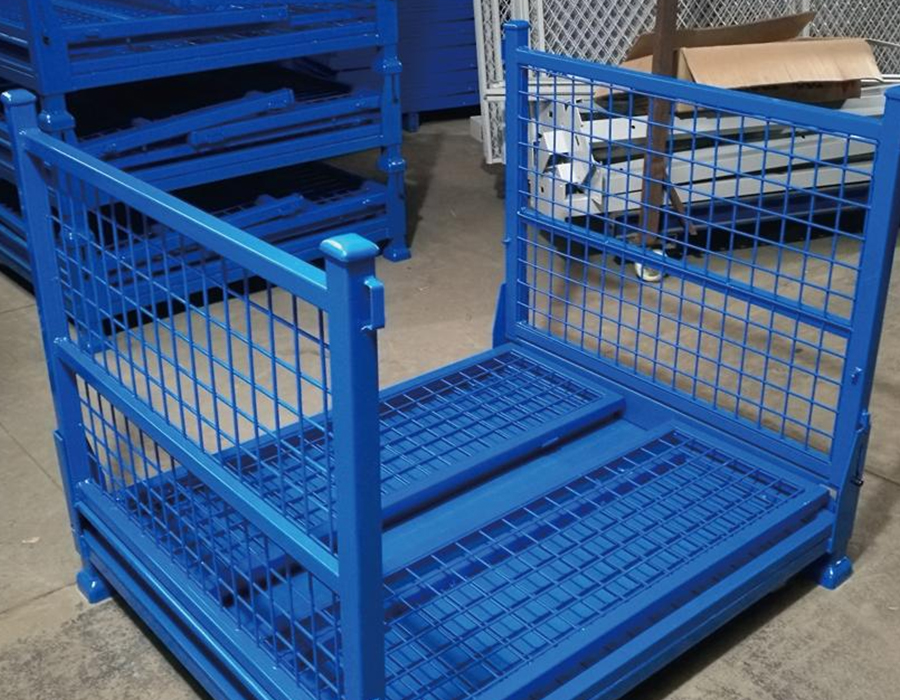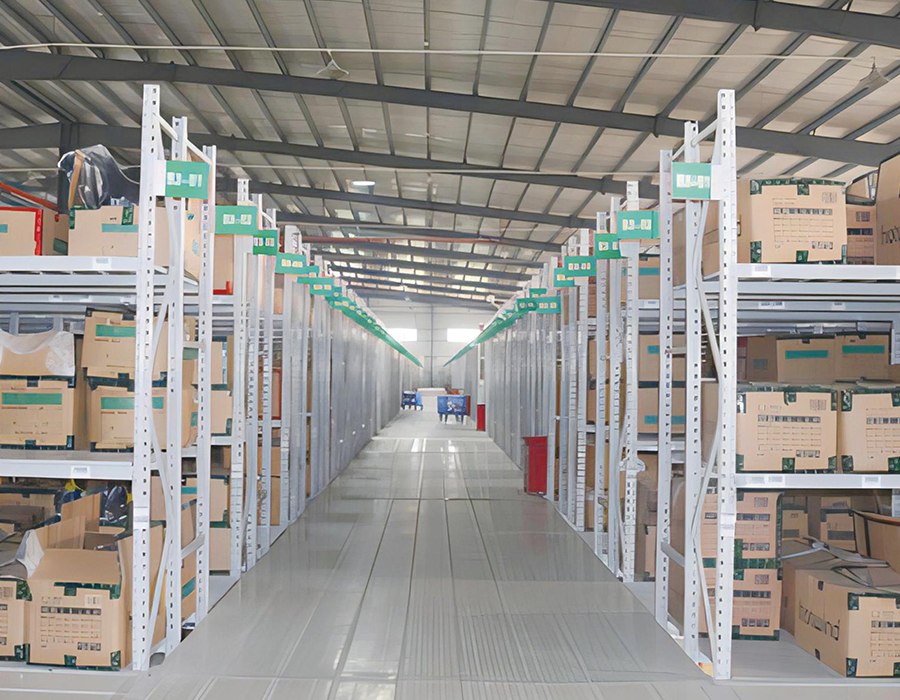
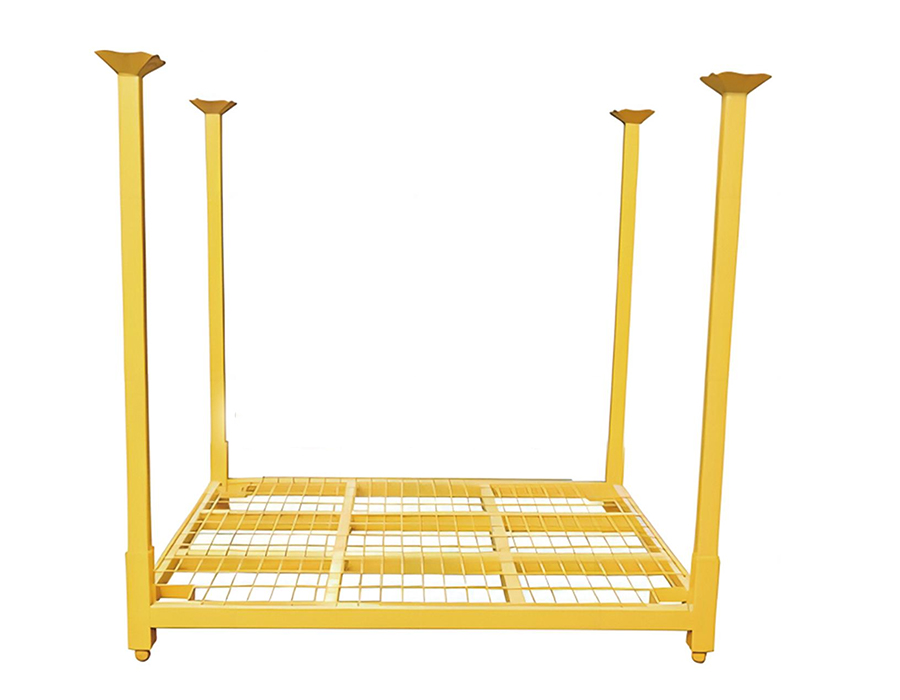
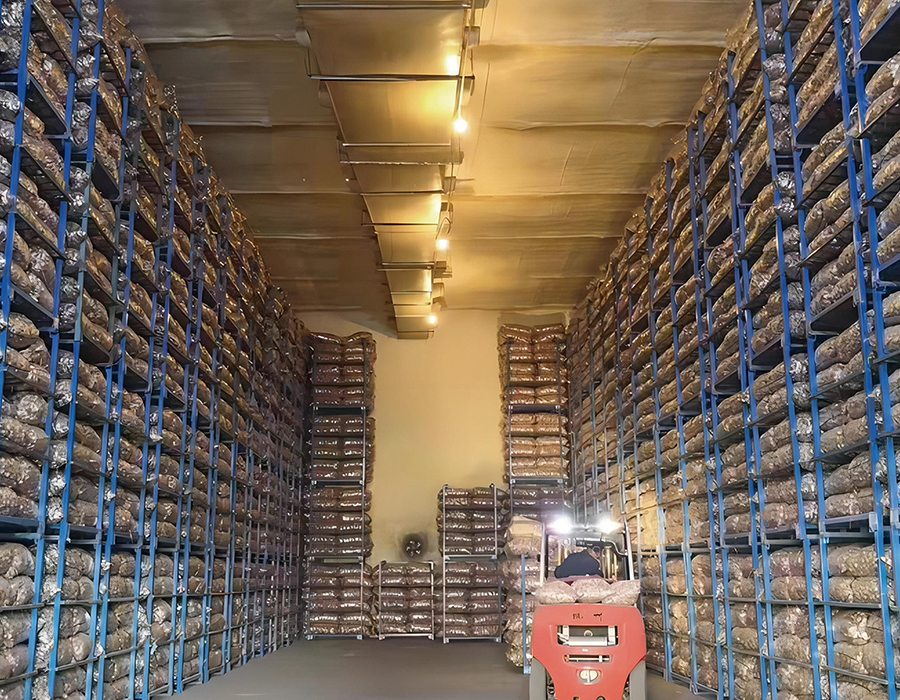
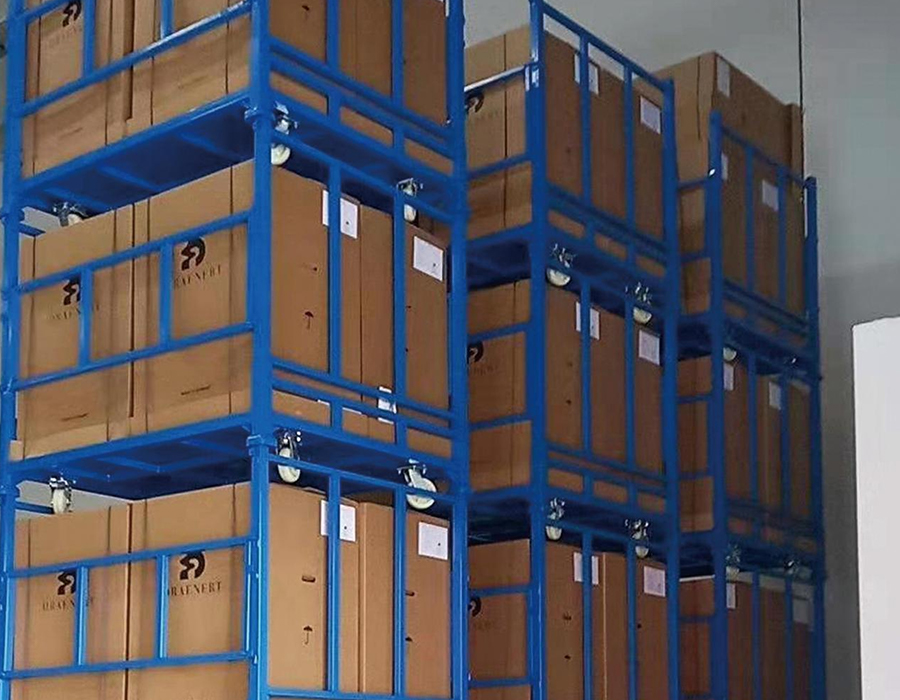
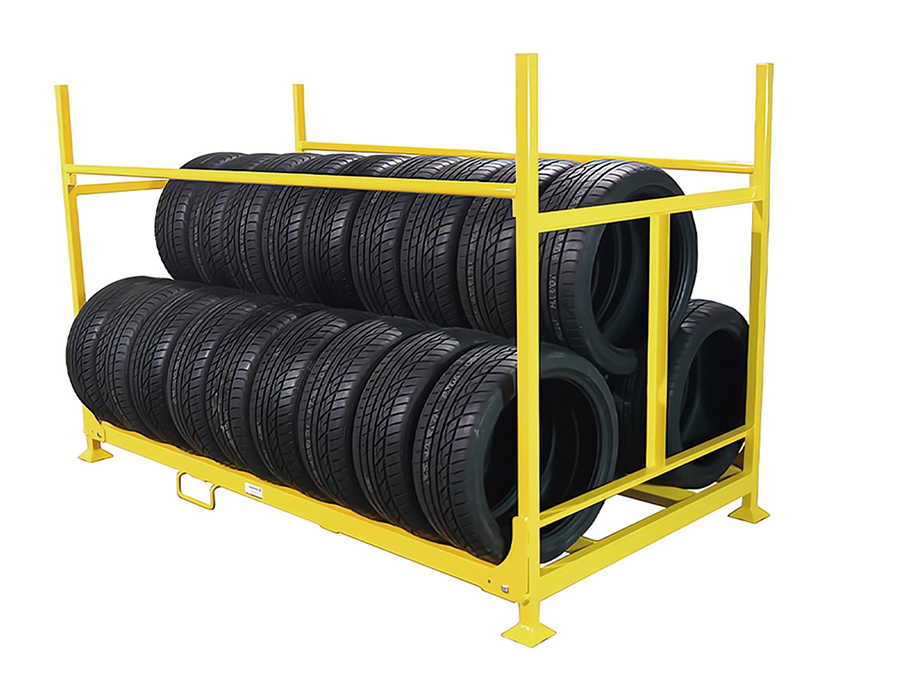
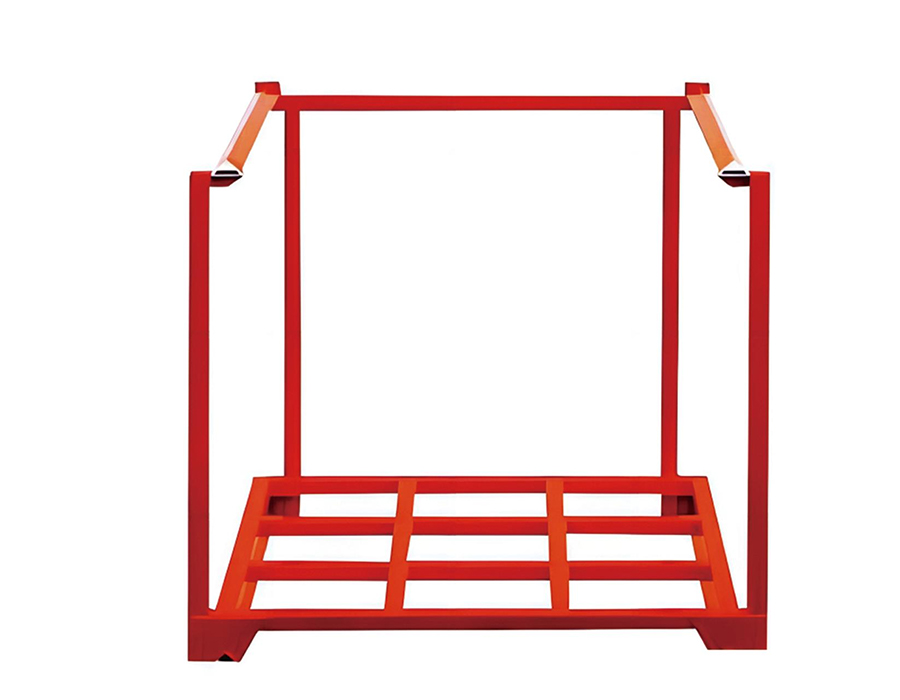
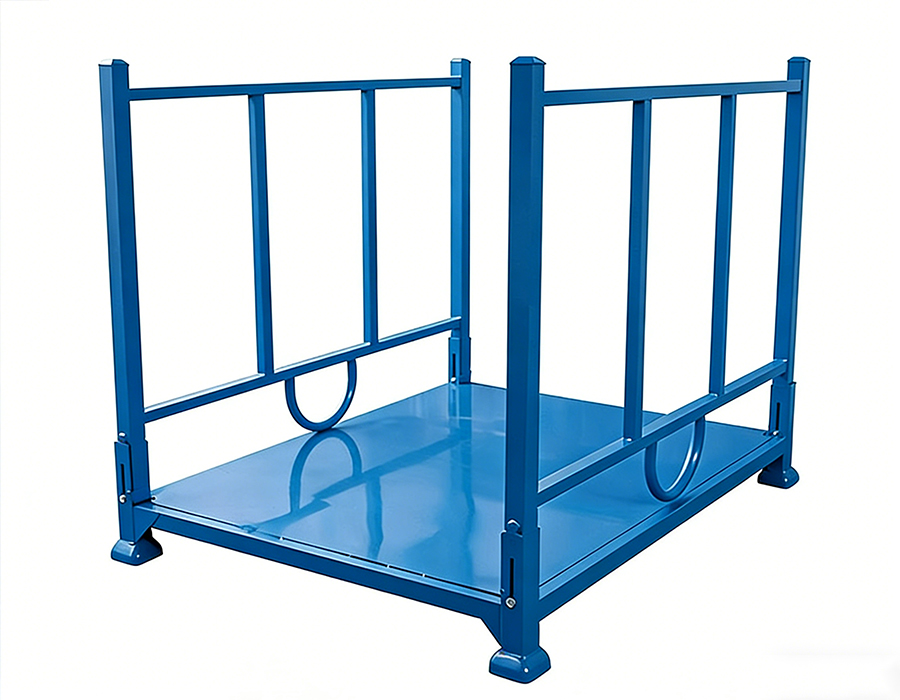
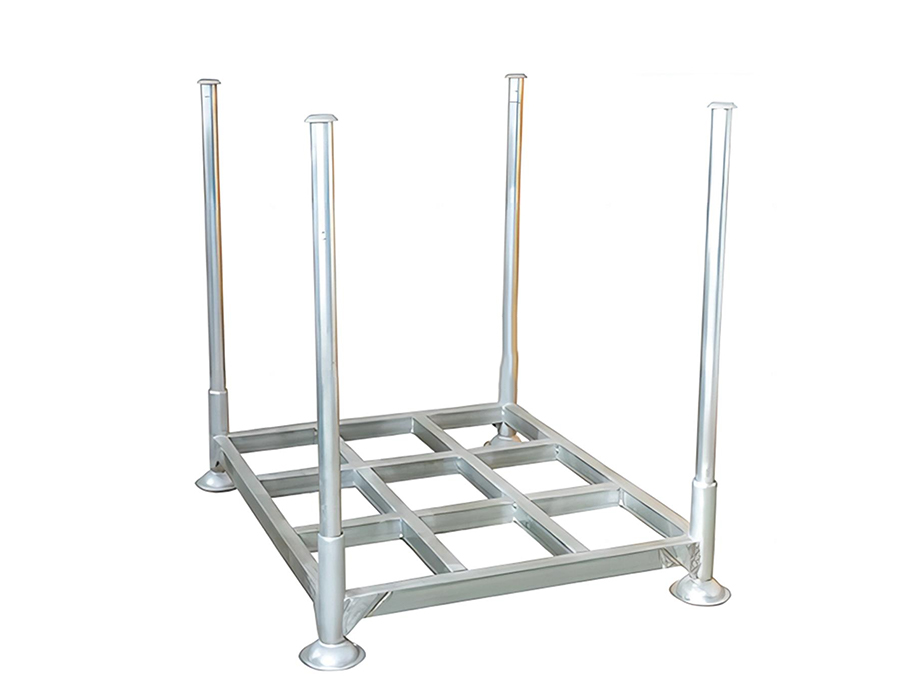
Stackable racks are unitised storage systems designed for forklift operation and multi-tier vertical stacking, available in cold-storage fixed, foldable, post-pallet, and inverted grid configurations to meet the diverse requirements of different storage environments and product types.
All variants are fabricated from high-strength steel for structural integrity and stable multi-tier stacking performance. Cold-storage models are treated to specialist anti-corrosion standards for reliable long-term performance in low-temperature, high-humidity environments; foldable and post-type models reduce to a fraction of their loaded volume when empty, delivering significant savings on return-transport logistics costs.
Product designs balance cargo visibility with ease of access — open-mesh deck variants allow visual stock checks without moving goods; folding mechanisms and post connections are validated through cyclic durability testing for long-term reliability and low maintenance overhead.
Widely deployed in food cold-chain logistics, manufacturing raw-material storage, automotive components, open-air port yards, and closed-loop supply chains — a flexible, efficient solution for increasing storage density per square metre and reducing overall warehousing and logistics costs.

Picture a warehouse at the end of a shift: pallets of finished goods waiting in the receiving bay, ...
Read MoreWhen a forklift drops a full pallet onto a rack beam, the structure receives more than static weigh...
Read MoreAnhui Huijian Intelligent Equipment Co., Ltd. recently welcomed a delegation of representatives from...
Read MoreWhy Mould Racks Are a Core Workflow Tool In any production environment that relies on molds—injecti...
Read MoreWhat Is Light-Duty Boltless Shelving? Light-Duty Boltless Shelving is a type of storage rack designe...
Read MoreThe stacking mechanism in warehouse stack racks — where the corner posts of an upper rack seat into collar sockets or receptor cups on the lower rack — appears mechanically straightforward, but the geometry of this connection governs both the lateral stability of the stacked column and the practical maximum number of tiers that can be safely achieved under load. The depth of post engagement into the collar socket is the most critical dimension: insufficient engagement depth allows the upper rack to rock under eccentric loading, while excessive post height above the collar can cause post buckling before the collar provides lateral restraint.
Most standard warehouse metal stack rack designs use a post engagement depth of 50–80mm, which provides adequate lateral constraint for two- or three-tier stacking under uniformly distributed loads. However, when loads are placed off-center — a common occurrence when irregularly shaped parts, long bar stock, or partially filled containers are stored — the eccentric load generates a tipping moment that the collar connection must resist. At three or four tiers of height, the moment arm from the load eccentricity to the lowest collar connection multiplies the lateral force at the base by the number of tier heights, meaning an eccentricity that is structurally inconsequential at one tier can become a stability concern at four tiers with the same load.
The governing design check for multi-tier warehouse stack rack columns is not axial compression capacity — the steel posts are almost always adequate in pure compression — but the combined axial-plus-bending interaction at the collar engagement point, where the post is simultaneously compressed by the weight above and bent by the lateral restraint reaction from the collar. Manufacturers who rate their stack racks by static axial load alone without specifying an eccentricity assumption or a maximum tier count for a given load are providing incomplete specifications. Buyers operating stack racks at three tiers or above should request the combined load interaction data, not just the per-rack load rating.
The vertical corner posts of warehouse metal stack racks are produced in several cross-section profiles, and the choice between them affects not only structural performance but also collar fit consistency, surface damage resistance, and the ease of repair after impact. The three most common post profiles are round tube, square tube, and angle section, each with distinct characteristics that make them more or less suitable depending on the operating environment.
| Post Profile | Structural Efficiency | Collar Fit Consistency | Impact Damage Behavior | Typical Application |
| Round tube | High — equal strength in all directions | Excellent — circular socket is self-centering | Dents locally without global section loss | Heavy duty, high-tier stacking |
| Square tube | Good — orientation-dependent | Good — corner alignment required | Corner damage reduces section significantly | Medium duty, standard warehouse use |
| Angle section | Moderate — open section susceptible to torsion | Moderate — alignment-sensitive | Leg deformation common under side impact | Light duty, infrequent handling |
Round tube posts have a structural advantage that is often underappreciated: their polar moment of inertia is equal in all lateral directions, meaning they resist bending equally whether the lateral load comes from the front, side, or diagonally. This is particularly important in stack rack applications where the direction of potential tip loading is unpredictable — a forklift nudging a stacked column from any angle encounters the same resistance regardless of approach direction. Square tube posts, by contrast, have higher bending resistance about their centroidal axes aligned with the tube faces, but lower resistance about the diagonal axis — the direction most commonly loaded during an oblique forklift impact. For heavy duty warehouse steel stack racks operating in busy forklift environments, round tube posts consistently outperform square tube in impact survivability despite similar or lower wall thickness.
The deck — the horizontal load-bearing platform of a warehouse stack rack — is fabricated in several configurations that have direct consequences for product stability, load distribution across the deck structure, and the practicality of loading and unloading different product types. Selecting the wrong deck configuration for the stored product is a frequent cause of product damage, handling difficulty, and premature deck wear that is avoidable with a more deliberate specification process.
Welded wire mesh decks provide ventilation and visibility through the deck surface, making them appropriate for stored products that benefit from airflow — automotive parts subject to condensation, food-grade containers requiring inspection without unstacking, and components that must be visible for inventory verification without opening the rack. The limitation of wire mesh is that the load-bearing capacity per unit area is lower than solid plate at equivalent material weight, and mesh openings can snag protruding fasteners, cable ties, or irregular packaging, causing damage during sliding or dragging of loads across the surface. Mesh wire diameter and opening size must be matched to the smallest component or packaging element likely to be placed on the deck — a 50mm × 50mm mesh opening is too large for racks storing small-boxed parts that can partially penetrate the mesh under their own weight.
Solid plate decks, typically 3–6mm cold-rolled or hot-rolled steel, provide a continuous bearing surface that distributes concentrated loads from irregular-bottomed products more effectively than mesh. They are the correct choice for storing products with small base footprints — cylindrical containers, shaped castings, or any product that would rest on only one or two mesh wires rather than spanning across the mesh grid. The practical limitation is weight: a 1,200mm × 1,000mm solid plate deck at 5mm thickness adds approximately 47 kg to the empty rack weight, which accumulates rapidly in a fleet of warehouse steel stack racks that are handled and repositioned frequently.
Corrugated or ribbed steel decks offer a structural efficiency advantage — the profiled section provides significantly higher bending resistance than flat plate at the same material thickness, allowing deck span capacity to increase without a proportional increase in self-weight. The surface ridges also provide a degree of lateral restraint for flat-bottomed products, reducing sliding during handling. The limitation is cleaning: product residue, lubricant, and particulate contamination accumulate in deck flutes and are difficult to clear thoroughly, making corrugated decks unsuitable in food-contact or pharmaceutically regulated storage environments where surface hygiene must be verifiable.
Empty warehouse metal stack racks present a significant space management challenge in facilities where rack utilization fluctuates with production or inventory cycles. A full production run may require 500 racks in active use simultaneously; between runs, those racks must be stored without occupying space needed for other operations. Nesting — collapsing the rack into a compact configuration that allows multiple empty racks to be stored in the footprint of one — is the primary solution, but the nesting ratio and the mechanism by which nesting is achieved vary significantly between rack designs and affect operational efficiency in ways that extend well beyond the storage space calculation.
The nesting ratio describes how many collapsed empty racks occupy the vertical space of one loaded rack. A 4:1 nesting ratio means four empty racks stack in the height of one loaded rack, reducing empty storage space requirements to 25% of active storage space. Achieving high nesting ratios requires that the rack's corner post height above the deck surface when collapsed be minimized — in practice, this means the posts must either fold down, detach, or drop below the deck level during nesting. Folding-post designs achieve the highest nesting ratios (often 5:1 or 6:1) but introduce mechanical complexity at the hinge points that are vulnerable to damage in rough handling environments and require inspection before each use to verify that post latches are fully engaged.
Fixed-post racks with tapered post geometry — where the upper portion of each post is slightly smaller in diameter than the lower, allowing posts of an upper empty rack to slide inside the collar sockets of the lower rack further than during loaded operation — achieve nesting ratios of 3:1 to 4:1 without mechanical folding components. This design simplicity reduces maintenance requirements and eliminates the failure mode of an unlatched fold that results in post collapse during loading. The trade-off is a lower nesting ratio than folding designs and a nesting operation that requires careful vertical alignment during stacking, which slows the nesting process in high-volume empty rack consolidation operations.
At Huijian, our warehouse metal stack rack range is engineered across multiple nesting configurations, with post geometry and collar dimensions developed through our in-house R&D center to optimize the nesting ratio for each load class — ensuring that empty rack storage consumes the minimum possible floor space without sacrificing the structural reliability of the post-collar engagement under loaded stacking conditions.
Warehouse steel stack racks used in outdoor staging areas, seaside logistics facilities, food processing environments, or chemical warehouses face corrosion challenges that standard powder coating alone cannot reliably address over a multi-year service life. Understanding the hierarchy of available surface treatments and the conditions that govern their selection is essential for specifying stack racks that will maintain structural integrity and appearance through the required service period without requiring premature recoating or replacement.
The corrosion protection performance of surface treatments is typically compared using salt spray test hours per ISO 9227, which accelerates the corrosion environment to allow comparison in a testing timeframe. Typical performance benchmarks for stack rack treatments are as follows:
For stack racks that transition between indoor storage and outdoor staging — a common operational pattern in automotive and building materials supply chains — the dual-layer epoxy-polyester system represents the most practical specification: meaningfully better corrosion resistance than standard powder coat, at a cost premium of 25–35%, and fully repairable with compatible field-applied coatings when localized damage occurs.
The rated capacity of a warehouse stack rack is calculated on the assumption that the load is uniformly distributed across the deck surface and that the center of gravity of the load is located at the geometric center of the rack. In practice, both assumptions are violated routinely — and the structural consequences of non-uniform loading in stacked rack configurations are more severe than they would be for the same load eccentricity in a single, floor-standing rack, because the eccentricity is amplified through the stacked column height.
Consider a rack loaded with steel coils or cylindrical components that roll to one side of the deck during placement — not unusual when decks are slightly uneven or when products are set down from an angle. A 200mm offset of a 1,000 kg load from the deck centerline generates a tipping moment of 200 kg·m at the deck level. In a single-tier configuration, this moment is resisted by the collar connection at the base and by the forklift pocket geometry. In a three-tier stack, the same 200mm eccentricity at the top tier creates a cumulative lateral force at the base that is three times larger, and the stabilizing base width of the rack column — the distance between the outermost collar engagement points — may not have increased proportionally. The practical result is that loading practices that are visually acceptable and structurally safe in single-tier use can create genuine instability risk in multi-tier stacking.
Facilities operating warehouse steel stack racks in high-tier configurations should implement explicit loading protocols that address centering discipline rather than relying on operators to intuitively understand the stability implications of off-center loading at height. Practical protocol elements include painted or welded centerline markers on the deck surface, maximum allowable overhang markers at deck edges, and a clear maximum eccentricity limit expressed in millimeters rather than a generic instruction to "load centrally" — a term that is interpreted differently by different operators.
The forklift entry pockets on the base frame of a warehouse metal stack rack are the interface point between the rack system and every piece of materials handling equipment in the facility — yet their design is frequently treated as a dimensional afterthought rather than an engineered component with its own functional requirements. Pocket width, depth, entry geometry, and the structural connection between the pocket tube and the base frame all have measurable effects on handling cycle time, rack damage rates, and the consistency of fork engagement across a mixed fleet of forklifts.
Fork pocket entry width is typically specified at either 160mm or 185mm, corresponding to the two most common standard fork widths in use across counterbalance and reach truck fleets. A pocket width of 160mm accepts 150mm standard forks with 5mm clearance per side — adequate for aligned entry but providing no tolerance for lateral fork positioning error or for the slight width variation between fork pairs of the same nominal specification. Increasing pocket width to 185mm adds 12.5mm clearance per side, meaningfully reducing the precision required for fork entry and cutting the frequency of pocket-lip impact from misaligned entry by 50–70% in facilities with mixed forklift fleets. The structural penalty of the wider pocket is negligible; the operational benefit in reduced rack damage is significant.
Pocket entry chamfer geometry — the angle at which the pocket entry is cut or formed — affects how the fork tip contacts the pocket during entry. A square-cut pocket opening with no chamfer concentrates impact force from a misaligned fork onto a single point at the pocket lip corner, causing progressive deformation and tearing of the pocket tube wall. A 30–45 degree chamfer on the outer face of the pocket entry distributes the impact force across a longer line of contact and deflects the fork tip into the pocket rather than into the tube wall. This simple fabrication detail extends the service life of high-use pockets in busy forklift environments by a factor of two to three with no increase in material cost — it requires only a secondary forming or cutting operation at the pocket entry during fabrication.
Our warehouse steel stack racks are manufactured across six dedicated production lines at our 58,000-square-meter Guangde facility, where pocket entry geometry is standardized with full chamfer profiles as a production default — not an upgrade option — because the long-term reduction in field damage rates from this detail more than justifies the additional fabrication step at scale.
A warehouse stack rack fleet in active industrial use is a depreciating asset that accumulates damage through handling impacts, overloading events, and environmental exposure over its service life. Unlike fixed racking systems where damage is visible in a defined location, stack racks travel between facilities, customers, and production areas — distributing damage events across the fleet in ways that make condition tracking difficult without a systematic management approach. Facilities operating fleets of more than 50 racks that lack formal tracking and inspection protocols routinely discover a significant proportion of their fleet in below-standard condition only when a handling incident or audit forces a physical review.
An effective stack rack fleet management system addresses three distinct operational requirements: individual rack identification, periodic condition inspection, and retirement decision criteria. Individual identification requires each rack to carry a unique identifier — either a stamped metal tag, a laser-marked code on the base frame, or an embedded RFID chip — that links the physical rack to a maintenance record in a tracking system. Bar code labels are the least durable option in industrial rack environments; they delaminate under repeated cleaning, fork contact, and outdoor UV exposure within 12–24 months. Stamped or laser-marked identifiers on the steel structure itself are permanent and should be specified as standard on any rack fleet intended for multi-year service.
Inspection criteria for warehouse metal stack racks should be adapted to the specific damage modes relevant to each rack type and operating environment, but a baseline inspection protocol should address the following conditions at defined intervals:
Retirement criteria should be expressed as specific measurable thresholds rather than subjective condition descriptions. A rack retirement policy that states "retire when significantly damaged" produces inconsistent decisions between inspectors; one that states "retire when post bow exceeds 5mm per 500mm, when collar socket cannot achieve minimum 40mm post engagement, or when any weld crack exceeds 10mm in length" produces consistent, auditable decisions that can be applied uniformly across a large fleet by personnel with basic training.
Our Professional Team
Is Ready to Support You.


 Custom Warehouse Steel Stack Racks




 English
 Español