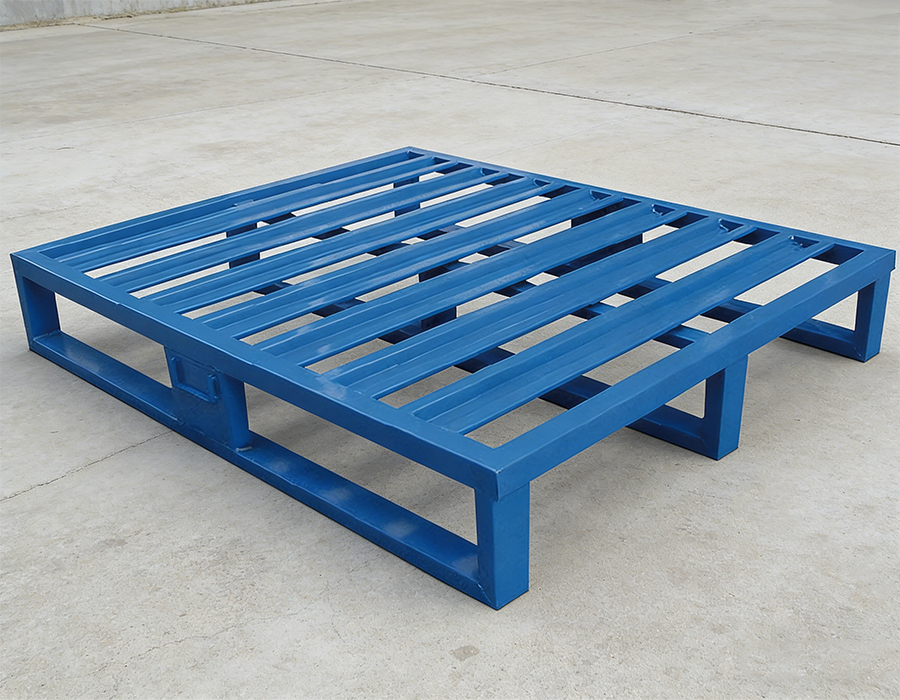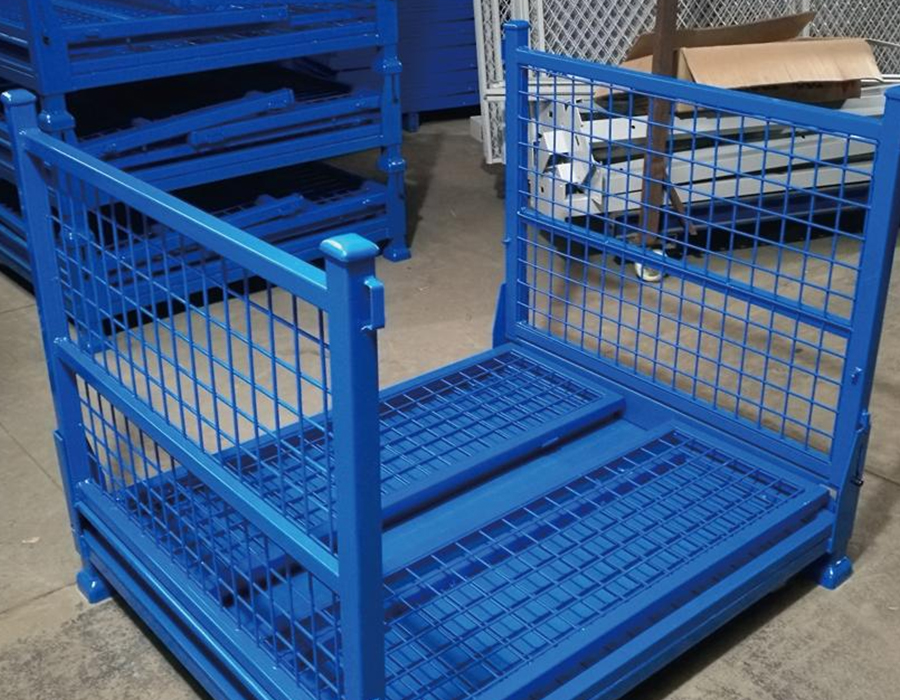
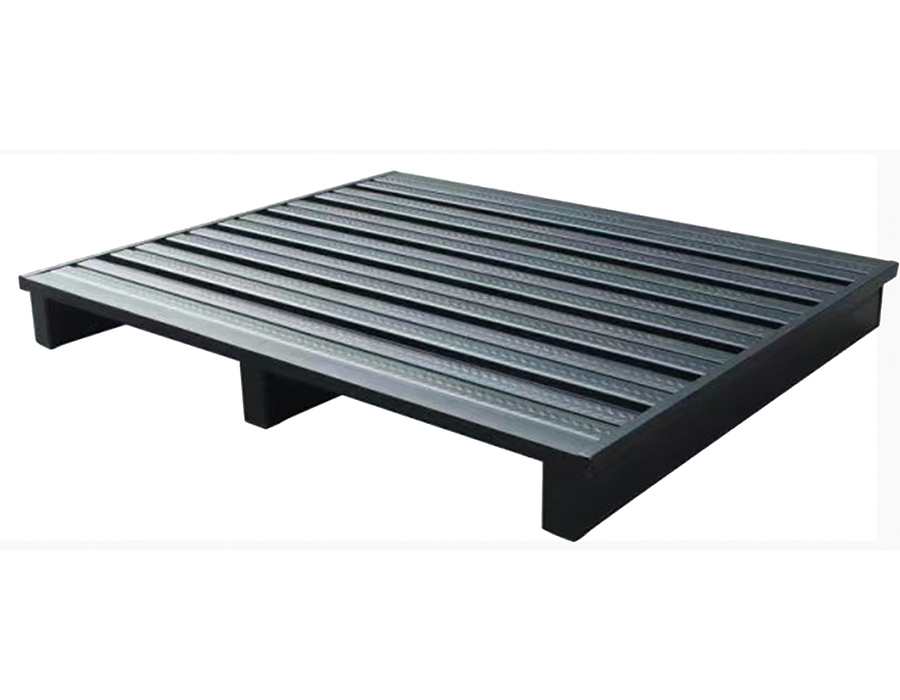
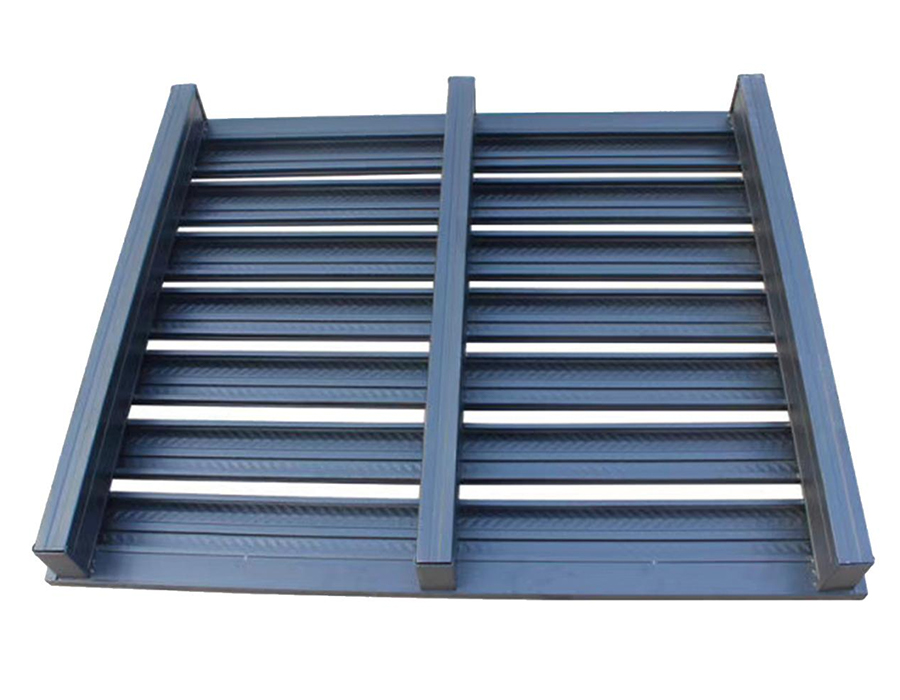
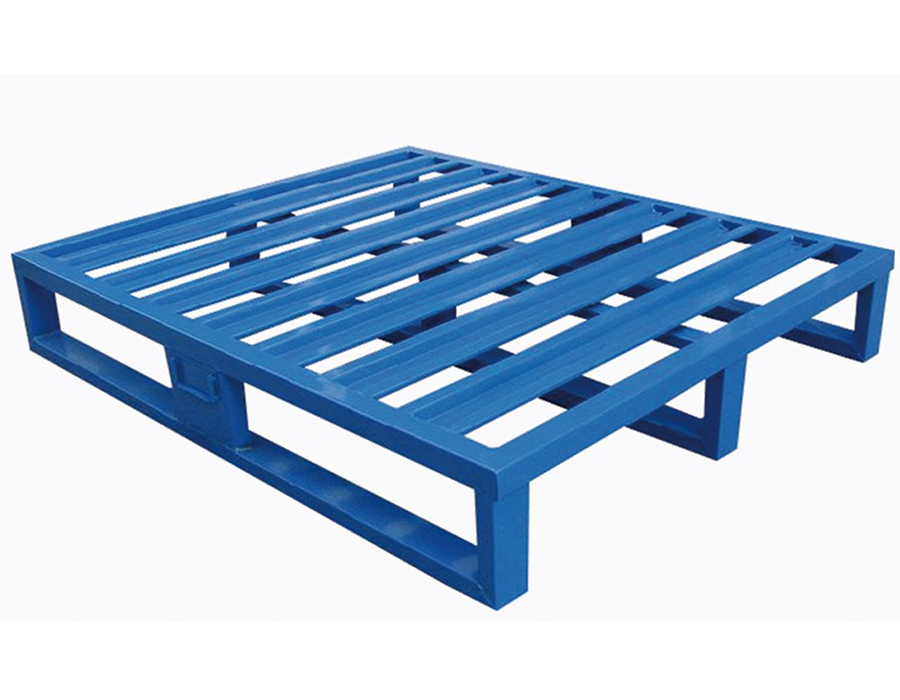
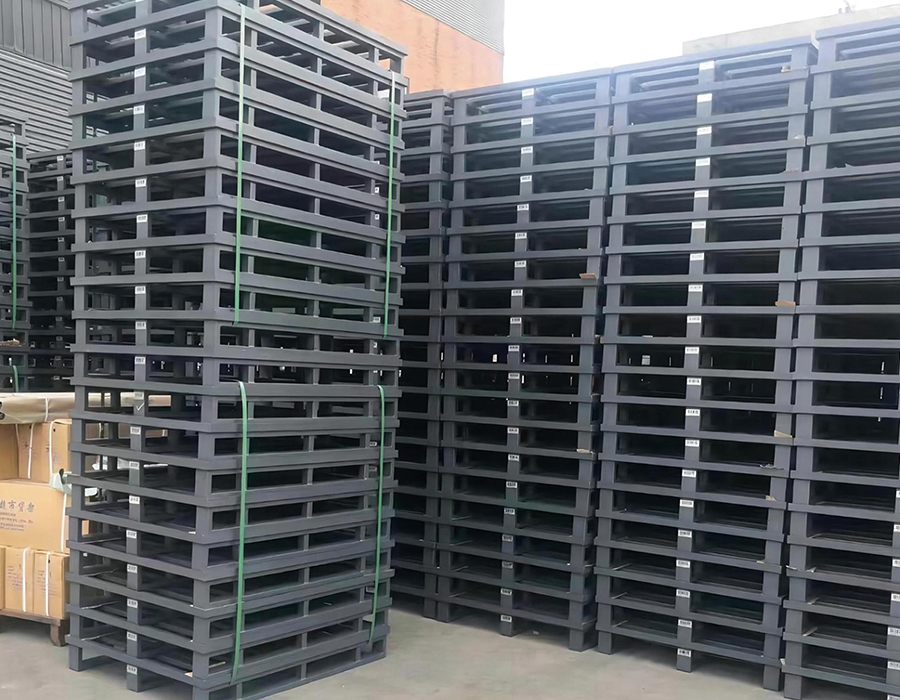
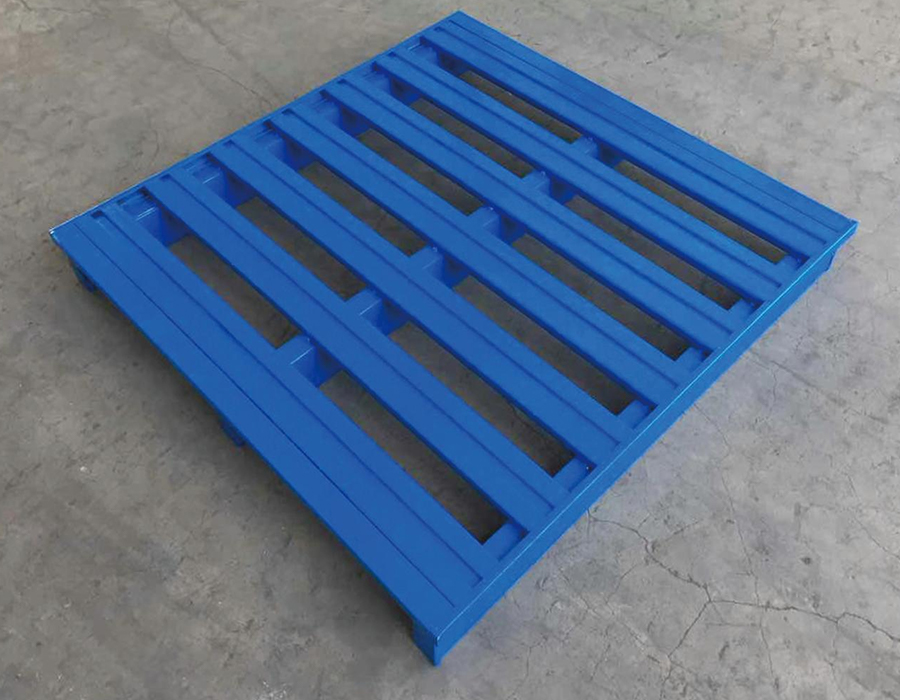
Metal pallets are fabricated from structural steel or galvanised steel plate, delivering a static load capacity of 5 tonnes per unit, a service life three times that of plastic pallets and ten times that of timber alternatives, and a significantly lower total cost of ownership under the intensive, high-frequency mechanical handling conditions of industrial warehousing.
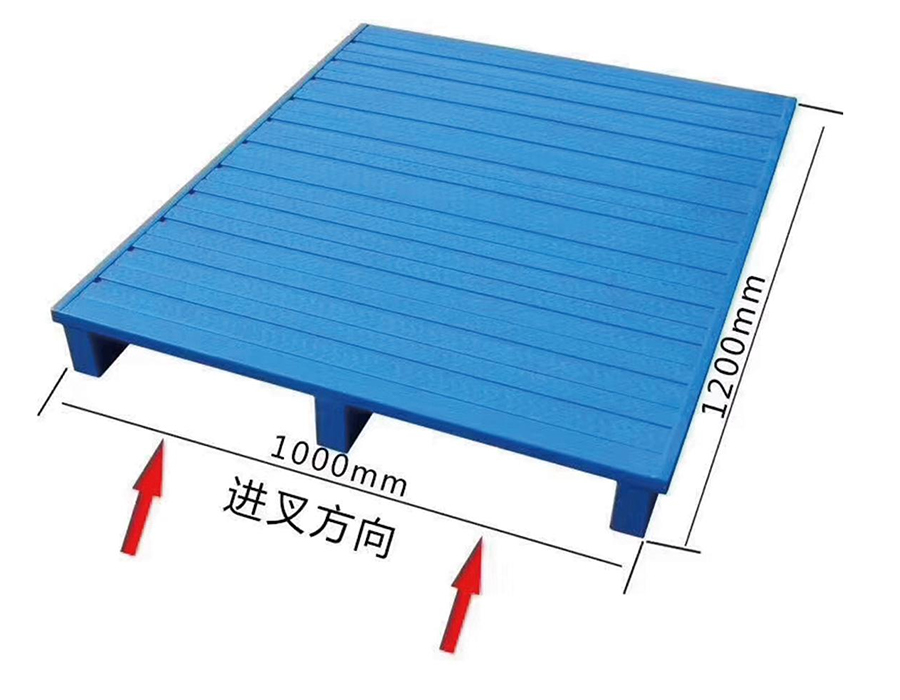
The standard 1,000 x 1,200 x 125 mm footprint is fully compatible with mainstream racking systems and forklift specifications. The anti-slip deck surface prevents load shift during handling, and the forklift entry design supports four-way or two-way entry to accommodate a wide range of handling equipment configurations.
Superior steel rigidity and a high-quality surface finish deliver load-bearing performance and anti-slip properties that exceed comparable competitor products of equivalent material grade, with versatile compatibility across floor stacking, racking storage, and transport rotation applications for a long and reliable service life.
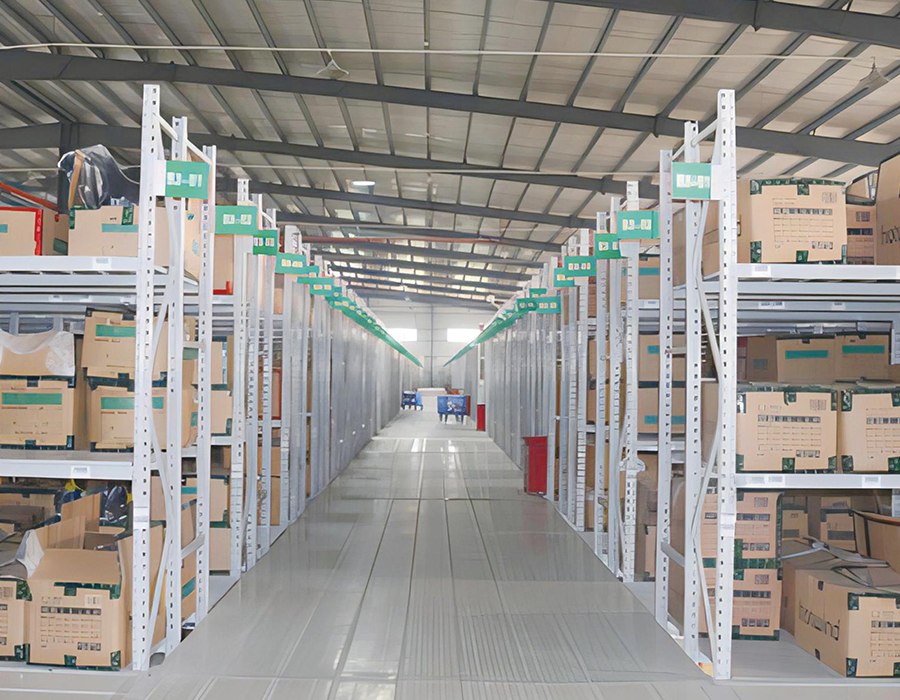
Widely used across heavy manufacturing, chemicals, steel production, automotive assembly, and large-scale logistics facilities — the preferred choice for automated high-bay warehouses and mechanised operations where pallet durability and load stability under repeated high-frequency handling are non-negotiable requirements.

Picture a warehouse at the end of a shift: pallets of finished goods waiting in the receiving bay, ...
Read MoreWhen a forklift drops a full pallet onto a rack beam, the structure receives more than static weigh...
Read MoreAnhui Huijian Intelligent Equipment Co., Ltd. recently welcomed a delegation of representatives from...
Read MoreWhy Mould Racks Are a Core Workflow Tool In any production environment that relies on molds—injecti...
Read MoreWhat Is Light-Duty Boltless Shelving? Light-Duty Boltless Shelving is a type of storage rack designe...
Read MoreStackable steel pallets are manufactured using one of three primary construction approaches — stamped deck with welded tube legs, fully welded structural frame with mesh or grating deck, and roll-formed profile assembly with bolted or welded connections. Each method produces a different internal load path, which has direct consequences for how point loads from goods, forklift tines, and stacking forces are transferred through the pallet structure.
Stamped deck pallets concentrate stress at the junction between the flat deck surface and the leg columns. Under high point loads — such as a machine base or engine block resting on a small footprint — stamped decks can develop stress fractures around the leg-weld zone if the deck steel gauge is insufficient for the application. A minimum 3.0 mm deck gauge with continuous perimeter welding to the leg frame is the practical threshold for medium-to-heavy industrial use. Fully welded structural frame pallets distribute loads more evenly through the frame members themselves, making them more tolerant of eccentric loading. The mesh or grating deck in these designs is primarily a product support surface rather than a structural element, which means selecting the correct mesh opening size matters for small or irregularly shaped goods that might deform into or fall through large openings.
Roll-formed profile assemblies offer the best strength-to-weight ratio when the profile geometry is well engineered — a hat-section or box-section runner achieves high bending stiffness with less steel than an equivalent flat plate. At Huijian, our R&D center specifically focuses on profile optimization for warehouse equipment, and the same engineering logic applied to our shelving beam design informs how we approach structural efficiency in steel pallet construction.
The stacking mechanism is the feature that most differentiates steel pallet families from one another, and the choice between fixed, removable, and collapsible post systems has significant operational consequences that extend well beyond storage height.
Fixed corner posts are permanently welded to the pallet frame and provide the highest stacking rigidity. They are the appropriate choice when stacking height is consistent, goods are always stacked to the same load pattern, and the pallets are handled exclusively by forklift — because fixed posts cannot be removed for nesting when empty, they generate a significant return logistics cost. A stack of four loaded fixed-post pallets occupies the same floor area as a single pallet; a stack of four empty fixed-post pallets occupies the same floor area as well, but requires considerably more vertical space than an equivalent collapsible or removable-post system returned flat. In a high-volume operation cycling hundreds of empty pallets back through a supply chain, this difference in empty stacking density directly translates to truck utilization rates and transport costs.
Removable posts insert into corner sockets on the pallet deck and are secured by pin locks, friction clips, or bolt collars. When disassembled, the pallet deck and posts can be stacked flat, reducing the empty height of a four-unit stack from approximately 1600–1800 mm to under 400 mm — a 75–80% reduction in vertical storage space for empties. The trade-off is joint rigidity: the post-to-socket connection introduces a degree of movement that reduces overall stacking stability, particularly under lateral forces during transport. Specifying post sockets with a minimum engagement depth of 60 mm and a positive locking mechanism rather than friction retention alone significantly mitigates this risk.
Collapsible steel pallet systems use hinged side frames that fold flat onto the base when empty. They offer the best empty return density but have more complex hinge mechanisms that are vulnerable to damage in rough handling environments. Hinge pin wear is the primary long-term maintenance concern; specifying hardened steel hinge pins and designing for easy field replacement extends service life considerably. For operations that need both loaded stacking rigidity and efficient empty return, collapsible systems with reinforced hinge assemblies represent the best engineering compromise.
The correct surface treatment for a metal pallets depends heavily on the operating environment — not just the warehouse interior, but the full cycle the pallet travels through, including outdoor staging areas, container shipping, cold storage, and any chemical or wash-down exposure. A treatment that performs adequately in a dry distribution center may fail within months in a food processing or coastal logistics environment.
| Treatment | Typical Thickness | Salt Spray Resistance | Suitable Environments | Key Limitations |
| Electrostatic Powder Coat | 60–100 µm | 500–800 hrs | Indoor dry/light humidity | Chips on impact edges; poor scratch recovery |
| Hot-Dip Galvanizing | 45–85 µm zinc | 1500–2000+ hrs | Outdoor, cold storage, wash-down | Dimensional tolerance variation; heavier |
| Electrogalvanizing + Sealer | 8–15 µm zinc + sealer | 300–500 hrs | Indoor moderate humidity | Thinner zinc layer; limited outdoor suitability |
| Epoxy Primer + Topcoat | 120–180 µm total | 800–1200 hrs | Chemical exposure, food-adjacent | Higher application cost; requires blast prep |
| Bare Steel (oiled) | — | <100 hrs | Short-term indoor use only | Rusts rapidly; unsuitable for most logistics use |
One frequently overlooked factor is edge and weld seam treatment. Cut edges and weld zones are the first locations where corrosion initiates because coating adhesion is weakest at sharp angles and heat-affected zones. Specifying a minimum coating thickness at edges — typically requiring at least 60% of the flat-surface thickness to remain after application — and ensuring weld spatter is ground flush before treatment are quality indicators that distinguish durable pallets from those that show rust spots within the first year of operation.
Steel pallet tine pocket dimensions are not standardized across the industry, and mismatches between pallet pocket geometry and forklift tine dimensions are a significant source of operational damage and handling inefficiency. The primary dimensions to specify are the pocket opening width and height, the tine channel length (depth into the pallet), and the clearance between the top of the tine and the underside of the deck surface.
Standard counterbalance forklifts typically use tines 100–125 mm wide and 35–45 mm thick. A tine pocket with a 130 mm internal width and 50 mm internal height provides adequate clearance for entry and exit without excessive lateral play that would allow the pallet to shift during lifting. However, reach trucks — commonly used in narrow-aisle racking environments — often have wider tine spacing and different tine profiles. When steel pallets are intended for use across a mixed fleet of handling equipment, designing pockets to the wider reach truck tine geometry rather than the counterbalance tine geometry prevents the common problem of reach truck tines that technically enter the pocket but contact the pocket sidewalls under load, stressing the pocket frame rather than supporting the load on the tine face.
Four-way entry pallets — where tine pockets run in both axes — introduce a structural complexity: the cross-pocket intersection reduces deck support in the center zone of the pallet, which is precisely where bending moments are highest under uniformly distributed loads. Well-engineered four-way entry steel pallets compensate with a reinforced center spine running between the pocket intersections. Inspecting whether this reinforcement is present is a quick field check that distinguishes structurally sound four-way pallets from those that will develop deck sag after moderate use.
A commonly misapplied assumption in steel pallet stacking is that the rated dynamic load per pallet applies equally to every unit in a stack. In reality, the bottom pallet in any stacked column bears cumulative loads from all units above it — and the way those loads transfer through the stacking posts or frames introduces stress concentrations at the corner zones that can exceed the deck's point load tolerance even when the total weight is within the per-pallet rating.
Consider a four-high stack of pallets each loaded to 800 kg. The bottom pallet carries 3,200 kg of superimposed load, transferred entirely through four corner post contact points. If each contact area is 50×50 mm, the nominal bearing pressure at each contact point is 3,200 kg ÷ 4 contact points ÷ 0.0025 m² = 3,200 kPa — well above what most warehouse floor coatings and some concrete mixes can sustain without surface damage, and a significant concentrated stress on the bottom pallet's corner zone. This is why stacking load ratings in reputable specifications are stated separately from single-unit load ratings, and why the stacking capacity figure is usually lower per unit than the single-tier load rating.
When planning stacking configurations, always obtain the manufacturer's stated stacking load — not the per-shelf dynamic load — and apply a safety factor of at least 1.25× for environments where the stack may experience minor impacts from passing forklifts or vibration from nearby machinery. Our technical team at Huijian provides stacking configuration guidance as a standard part of the product specification process, helping clients avoid over-stacking scenarios that would compromise both pallet integrity and floor safety.
Steel pallets have a theoretical service life many times that of wooden alternatives, but achieving that longevity requires a structured inspection and maintenance protocol rather than run-to-failure operation. The most common failure modes in long-service steel pallets are predictable and detectable well before they cause load drops or handling incidents.
Establishing a pallet ID tagging system — even a simple stamped number on each unit — enables maintenance records to be tied to individual pallets, making it possible to identify high-failure units early and investigate whether the cause is a manufacturing defect, a specific handling station, or a particular product type being stored.
Our Professional Team
Is Ready to Support You.


 Stackable Steel Pallets Manufacturer




 English
 Español