 2026.07.02
 Industry News
Content
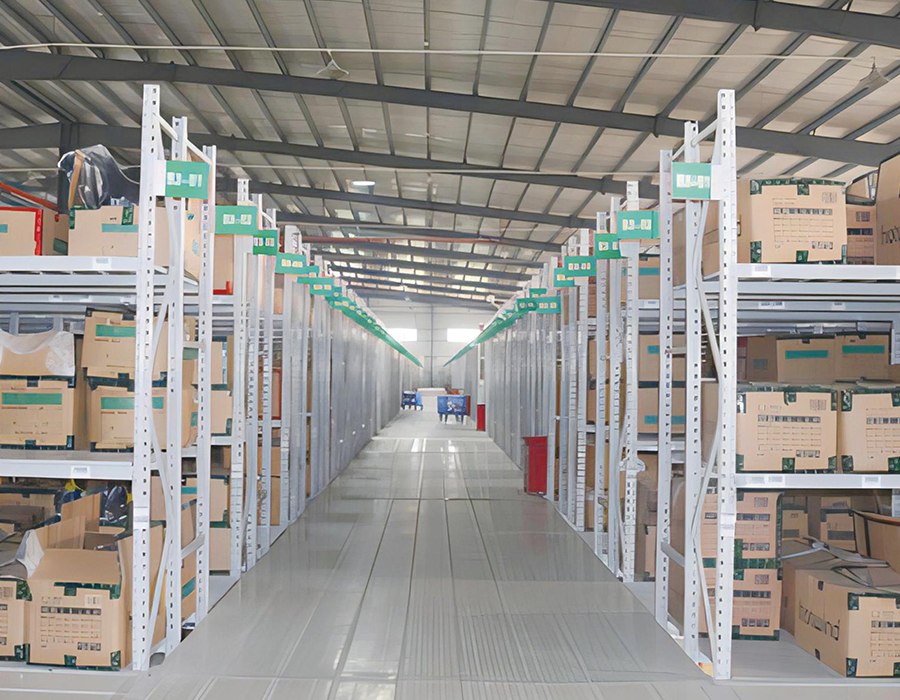
Medium-duty boltless shelving is a storage system made from steel uprights, beams, and shelf decking that snap together without nuts, bolts, or tools, while still supporting a moderate to heavy load per shelf level. Most medium-duty boltless shelving units hold between 500 and 800 pounds per shelf when weight is evenly distributed, making them a practical middle ground between lightweight wire shelving and heavy-duty industrial pallet racking.
This type of shelving is commonly found in garages, retail stockrooms, small warehouses, auto parts stores, and light manufacturing facilities where storage needs go beyond household shelving but don't require full industrial racking. Because the boltless design uses a rivet-and-slot connection system, medium-duty boltless shelving can be assembled in minutes without a wrench or drill, and shelf heights can be adjusted later simply by repositioning the beams.
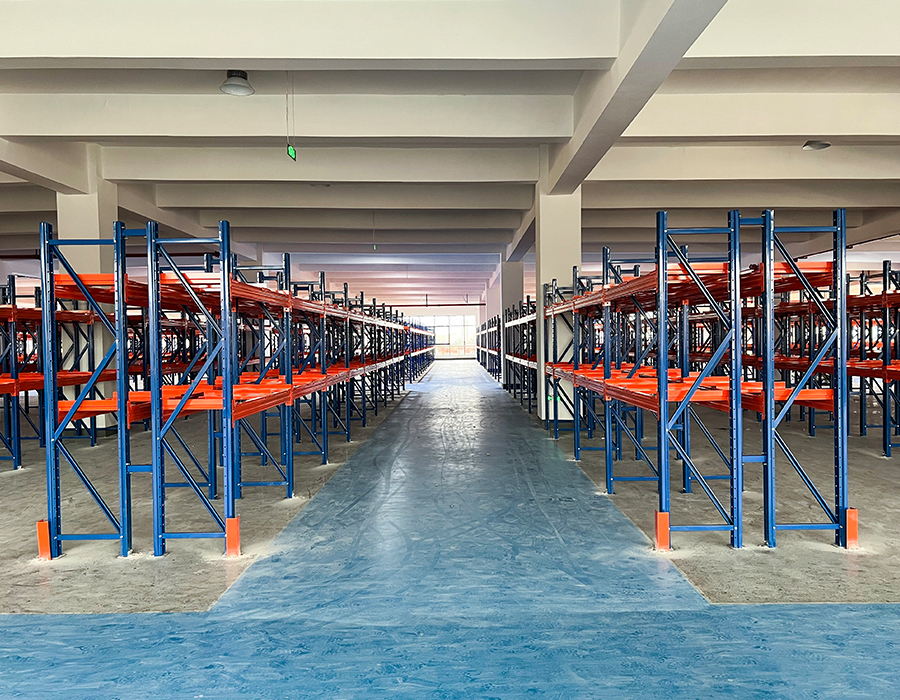
Every medium-duty boltless shelving system is built from a small set of interlocking parts, and understanding each one makes assembly and future upgrades much easier.
These vertical steel posts feature punched slots along their length, allowing beams to be inserted at different heights without any additional hardware.
Horizontal beams have rivets on each end that lock directly into the upright slots, forming the frame that supports each shelf level.
Decking panels, typically particleboard, wire mesh, or steel, rest on top of the beams to create the actual storage surface for boxes, bins, or equipment.
Diagonal or cross bracing adds lateral stability, keeping the entire unit rigid even when shelves are loaded near their weight capacity.
Understanding where medium-duty boltless shelving fits among other shelving options helps buyers avoid choosing a system that's either overbuilt or underbuilt for their storage needs.
| Shelving Class | Typical Capacity Per Shelf | Best For |
| Light-Duty Shelving | Up to 350 lbs | Home storage, light office supplies |
| Medium-Duty Boltless Shelving | 500-800 lbs | Garages, stockrooms, small warehouses |
| Heavy-Duty Boltless Shelving | 1,000-2,000 lbs | Distribution centers, bulk storage |
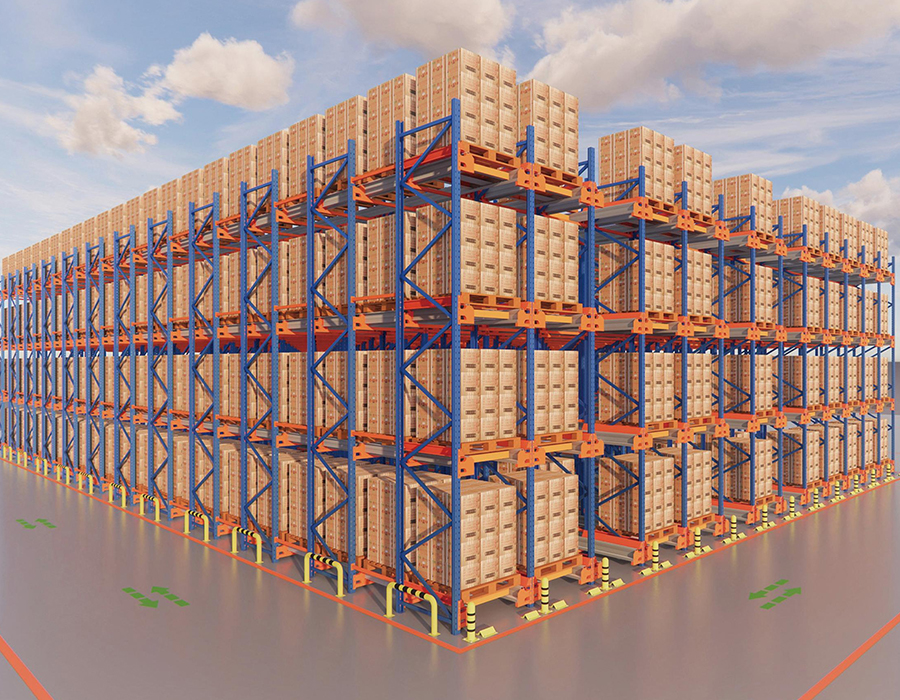
| Industrial Pallet Racking | 2,000+ lbs | Palletized warehouse storage |
For most small businesses and workshops, medium-duty boltless shelving hits the sweet spot of strong enough for tools, inventory, and bins, without the cost or footprint of full industrial racking.
Businesses and homeowners alike choose this shelving style for reasons that go beyond just weight capacity.
Since beams simply lock into slotted uprights, a typical unit can be fully assembled in 15 to 30 minutes without needing a drill, wrench, or extra hardware.
Beams can be repositioned along the upright slots whenever storage needs change, letting users customize shelf spacing for taller bins or shorter stacked boxes.
Medium-duty boltless shelving typically costs less than welded or industrial racking systems while still handling substantial daily use in a busy stockroom or garage.
Because units disassemble just as easily as they go together, businesses can reconfigure storage layouts or move shelving to a new location without major downtime.
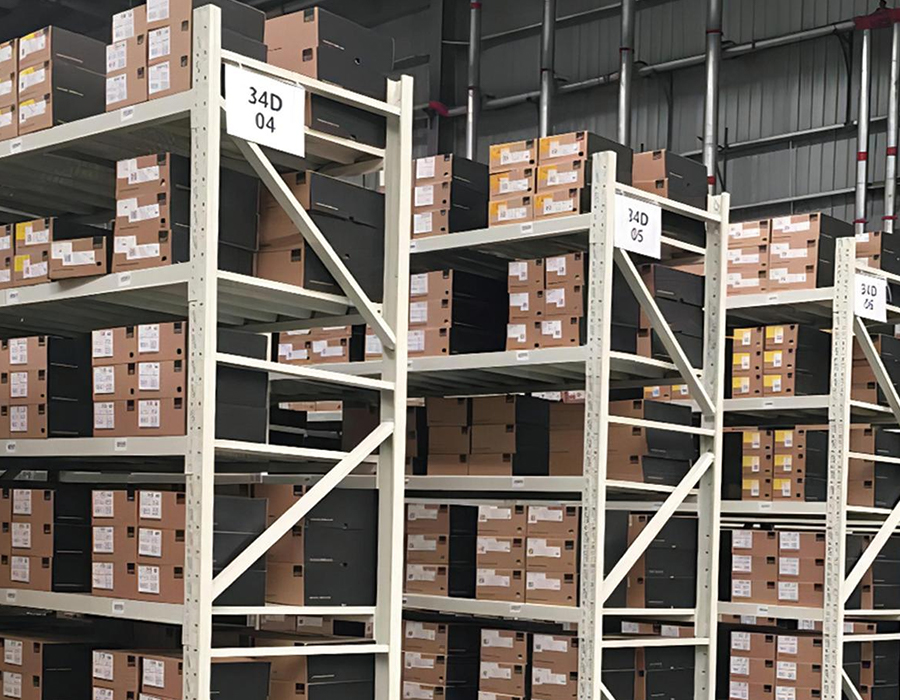
Picking the right configuration depends on more than just available floor space. Weight distribution, item size, and access frequency all play a role in the decision.
While the boltless design makes assembly simple, following the correct sequence prevents wobbling or misaligned shelves later on.
Even a well-built medium-duty boltless shelving unit can fail prematurely if weight isn't distributed correctly across the shelf surface.
Concentrating heavy items in the center of a shelf puts more stress on the decking than spreading the same load across the full surface area.
Placing the heaviest boxes or equipment on the bottom shelves lowers the unit's center of gravity and reduces tipping risk.
Manufacturer weight ratings account for even distribution, so stacking beyond the listed capacity, even briefly, can bend beams or weaken the frame over time.
A little routine upkeep goes a long way toward keeping medium-duty boltless shelving stable and safe for years of daily use.
Yes, since the beams simply lock into the upright slots without permanent hardware, units can be taken apart, moved, and reassembled multiple times without damage.
Anchoring is strongly recommended for taller units or those placed in areas with foot traffic, as it significantly reduces the risk of tipping when shelves are loaded unevenly.
Boltless shelving uses a rivet-and-slot connection that allows tool-free assembly and adjustment, while welded shelving is permanently fixed and generally used for higher-capacity, less frequently reconfigured storage.
Our Professional Team
Is Ready to Support You.


 Warehouse Storage Racks Manufacturers




 English
 Español