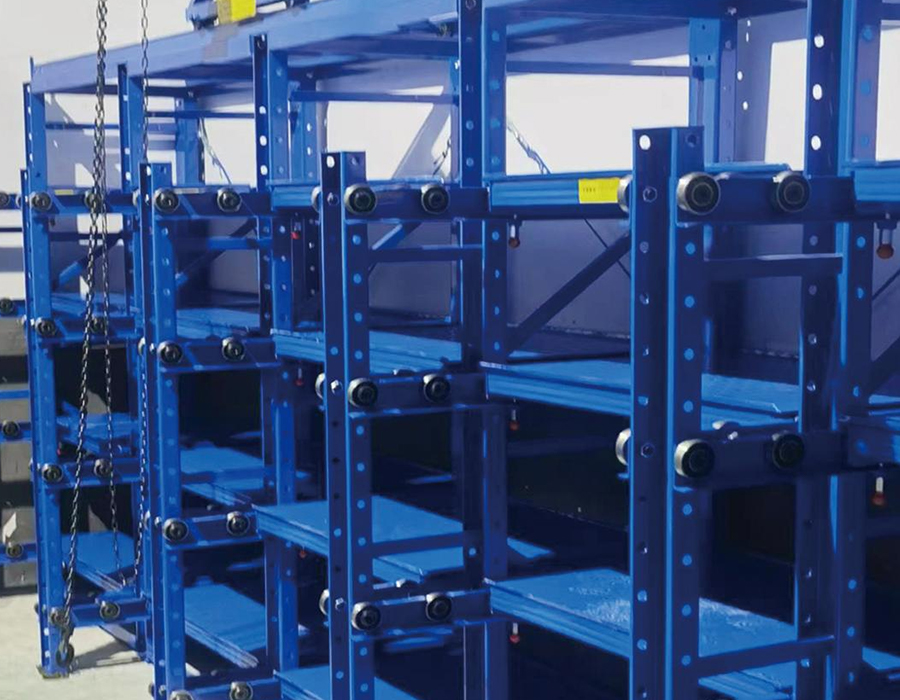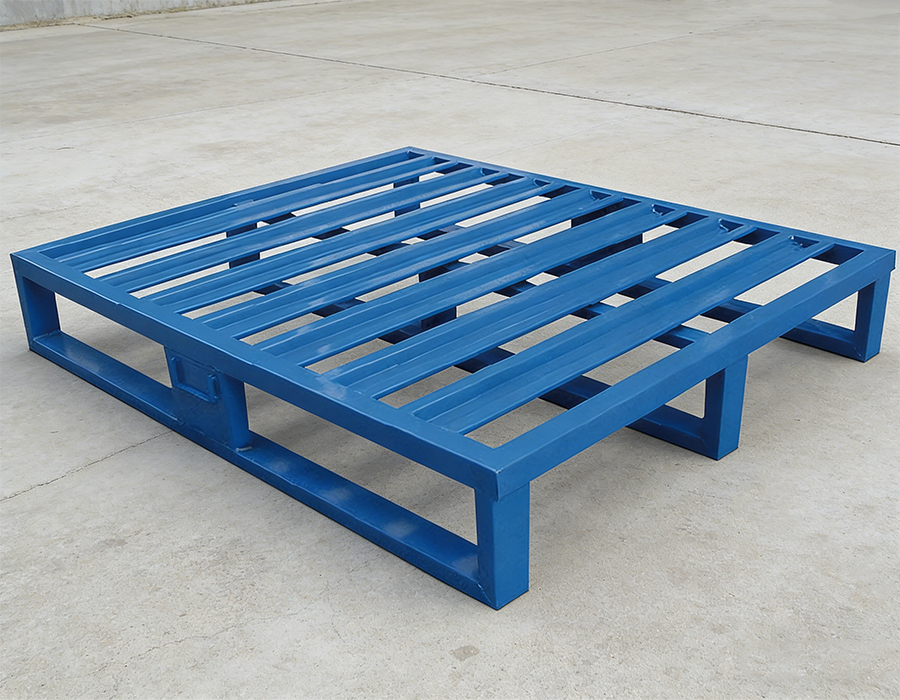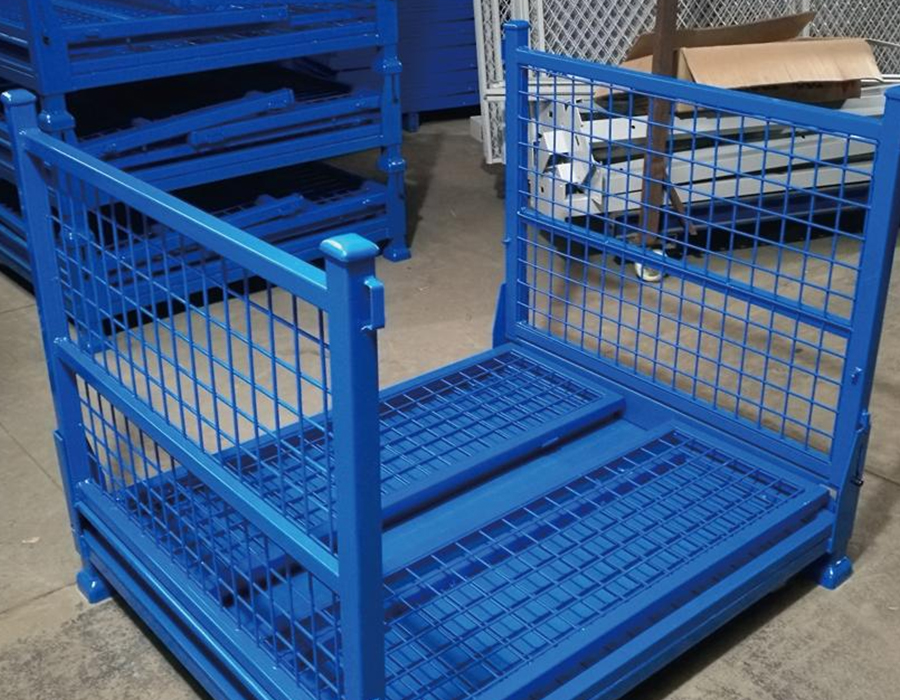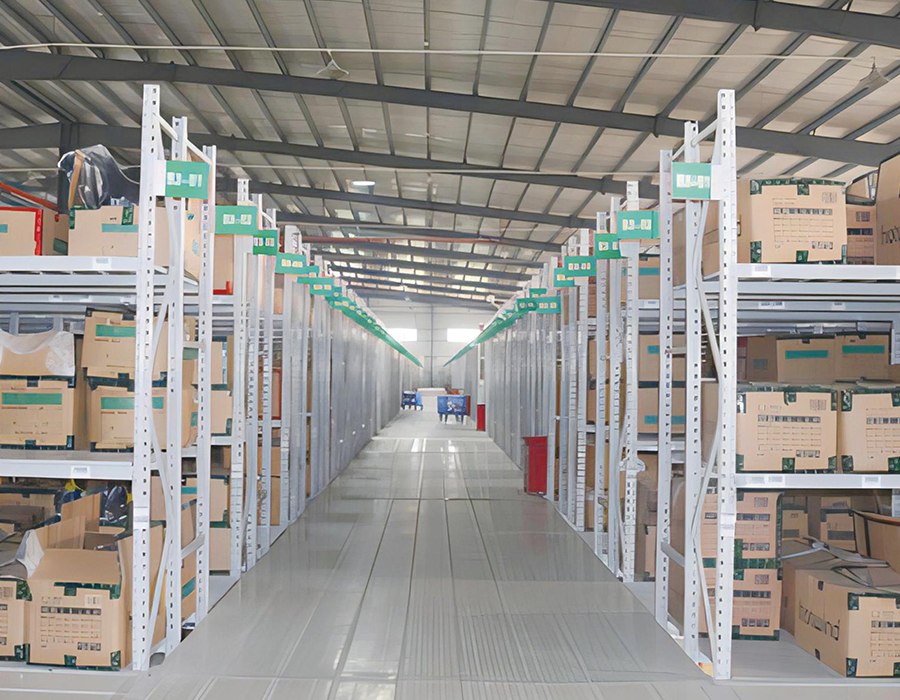
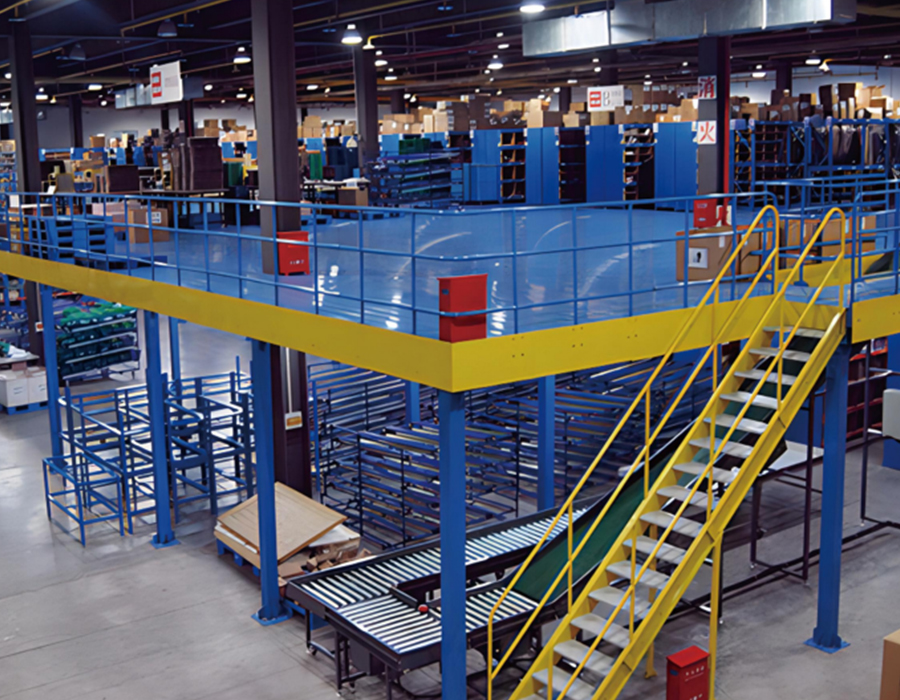
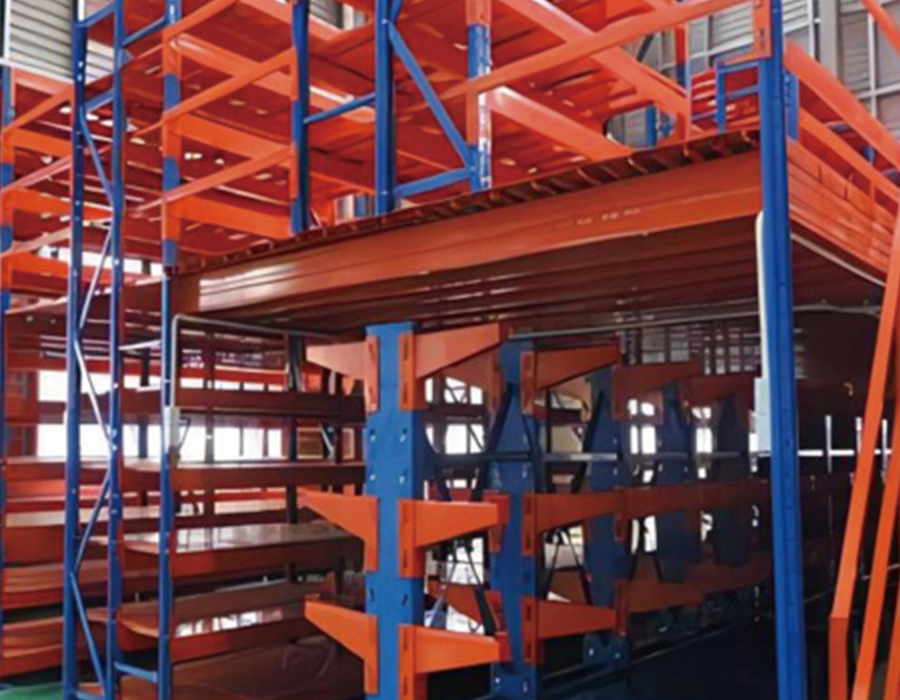
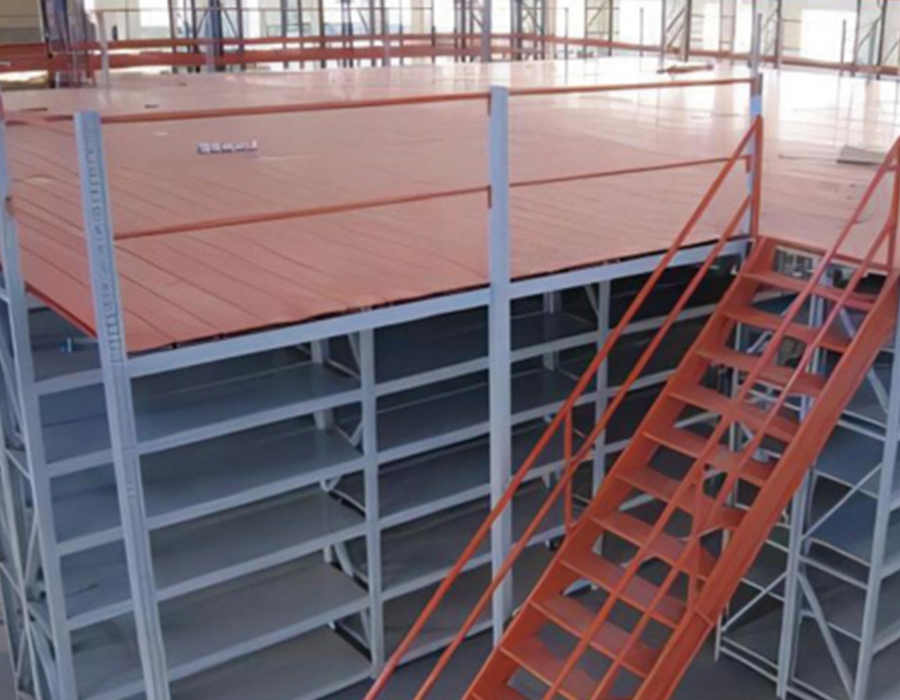
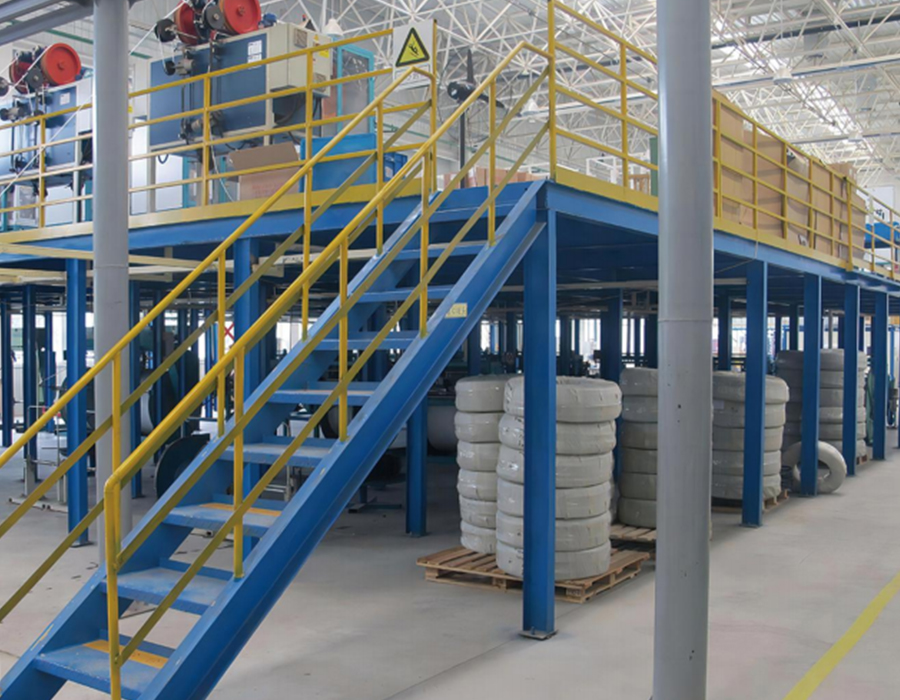
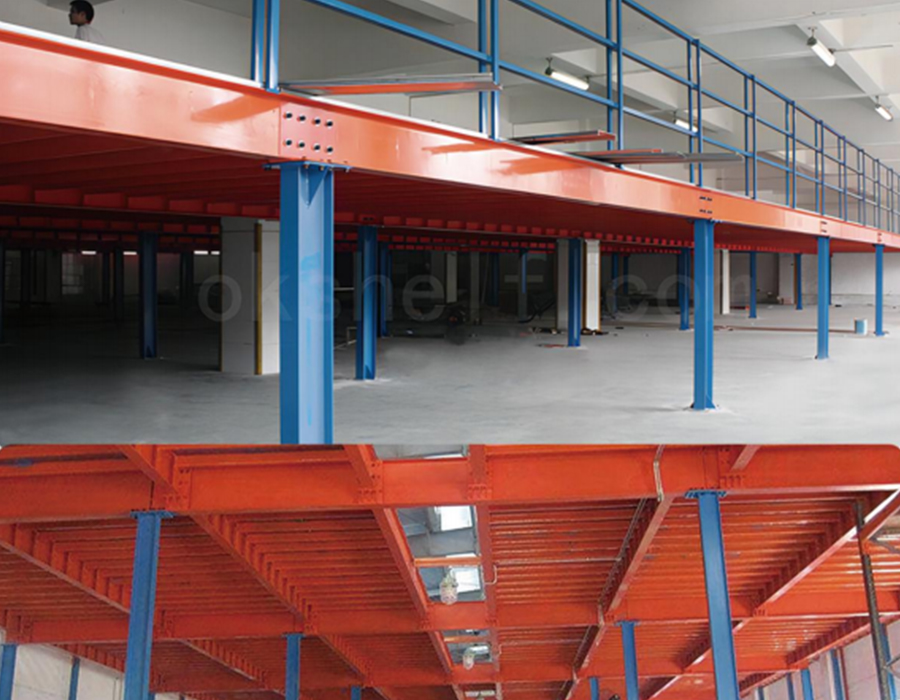
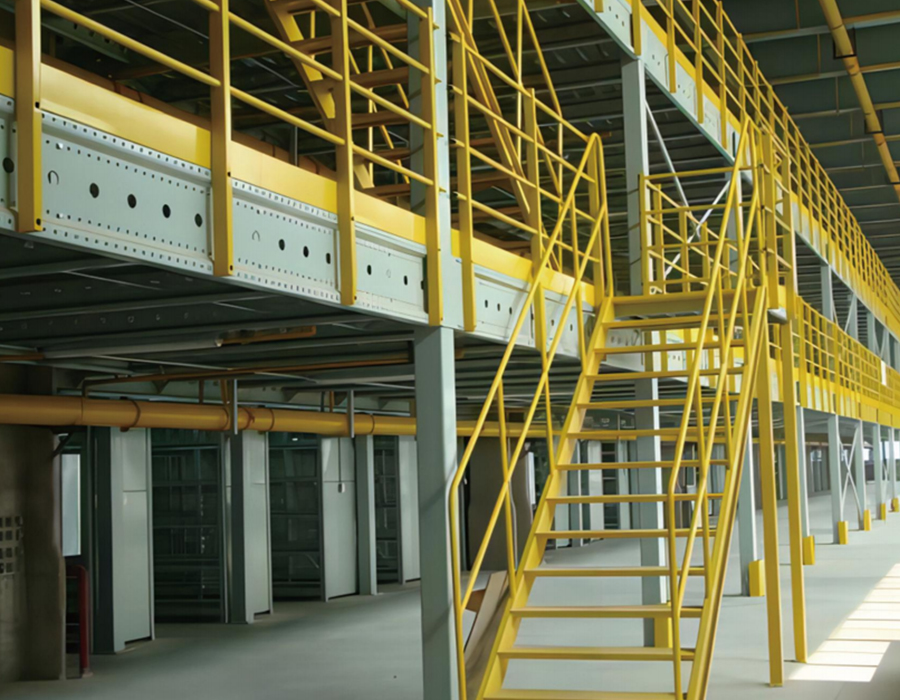
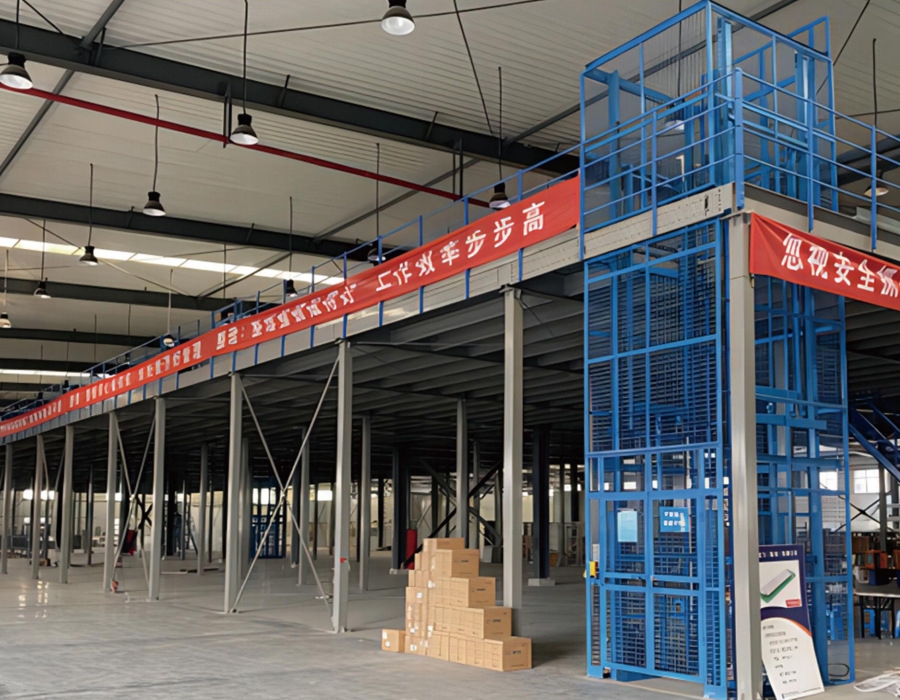
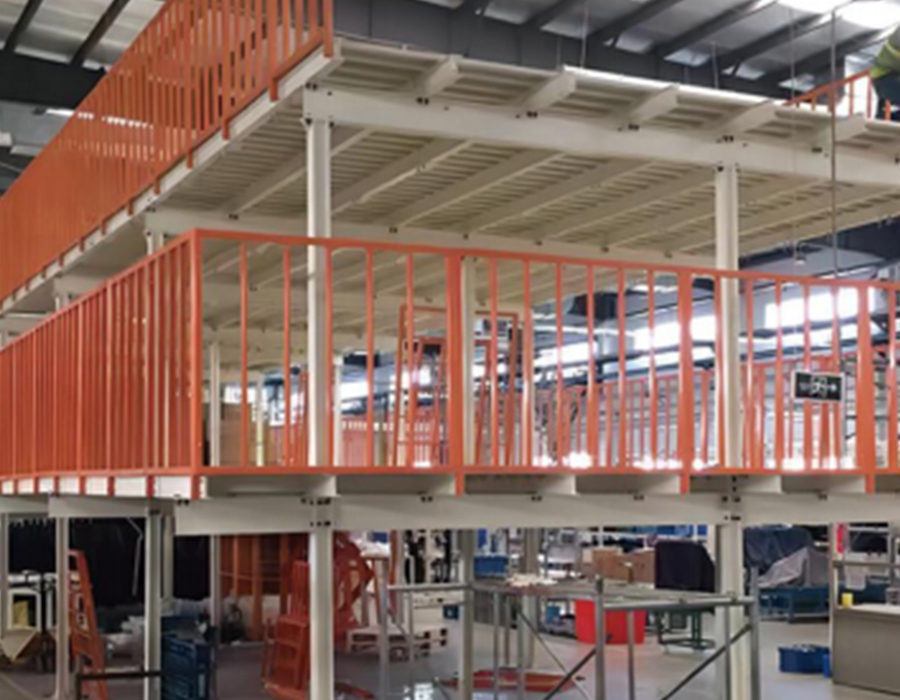
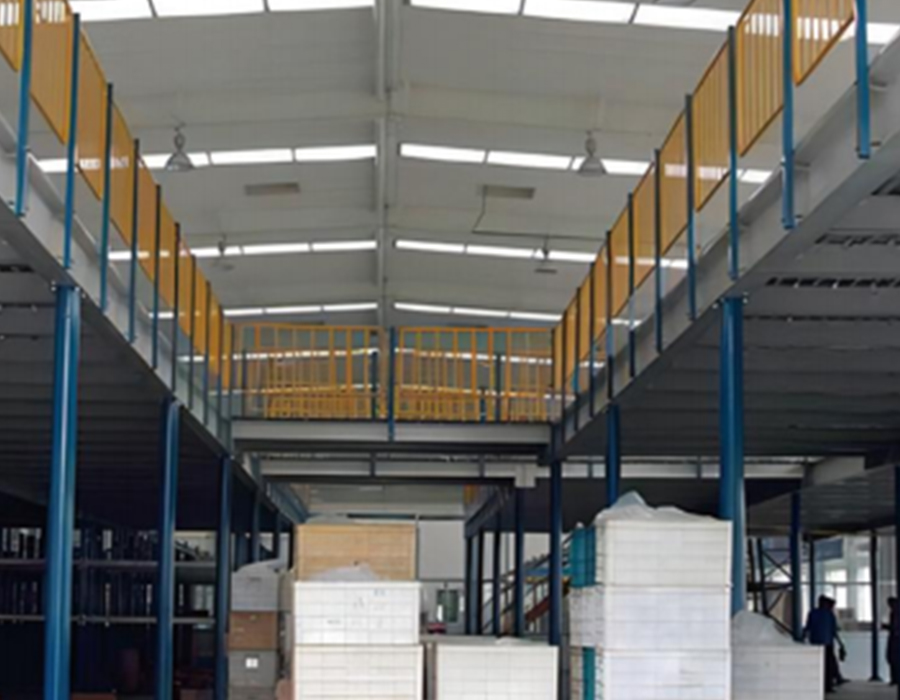
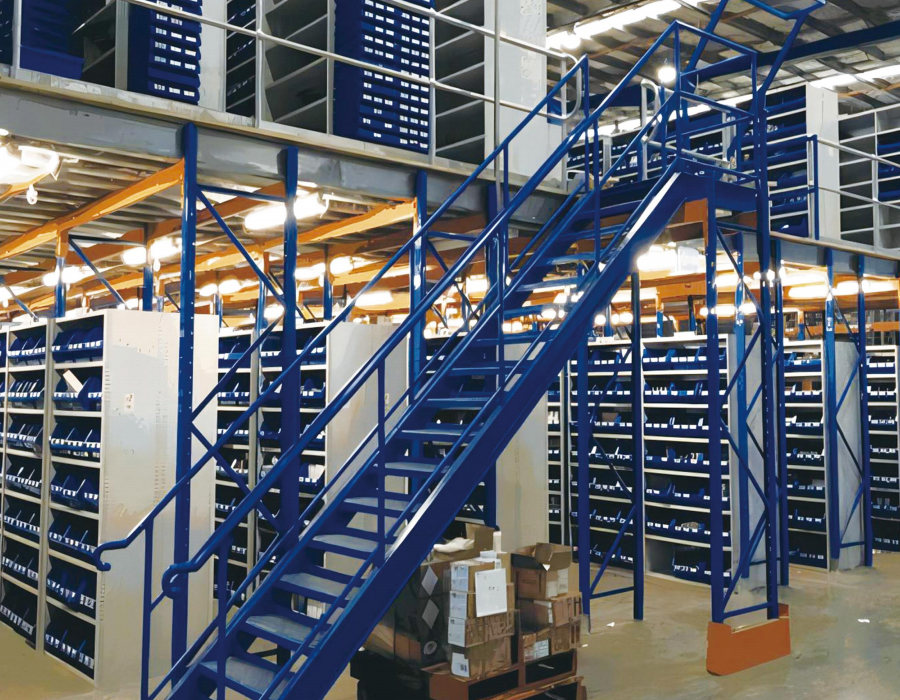
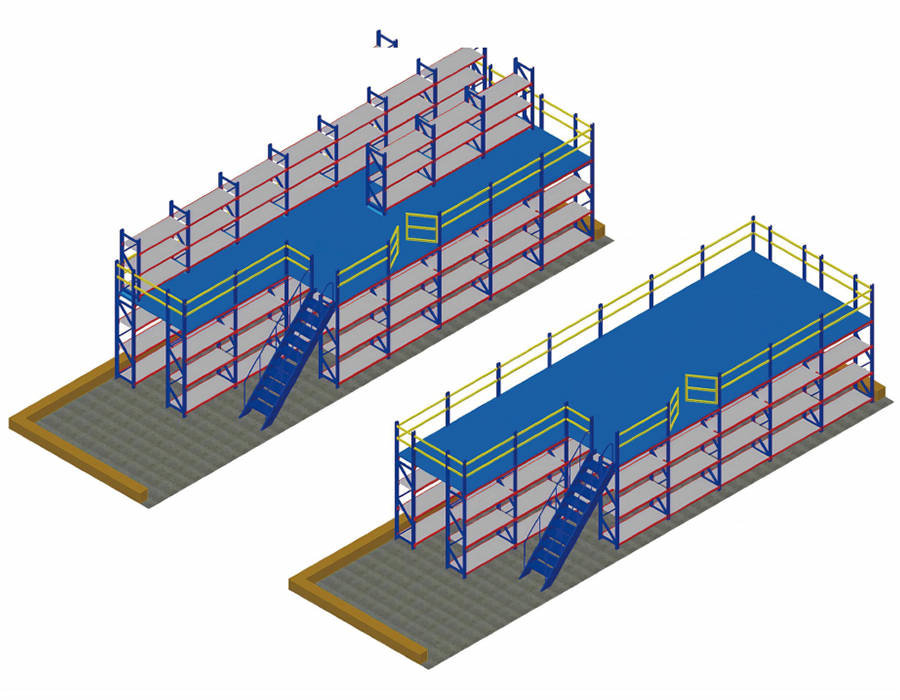
The structure is fully assembled. The columns are usually made of square tubes, round tubes and U-shaped columns. The main and secondary beams are usually made of hot-rolled steel and cold-formed C-shaped steel. The floor slabs are usually made of cold-rolled steel floor slabs. The structure is interlocked and the floor slabs are locked to the main and secondary beams by a specially designed locking mechanism.
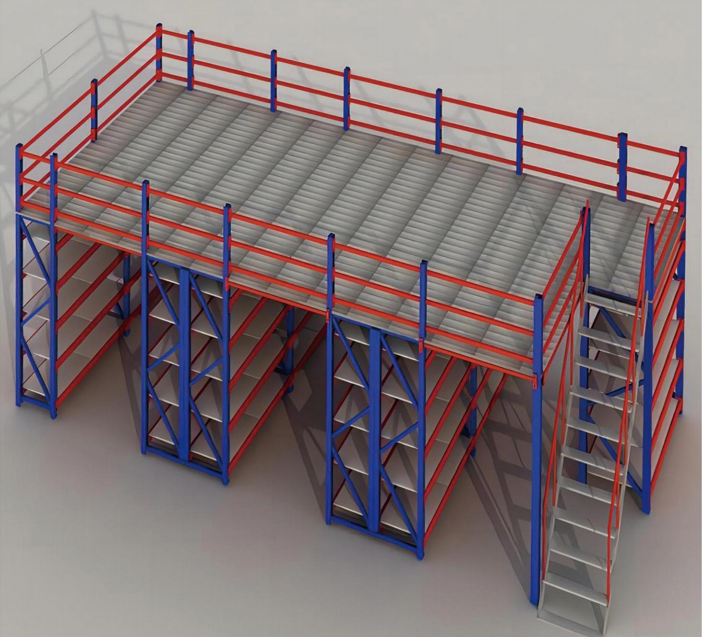 |
Racking Type | Mezzanine Shelving |
| Stock Rotation Method | Last-In, First-Out (LIFO) | |
| Storage Capacity | 0.6 | |
| Maximum Storage Height | 8 meters | |
| Auxiliary Equipment | Forklifts, hydraulic lifts, pallet jacks, hand trucks | |
| Accessibility | Moderately fast | |
| Primary Industries | Suitable for warehouses with high ceilings, small goods, manual handling, and large storage volumes, such as electronics, food, pharmaceuticals, automotive dealerships, apparel, footwear, and hardware. | |

Picture a warehouse at the end of a shift: pallets of finished goods waiting in the receiving bay, ...
Read MoreWhen a forklift drops a full pallet onto a rack beam, the structure receives more than static weigh...
Read MoreAnhui Huijian Intelligent Equipment Co., Ltd. recently welcomed a delegation of representatives from...
Read MoreWhy Mould Racks Are a Core Workflow Tool In any production environment that relies on molds—injecti...
Read MoreWhat Is Light-Duty Boltless Shelving? Light-Duty Boltless Shelving is a type of storage rack designe...
Read MoreClear internal height — the usable vertical dimension from finished floor to the lowest obstruction above — is the single most constraining parameter in any mezzanine shelving system project, yet it is frequently measured at only one or two points in the building rather than mapped systematically across the full installation footprint. Roof structures, HVAC ductwork, fire suppression pipework, lighting fixtures, and crane runway beams all create localized height restrictions that may fall well below the nominal clear height stated in the building specification. Installing a warehouse mezzanine steel platform shelving system without a comprehensive overhead obstruction survey routinely results in structural conflicts discovered only during installation, requiring costly beam rerouting or mezzanine height reduction.
The minimum clear height calculation for a two-level mezzanine shelving system must satisfy all of the following simultaneously: the clear headroom required on the ground floor beneath the mezzanine deck (typically 2,400–2,700mm for personnel access with materials handling equipment); the structural depth of the mezzanine deck itself, including primary beams, secondary joists, and decking (typically 250–450mm depending on span and load); the clear headroom required on the mezzanine floor level (again 2,400–2,700mm minimum, more if racking or tall shelving units will be installed above the mezzanine); and fire suppression clearance requirements, which in many jurisdictions mandate a minimum gap between the top of storage and sprinkler deflectors of 450–600mm. Adding these layers often yields a minimum building clear height of 6.5–7.5m for a functional double-level mezzanine floor racking system, which eliminates many older warehouse buildings from consideration without significant structural modification.
Where building height is borderline, reducing the structural depth of the mezzanine deck is the primary lever. Switching from conventional I-beam primary structure to cellular beams — steel beams with circular or hexagonal web openings — allows services such as sprinkler pipes and electrical conduit to pass through the beam web rather than beneath it, recovering 150–300mm of structural depth without reducing beam load capacity. This single design change can make a marginal building feasible for a full mezzanine shelving system installation.
The column grid of a warehouse mezzanine steel platform shelving system is not simply a structural question — it is a spatial planning decision that permanently shapes how the ground-floor area beneath the mezzanine can be used for the life of the installation. Columns placed without reference to ground-floor material flow, racking aisle layout, or equipment turning radii create obstructions that reduce ground-floor utility far more than the physical footprint of the columns themselves.
A column positioned in the middle of a planned forklift aisle does not just block that aisle — it forces an aisle relocation that may compress adjacent storage bays, reduce rack row length, or create dead zones in the corner geometry around the column that are too narrow for standard pallet racking but too wide to leave empty. The cumulative effect of poor column placement in the ground-floor zone can reduce usable racking positions by 15–25% compared to a layout where the column grid was coordinated with the rack layout from the outset.
The practical planning approach is to establish the ground-floor racking and aisle layout first, then define the mezzanine column grid to align column centerlines with rack upright rows rather than with rack aisle centers. This means columns fall between storage positions rather than within aisles, minimizing operational impact. In most standard pallet racking configurations with 2,700mm bay widths and 3,500mm wide aisles, a column grid of approximately 5,400mm (two bay widths) in the storage direction and 8,000–10,000mm in the aisle direction is workable. Grids wider than 10,000mm begin to require significantly deeper primary beams to control deflection under mezzanine floor loads, increasing structural depth and consuming headroom.
The decking layer of a mezzanine floor racking system — the surface that sits atop the secondary joist structure and forms the usable platform — is specified in several competing materials, each with distinct structural, operational, and maintenance characteristics. The choice is rarely straightforward because the governing requirements differ between the mezzanine floor surface (where personnel walk and equipment operates) and any racking shelving installed above it (which demands a flat, load-distributing base).
| Decking Type | Typical Thickness | Load Distribution | Surface Suitability | Key Limitation |
| Steel chequer plate | 4–6mm | Good — continuous surface | Forklift, trolley, personnel | Heavy self-weight; reflective glare |
| Resin-bonded particle board (RBPB) | 38–50mm | Excellent — wide bearing area | Personnel, light equipment | Moisture-sensitive; not suitable for wet environments |
| Open bar grating | 25–40mm depth | Poor — concentrated on bars | Personnel access only | Drops small items; not suitable under racking |
| Corrugated steel deck with concrete topping | 75–100mm composite | Excellent — fully structural | All equipment types, heavy loads | High self-weight; complex installation; permanent |
| Aluminium tread plate | 4–5mm | Good | Light equipment, personnel | Lower rigidity; higher cost than steel |
Resin-bonded particle board is the most common decking specification in mezzanine shelving systems intended for manual picking operations, largely because its thick cross-section distributes point loads from racking leg bases over a wider contact area and provides a quiet, non-slip walking surface. The critical installation requirement is that RBPB panels must be fully supported along all four edges — unsupported spanning between secondary joists at the panel midpoint causes progressive delamination under repeated dynamic loading. In environments with any moisture exposure — including high humidity cold-store ante-rooms and loading bay areas — phenolic-faced RBPB or steel plate is the appropriate specification, as standard RBPB swells at edges and loses structural integrity within 12–18 months of regular moisture contact.
A warehouse mezzanine steel platform shelving system fundamentally changes the fire risk profile of the building it occupies, and fire authority requirements for compartmentation, suppression, and egress are frequently the most constraining regulatory factors in mezzanine design — more so than structural load or building height in many projects. Understanding these requirements before layout design is complete prevents the scenario where a structurally sound mezzanine design requires major reconfiguration to achieve fire compliance.
The core issue is that a mezzanine floor creates enclosed space beneath it that behaves as a separate fire compartment regardless of whether it is physically enclosed with walls. Most building codes and fire authority interpretations treat the underside of the mezzanine deck as a ceiling that must either be fire-rated to a specified standard or be provided with sprinkler coverage beneath it as if it were an enclosed room. In practice, this means that a mezzanine shelving system installation in a building with an existing roof-level sprinkler system almost always requires additional sprinkler heads installed in the sub-mezzanine space, and frequently requires a further layer of sprinklers at or just below the mezzanine deck surface to protect the floor above.
Egress requirements impose additional layout constraints. Most fire codes require two independent means of escape from any mezzanine floor area where personnel are regularly present, with maximum travel distances to a staircase of 18–45 meters depending on jurisdiction and occupancy classification. For large mezzanine shelving installations, this often mandates two staircases positioned to serve opposite ends of the platform, which consumes mezzanine floor area and requires corresponding openings through the mezzanine deck structure that must be framed and edge-protected. Planning staircase locations as an afterthought — after the shelving layout has been finalized — regularly results in staircases that conflict with shelving bays or that cannot achieve the required travel distance coverage without a third staircase.
The design live load for a mezzanine floor racking system — typically expressed in kN/m² or tonnes per square meter — is the specification most prominently stated in supplier proposals, yet it is also the figure most frequently misinterpreted by buyers. The live load rating is a uniformly distributed load (UDL) assumption applied across the full mezzanine floor area for structural design purposes. It does not represent the maximum load that can be placed at any single point, and it does not account for dynamic effects from moving equipment or concentrated loads from racking leg bases.
A mezzanine designed to 5 kN/m² (approximately 500 kg per square meter) does not mean that every square meter can simultaneously carry 500 kg of racking plus 500 kg of product — the 5 kN/m² figure is the combined allowance for structure, storage, and occupancy. Furthermore, the distribution assumed in the UDL calculation is uniform, but racking systems concentrate load at leg base points. A standard longspan shelving bay with a 2,400mm × 600mm footprint and a 1,500 kg capacity concentrates that load on four baseplate contacts, each with a contact area of perhaps 60mm × 60mm. The localized floor pressure at each contact point may be ten to fifteen times the nominal UDL, which means the decking and secondary joist structure must be checked for local punching and bending under concentrated loads in addition to the global UDL check.
At Huijian, our mezzanine shelving system designs are developed through our dedicated R&D center, with structural calculations that explicitly address both global UDL and localized leg-base point loads — the combination that reflects how mezzanine floors actually perform in service, rather than how they appear on a simple load rating specification sheet.
A mezzanine shelving system that relies solely on staircases for vertical goods movement becomes a productivity bottleneck as throughput increases. The integration of vertical conveyors, goods lifts, or pallet lifts into the mezzanine structure is a design consideration that must be addressed at the layout planning stage — retrofitting these elements into a completed mezzanine installation is significantly more complex and costly than incorporating them from the outset.
The structural implication of a goods lift shaft penetrating a mezzanine deck is that the deck opening must be fully framed with structural trimmer beams capable of redirecting the loads that would otherwise have been carried by the interrupted secondary joists. The trimmer beams transfer these redirected loads to the nearest primary beams, which must be sized to carry the additional tributary area. For large lift openings — a pallet lift with a 1,200mm × 1,200mm platform requires a deck opening of approximately 1,500mm × 1,500mm including clearances — the trimmer beam loads can be substantial and may require an additional mezzanine column adjacent to the opening to provide a short load path to the foundation.
Beyond the structural framing, the interface between the lift and the mezzanine deck requires particular attention in three areas:
The choice between a modular mezzanine shelving system — built from standardized, pre-engineered components in fixed increments — and a fully custom-fabricated structure is frequently framed as a straightforward cost comparison in which modular is cheaper. This framing is accurate in many standard applications but breaks down in specific conditions where the limitations of modular systems generate hidden costs that appear only during installation or operation rather than in the initial quote.
Modular mezzanine systems achieve their cost efficiency through standardized column sizes at fixed height increments (typically 100mm or 150mm steps), standardized beam spans in fixed widths (commonly 2,000mm, 2,500mm, 3,000mm), and pre-engineered connection details that are repeated identically across the structure. This standardization dramatically reduces engineering time and fabrication cost for rectangular mezzanine footprints in buildings with regular dimensions. The cost comparison genuinely favors modular systems in these conditions by 20–35% over equivalent custom structures.
The conditions where modular systems lose their cost advantage include:
Our warehouse mezzanine steel platform shelving systems are available in both modular and fully engineered custom configurations, developed through our 1,500-square-meter R&D center and produced across six dedicated production lines — meaning the structural solution can be precisely matched to the building geometry and load requirements rather than forcing the building to conform to a standard product grid.
In warehouse facilities where a mezzanine floor racking system is installed in proximity to or structurally connected with existing heavy-duty pallet racking, differential settlement between the mezzanine columns and the adjacent rack uprights is a long-term serviceability issue that is rarely addressed in installation planning. Both structure types impose significant point loads on the warehouse floor slab, but they do so through different baseplate areas, at different load intensities, and with different loading histories — conditions that produce different settlement rates over time.
Mezzanine columns typically impose higher sustained point loads than pallet rack uprights — a mezzanine column supporting 40–60 tonnes of floor, live load, and racking above it generates a baseplate pressure an order of magnitude higher than a standard pallet rack upright under the same footprint. If both are founded on the same concrete slab of uniform thickness, the mezzanine column will induce greater slab deflection and long-term creep settlement than the adjacent rack upright. Over two to five years, this differential settlement can produce relative vertical displacement of 5–15mm between mezzanine columns and adjacent rack rows — sufficient to induce measurable bow in rack uprights physically connected to or bearing against the mezzanine structure, and to create visible slope on the mezzanine deck surface that affects pallet stability and wheeled equipment handling.
The correct structural approach is to treat the mezzanine and any adjacent racking as independent structures with a deliberate movement joint between them, regardless of how close they are to each other. Mezzanine columns should be anchored to the slab through baseplates sized to limit floor pressure to a level consistent with the slab's long-term bearing capacity, not merely its short-term yield strength. Where the slab is known to be thin or the subgrade compressible, ground improvement below mezzanine column locations — through compaction grouting or the installation of micro-piles — is a more reliable long-term solution than attempting to distribute mezzanine loads through oversized baseplates alone.
Our Professional Team
Is Ready to Support You.


 Mezzanine Floor Racking System Custom




 English
 Español