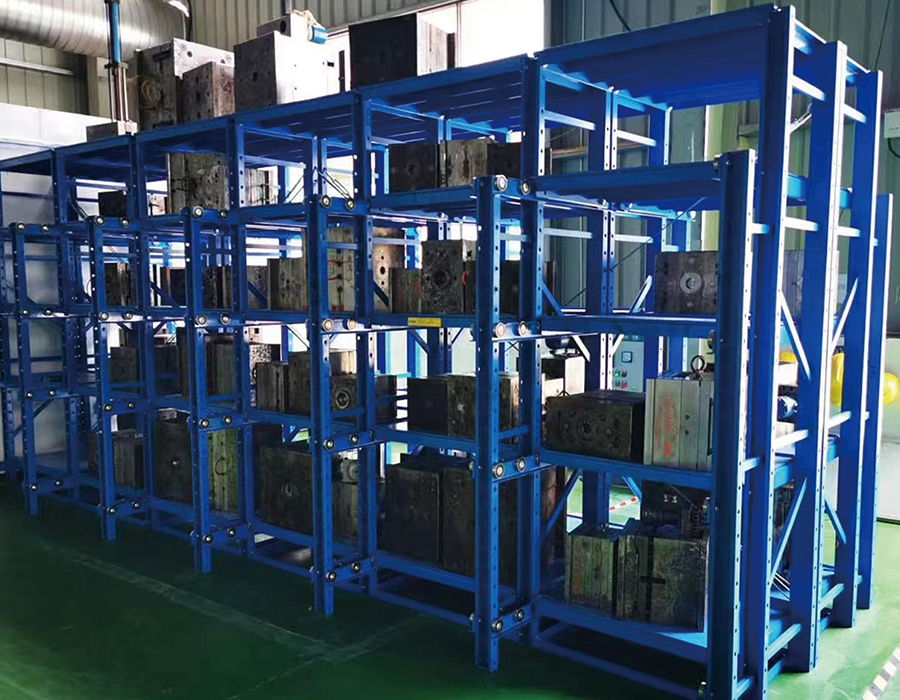
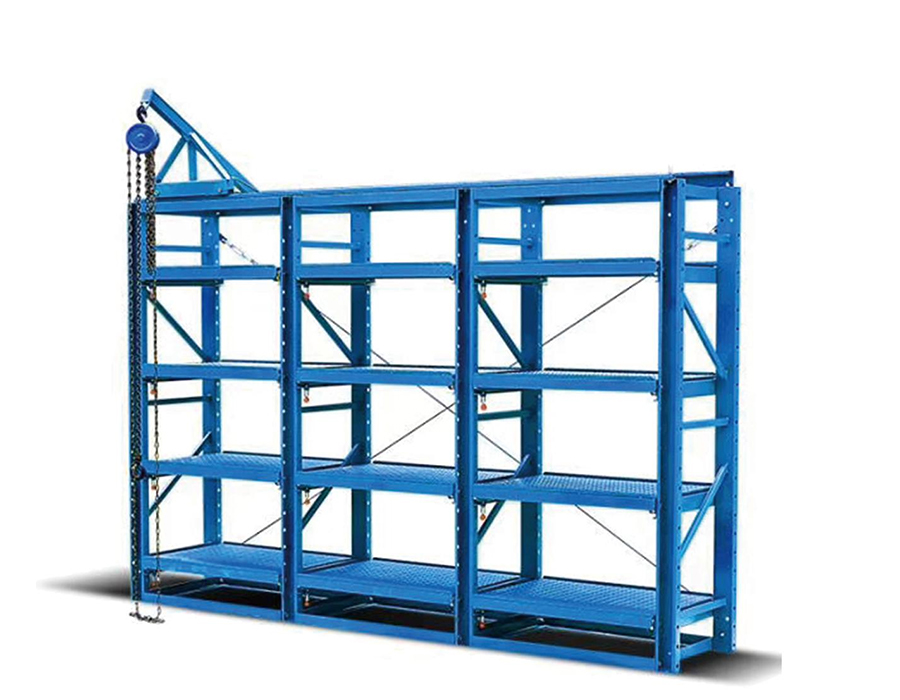
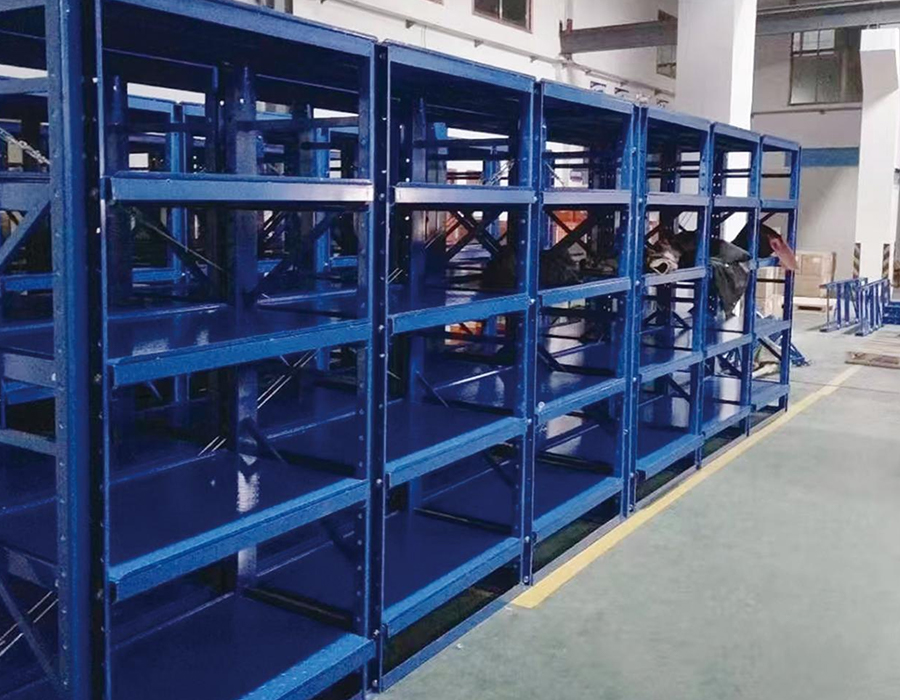
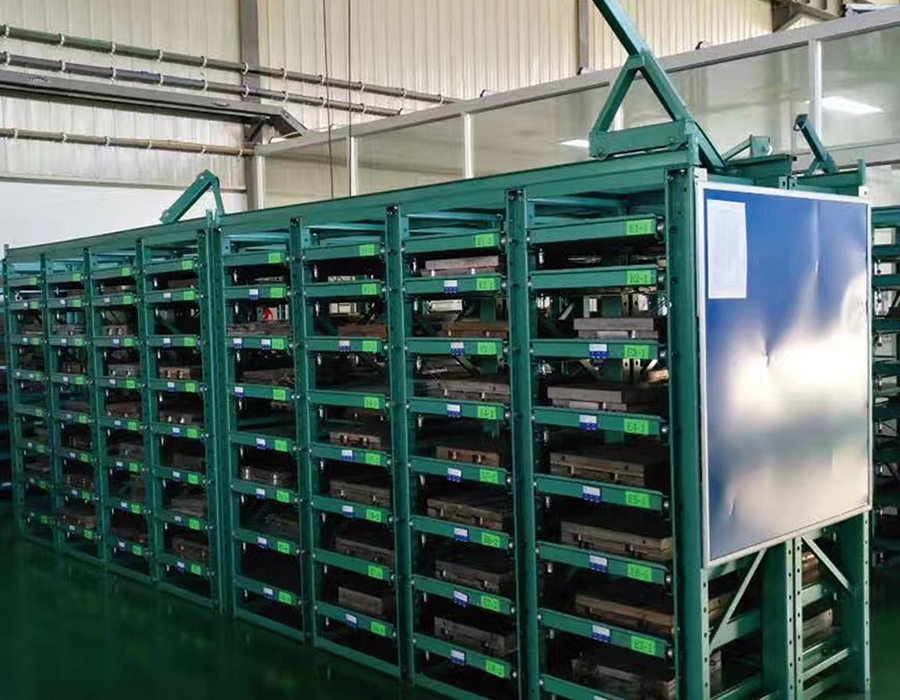
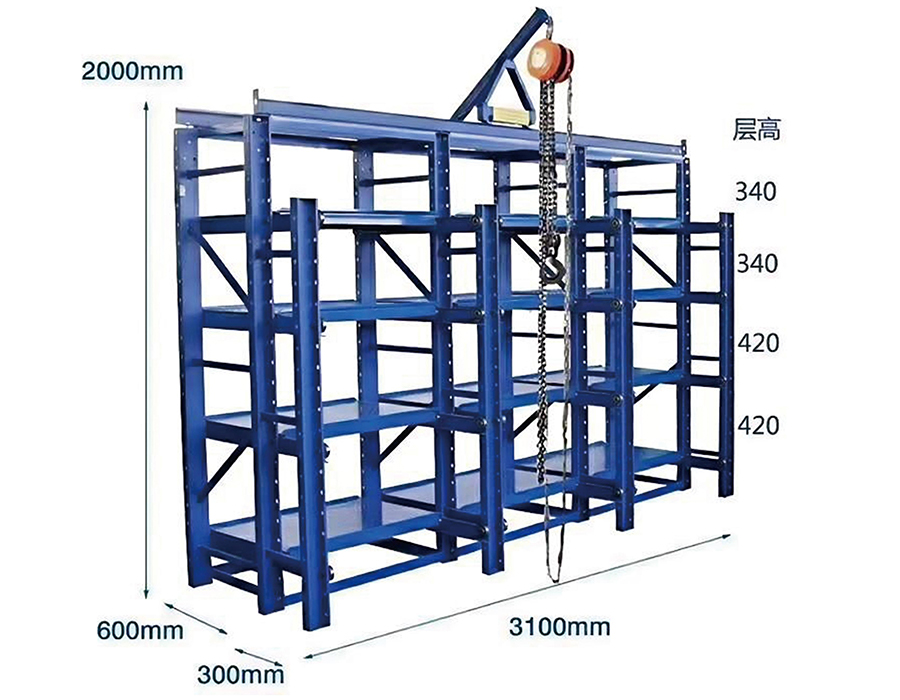
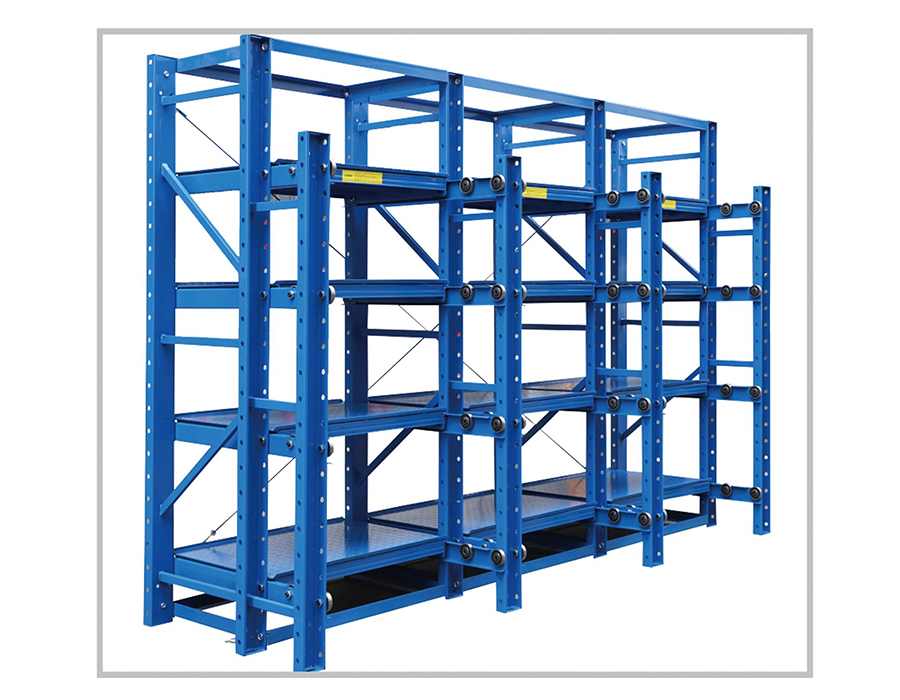
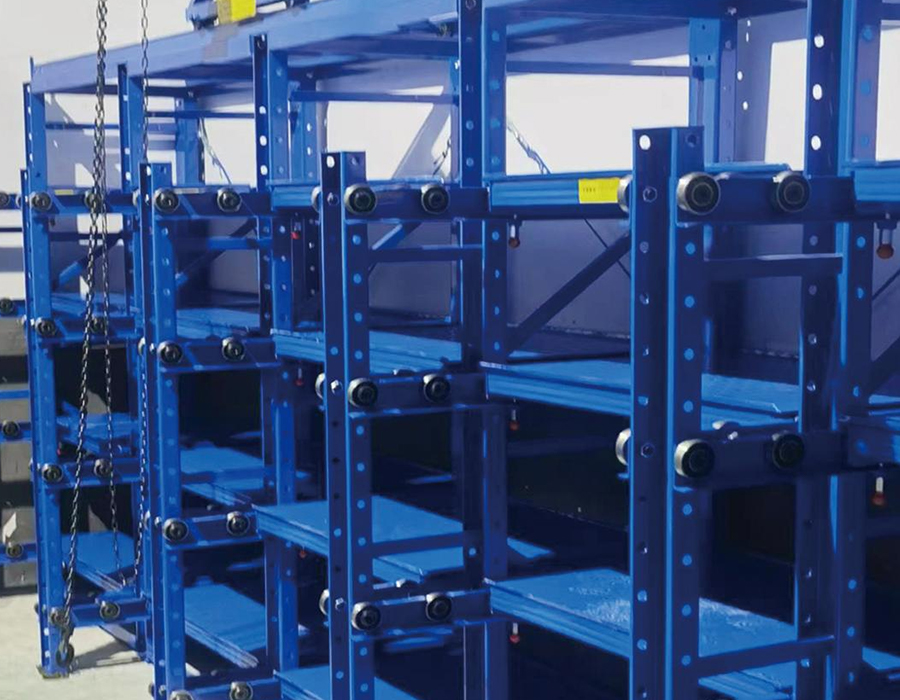
Drawer-type mould racks are purpose-engineered storage systems for the organised storage, classification, and retrieval of industrial tooling, available in semi-open and full-open configurations to suit different mould dimensions, weights, and access frequencies across a wide range of manufacturing environments.
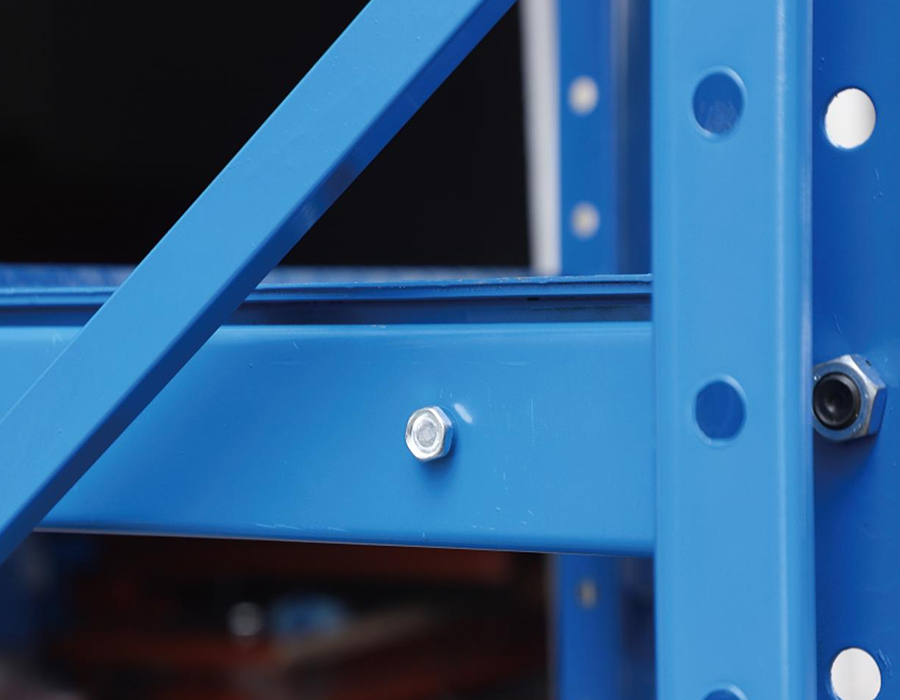
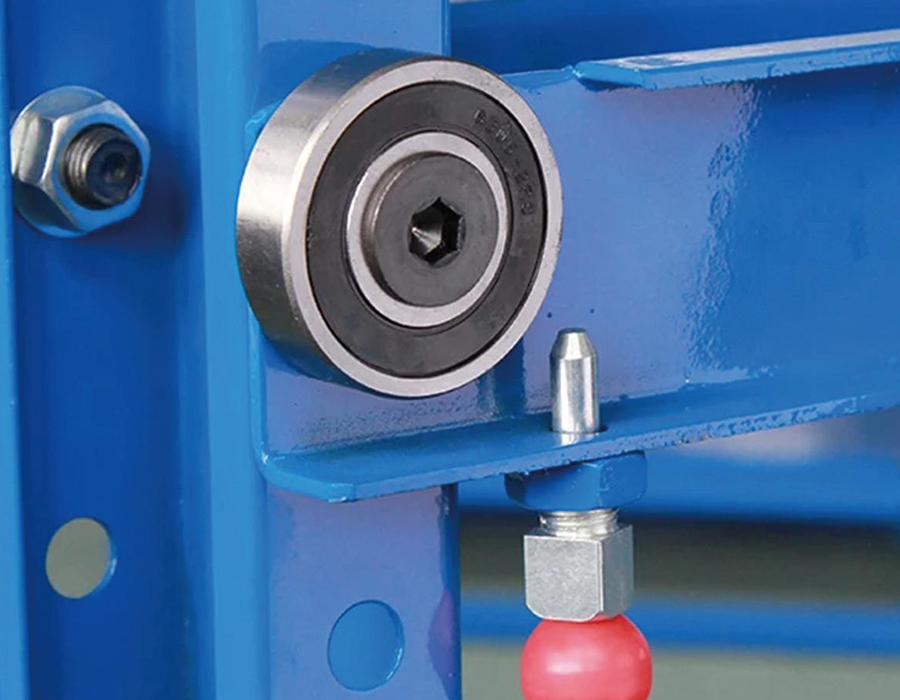
The primary structure comprises high-strength channel steel or cold-rolled steel uprights and cross-beams, with precision-slide-mounted drawers for smooth, effortless operation. Each drawer is fitted with a positioning safety lock and anti-dropout retaining screws to maintain mould stability during storage and prevent damage caused by unintended displacement.
Load capacity per drawer ranges from 200 kg to 3,000 kg; the full-open heavy-duty model supports 1,200 kg per drawer and is supplied with an integrated hoist device for loading and retrieval without overhead cranes or large forklifts. An interlocking mechanism structurally prevents more than one drawer from being extended simultaneously, eliminating the centre-of-gravity instability risk associated with multiple open tiers.
The rust-resistant, moisture- and dust-inhibiting surface treatment protects stored tooling from environmental degradation. Primary applications include mechanical manufacturing, automotive tooling, injection moulding, and electronics production — delivering measurably higher mould change-over efficiency and lower tooling wear and damage costs.

Picture a warehouse at the end of a shift: pallets of finished goods waiting in the receiving bay, ...
Read MoreWhen a forklift drops a full pallet onto a rack beam, the structure receives more than static weigh...
Read MoreAnhui Huijian Intelligent Equipment Co., Ltd. recently welcomed a delegation of representatives from...
Read MoreWhy Mould Racks Are a Core Workflow Tool In any production environment that relies on molds—injecti...
Read MoreWhat Is Light-Duty Boltless Shelving? Light-Duty Boltless Shelving is a type of storage rack designe...
Read MoreIn a storage heavy duty drawer-type mould racks, the drawer extension mechanism is where the greatest engineering demands are concentrated — yet it is the component most frequently underspecified in budget procurement. A mould drawer may carry loads ranging from 500 kg to over 5,000 kg depending on the application, and it must extend that load smoothly over a distance of 600–1,200mm with no lateral deflection, no binding under eccentric load, and reliable operation across thousands of cycles. These requirements cannot be met by scaling up standard light-duty drawer slides.
The two dominant extension system types used in industrial mould racks are steel roller bearing slides and profiled guide rail systems with recirculating ball carriages. Roller bearing slides use hardened steel rollers running in cold-formed channels — they are robust, tolerant of contamination, and straightforward to maintain, but their load-carrying capacity per unit width is limited by roller contact stress. For drawers exceeding 2,000 kg, a single pair of roller slides becomes impractical without extremely wide spacing, which in turn increases the rack's overall bay width. Profiled guide rail systems — essentially linear motion rails borrowed from machine tool technology — achieve much higher dynamic load ratings in a narrower cross-section, but they are more sensitive to misalignment during installation and require cleaner operating environments to achieve their rated service life.
The critical specification parameter is not just static load capacity but dynamic load rating under repeated extension cycles. A slide system rated at 3,000 kg static load may have a fatigue life rated to only 20,000 full-extension cycles at that load — which, in a mould room operating two shifts daily, translates to roughly two to three years before bearing replacement is required. Buyers should request the dynamic load-cycle rating and not rely solely on the static capacity figure when comparing drawer-type mould rack specifications.
Mould weight is almost always quoted as the net weight of the mould assembly itself — the core, cavity plates, and ejector system. This figure is what appears on mould cards and what most production managers use when specifying storage requirements. However, the actual load that a drawer-type mould rack must carry is consistently higher than the nominal mould weight, sometimes by a significant margin, because of additional mass that accumulates in storage conditions.
Several factors contribute to this undercount in practice:
A reliable design practice is to apply a 1.25× factor to the nominal mould weight when specifying drawer capacity, and to treat that as the minimum working load rating rather than the maximum. Our storage heavy duty drawer-type mould racks are rated and tested at their declared working load with full safety factors applied — accounting for the real-world loading conditions that nominal mould weight figures routinely miss.
The surface configuration of a mould rack drawer is rarely discussed in procurement conversations, but it has a direct impact on mould condition during storage, ease of handling, and the time required for mould retrieval and preparation. A flat steel plate — the most common drawer surface — is simple to fabricate and generically capable, but it is not the optimal surface for every mould type or storage duration.
Full-coverage flat plate provides maximum contact area and is suitable for moulds with flat, machined base surfaces. The key specification issue is surface flatness tolerance: a drawer plate that deflects more than 3–5mm under full load creates an uneven support condition that can induce stress in mould base plates not designed for three-point loading. Ribs should be oriented to minimize mid-span deflection under the mould's footprint, which requires knowing the mould's center-of-mass location relative to the drawer, not just its total weight.
Steel slat or bar-grating surfaces allow coolant, cutting fluid, and mould release residue to drain through the drawer rather than pooling on the platform surface. This is particularly valuable in facilities where moulds enter storage without full cleaning. The structural trade-off is that concentrated loads from small-footprint moulds rest on individual bars rather than distributing across a plate, increasing local stress at the contact points and potentially marking soft mould surfaces if the bar pitch is too coarse.
For facilities storing high-value precision moulds with tight dimensional requirements, drawers can be fitted with machined locating blocks or adjustable V-blocks that register the mould in a defined orientation. This prevents the mould from shifting during drawer extension — a real risk with heavy moulds on smooth flat plates — and ensures that lifting equipment can engage the mould lift points consistently without repositioning. The additional fabrication cost of locating features is typically recovered within the first year through reduced handling time and eliminated re-inspection after storage-induced movement.
A fully extended drawer carrying a 3,000 kg mould represents one of the highest localized load demands in any warehouse storage system. The cantilever moment generated by full extension — the product of the mould weight and the extension distance from the front face of the rack — must be resisted entirely by the drawer guide system and transferred back into the rack frame through the slide mounting structure. If this load path is interrupted by a guide failure, a mounting bolt shear, or a weld crack, the consequence is sudden uncontrolled descent of the full drawer weight.
Rack systems designed without structural redundancy rely on the integrity of a single load path through the extension mechanism. Adding redundancy means building in secondary support elements that engage only in a failure event, preventing catastrophic drop without being active under normal operating conditions. The most practical redundancy measures used in heavy duty drawer-type mould rack design include:
Specifying redundancy features adds cost — typically 12–18% to the drawer mechanism cost — but this is the appropriate comparison basis, not the total rack cost. Against the liability and operational disruption of a mould drop event involving tooling worth hundreds of thousands of yuan, the engineering investment is straightforward to justify.
Mould identification and retrieval efficiency is a recurring operational bottleneck in facilities that store more than 30–50 moulds, even when the physical storage system is well designed. The drawer-type mould rack's inherent advantage — that each mould occupies its own dedicated drawer that can be extracted and inspected individually — is only fully realized when the identification system allows the correct drawer to be located without opening multiple drawers sequentially.
Physical labeling is the baseline: a label holder mounted at the front face of each drawer, visible when the aisle-side face of the rack is approached. The practical requirement is that labels must remain legible in the mould room environment — oil mist, humidity, and occasional impact make paper labels in plastic holders unreliable after six to twelve months. Stainless steel engraved tags or anodized aluminum plates with laser-marked content are the appropriate specification for environments with regular coolant or release agent exposure.
RFID integration at the drawer level is increasingly adopted in facilities managing moulds with short production cycles and frequent changeovers. An RFID tag embedded in or attached to the drawer front face is read by a fixed antenna at the rack aisle face or a handheld reader, linking the physical drawer location to the mould management database without manual scanning. The key integration requirement is that the RFID tag position must remain consistent across all drawers in the system — variation of more than 20–30mm from the antenna read zone center reduces read reliability in high-metal environments where signal reflection is already a challenge. With our in-house R&D capabilities and customizable drawer fabrication, we are able to design RFID-compatible drawer fronts with standardized tag pockets as a factory-integrated option rather than a field retrofit.
Barcode and QR code systems occupy the middle ground — lower infrastructure cost than RFID and more durable than paper labels when printed on metal-backed polyester stock with UV-stable ink. A handheld scanner linked to a tablet or mobile WMS terminal allows location confirmation before drawer extension, reducing the risk of retrieving the wrong mould in a facility where multiple similar-looking tooling sets are stored.
Drawer-type mould rack systems, particularly those configured for multiple tiers of heavy moulds, generate floor load concentrations that frequently exceed what standard warehouse floor slabs can support without engineering intervention. A two-tier mould rack storing 3,000 kg moulds in each of six drawers per bay carries a potential total bay load of 36,000 kg — not including the rack structure weight — distributed across four baseplate footprints. The floor pressure under each baseplate can exceed 80–100 tonnes per square meter if the baseplates are small and the concrete slab is thin.
The first step in any mould rack installation planning process is obtaining the structural engineer's floor load certification for the installation area — not the building's generic floor capacity specification, which is typically a nominal uniformly distributed load that does not reflect point load behavior. Point loads beneath rack baseplates behave differently from distributed loads in terms of punching shear stress in the slab, and older warehouse floors designed for 5 tonnes per square meter of distributed load may be vulnerable to punching failure under a concentrated baseplate load of 20+ tonnes even if the total weight is within the distributed capacity.
Where floor capacity is marginal, the practical solutions include:
Corrosion of mould surfaces during storage is one of the most costly and preventable forms of tooling damage in manufacturing facilities, yet it is frequently attributed solely to inadequate corrosion inhibitor application rather than examined as a storage environment problem. Drawer-type mould rack design influences the microenvironment around stored moulds in ways that either accelerate or retard surface oxidation, independent of whatever rust inhibitor compound is applied to the mould surface before storage.
Condensation is the primary corrosion driver in most mould storage environments. Moulds with large thermal mass — particularly large die-casting tools stored after hot production cycles — cool slowly and pass through the dew point of the ambient air as their surface temperature drops. If the air surrounding the mould in a closed or semi-closed drawer has limited circulation, moisture condenses on the mould surface and remains in contact for extended periods. Rack designs with enclosed drawer housings — solid side panels and top covers — create stagnant air pockets that worsen this effect compared to open-frame racks that allow ambient air circulation around stored moulds.
Practical design features that reduce corrosion risk in drawer-type mould storage include:
What rack design cannot compensate for is inadequate surface treatment before storage. Vapour-phase corrosion inhibitor (VCI) film wrapping, rust-preventive oil applied to all unpainted surfaces, and sealed parting line protection remain the primary defence against mould corrosion in storage. The rack's contribution is to create conditions where those treatments can work effectively — which means minimizing condensation, contamination, and pooled moisture contact time rather than simply providing a dry floor for the mould to sit on.
Drawer extension travel is a specification parameter that is frequently set to a round number — 600mm, 800mm, or full extension — without a systematic analysis of the actual travel distance required for safe mould lifting and handling in the specific facility. Under-specified travel distance is a common source of handling difficulty and injury risk; over-specified travel distance increases the cantilever moment on the guide system and may exceed the structural capacity of the rack for a given mould weight.
The minimum required drawer travel distance is determined by the geometry of the mould, the type of lifting equipment used, and the clear space available in front of the rack. The governing calculation involves three variables:
A systematic approach is to prepare a scaled drawing of the fully extended drawer with the mould in position, overlay the crane hook approach geometry and the aisle boundary, and verify that lifting clearances and aisle egress requirements are both met at the selected travel distance. This drawing exercise takes less than an hour and eliminates the most common post-installation complaint about drawer-type mould racks — that the drawer does not extend far enough for safe crane engagement with the tooling.
Our Professional Team
Is Ready to Support You.


 Drawer-Type Mould Racks Manufacturers




 English
 Español