 2026.07.30
 Industry News
Content
If you've ever walked into a warehouse that feels chaotic, cramped, or downright dangerous, chances are the problem isn't the size of the building — it's the storage racks. Warehouse storage racks are the backbone of any storage operation. Get them right, and you can fit more inventory into less space, move products faster, and keep your team safe. Get them wrong, and you'll deal with wasted floor space, damaged goods, and workers who dread walking near the shelving.
Before you buy the first rack system that shows up in a search result, it helps to understand what's actually out there, how to match it to your operation, and what mistakes to avoid. This guide walks through all of it in plain language, no engineering degree required.
Not all racking systems are built the same, and picking the wrong one is one of the most expensive mistakes a warehouse manager can make. Here's a quick breakdown of the most widely used options.
| Rack Type | Best For | Key Advantage |
| Selective Pallet Racks | General warehouses with varied SKUs | Direct access to every pallet |
| Drive-In Racks | High-density storage, few SKUs | Maximizes floor and cube space |
| Cantilever Racks | Long or bulky items like pipes and lumber | No front columns blocking loading |
| Push-Back Racks | Medium-density storage with LIFO flow | Faster loading than drive-in systems |
| Pallet Flow Racks | High-turnover FIFO operations | Automatic stock rotation via gravity rollers |
Most warehouses actually use a mix of these systems rather than relying on just one. A distribution center, for example, might use selective racks for fast-moving items and drive-in racks for seasonal overflow stock.
Picking warehouse storage racks isn't just about picking the cheapest option or the one that looks sturdiest in a catalog photo. It comes down to a handful of practical factors that directly affect your daily operations.
Start by looking at what you're actually storing. Palletized goods, loose cartons, long materials, and small parts all call for different rack configurations. Trying to force one rack style to handle everything usually leads to wasted space or awkward, unsafe stacking.
Vertical space is often the most underused resource in a warehouse. Before ordering racks, measure your clear ceiling height and check your floor's load-bearing capacity. Taller racks let you store more per square foot, but only if your floor and forklift can support the weight and reach.
Ask yourself how often you need to access each pallet or item. High-turnover products need racks that offer quick, direct access, like selective racking. Slow-moving or seasonal stock can go into denser systems like drive-in racks, where retrieval speed matters less than storage volume.
Here's a simple checklist to run through before finalizing your rack order:
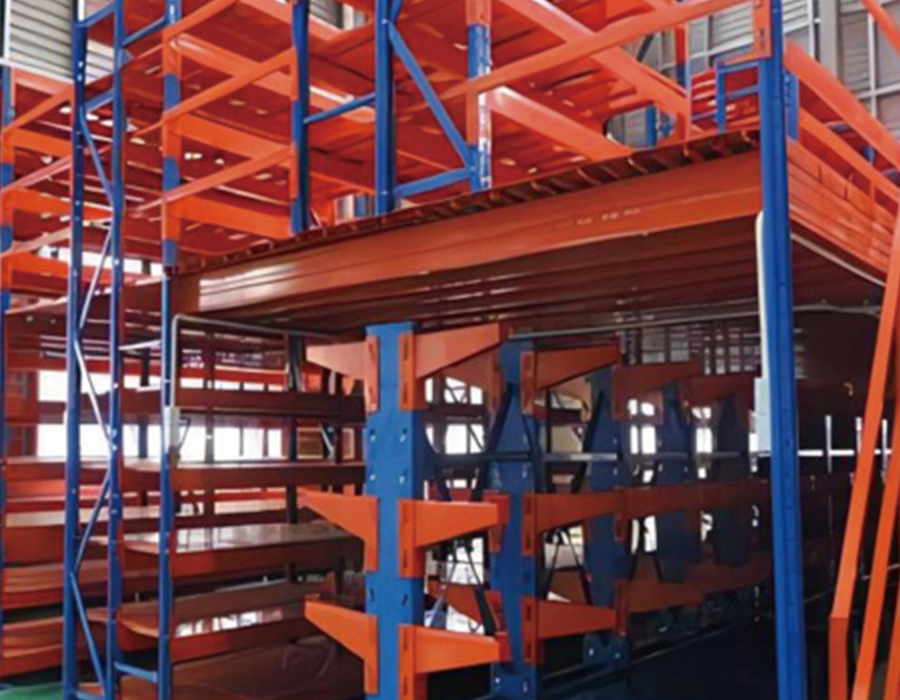
Even the best warehouse storage racks become a liability if they're installed poorly or overloaded. Rack collapses are rare, but when they happen, they're almost always tied to preventable mistakes: missing safety pins, overloaded beams, or racks that were never anchored to the floor properly.
Racks should always be bolted to the floor using the anchors specified by the manufacturer. Skipping this step to save time during installation is one of the most common causes of tip-over accidents, especially in warehouses with forklift traffic nearby.
Every rack level should have a clearly posted weight capacity, and that number should never be treated as a suggestion. Overloading a single beam doesn't just risk that shelf — it can cause a chain reaction that damages the entire rack row.
A few other safety habits worth building into your routine:
Warehouse storage racks are built to last for years, but only with regular upkeep. A quick monthly inspection can catch small issues before they turn into costly repairs or safety hazards.
Look for bent beams, rust spots, loose bolts, and any visible dents from forklift contact. Damaged components should be replaced immediately rather than left in place "for now" — a single weakened beam can compromise the stability of an entire rack section. Keeping a simple maintenance log also helps you track wear patterns and plan replacements before a failure happens.
Even experienced operations managers fall into a few predictable traps when setting up racking systems. Knowing them in advance can save you time, money, and headaches down the road.
Warehouse storage racks are a long-term investment, not just a one-time purchase. Taking the time to choose the right type, install it correctly, and maintain it consistently pays off in fewer accidents, smoother workflows, and a warehouse that actually works for your business instead of against it.
Our Professional Team
Is Ready to Support You.


 Warehouse Storage Racks Manufacturers




 English
 Español