 2026.09.15
 Industry News
Picture a warehouse at the end of a shift: pallets of finished goods waiting in the receiving bay, raw material staged in the center aisle, and forklift drivers weaving around product that should have been put away hours ago. The root cause is rarely a lack of floor space. It is unused vertical space. Heavy duty industrial pallet racks exist to convert that empty height into working storage, but only when they are specified correctly. Get the frame height, beam rating, and aisle width right, and the same footprint can hold far more pallets with a cleaner, safer operation. Get them wrong, and you end up with damaged product, stressed drivers, and a warehouse that struggles to pass its next safety audit.
Content
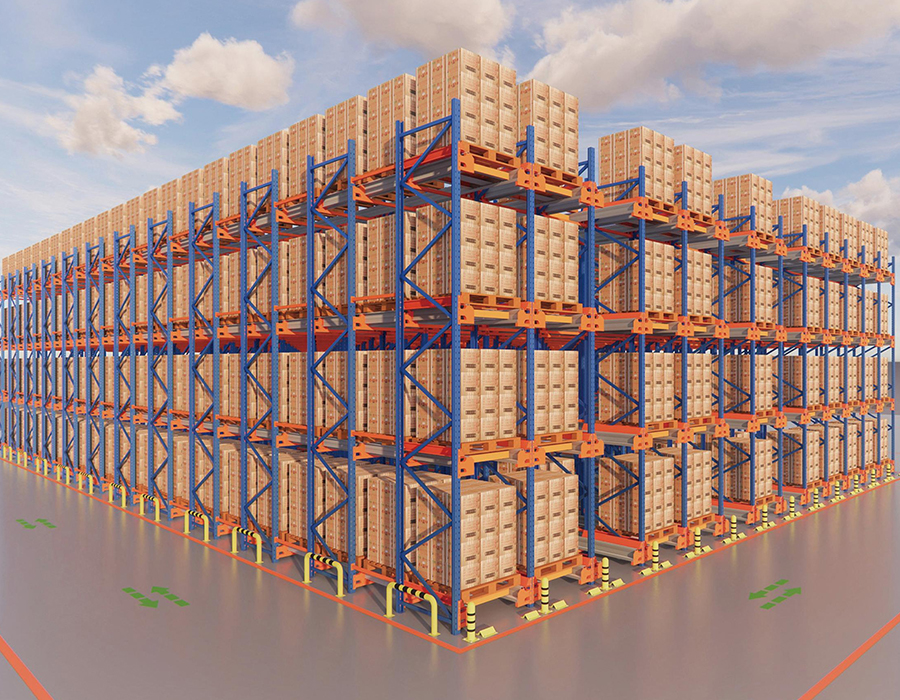
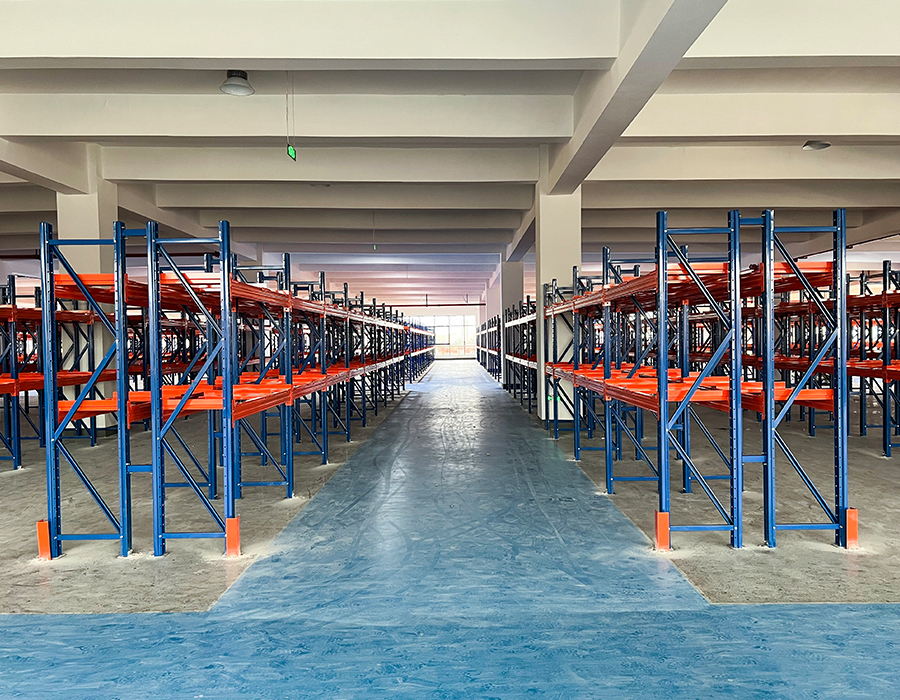
A heavy duty industrial pallet rack is a structural storage system built from steel upright frames, horizontal step beams, and diagonal bracing. It is engineered to store palletized loads at height and to absorb repeated forklift handling. The term "heavy duty" is not a marketing label; it refers to measurable engineering parameters. Beam pairs on standard selective racks commonly support 2,500 to 5,000 lbs per level (roughly 1,100 to 2,300 kg). Heavy duty systems can exceed 10,000 lbs per level when frames, beams, and floor anchoring are designed as one system.
The distinction from light and medium duty shelving matters long before the rack arrives. A boltless shelf rated at 150 kg or 500 kg per layer is designed for manual picking and lighter unit loads. A heavy duty pallet rack must handle dynamic loads during put-away, the concentrated point loads of uneven pallet boards, and the lateral forces of impact during daily operation. If your goods move by pallet jack or forklift, you need a system that treats impact as a normal operating condition, not an exception.
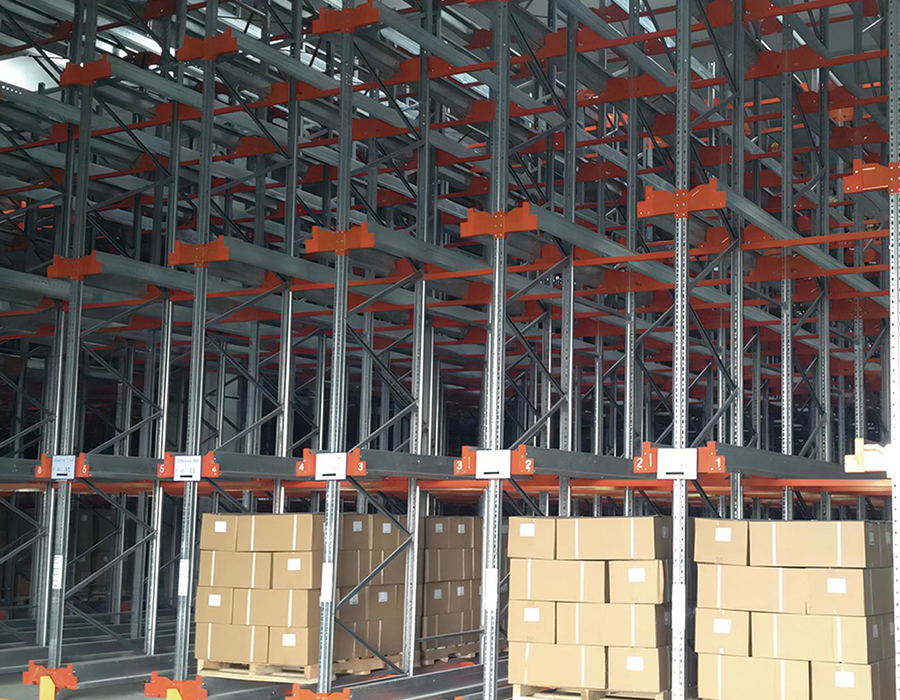 Heavy-Duty Pallet Racking System for Dynamic Warehouse LoadsBuilt for forklift and pallet jack operations, this racking handles dynamic loads, concentrated point loads, and daily impacts. Three-stage quality control ensures reliable performance over decades, making it a strong choice for high-demand storage.View Product →
Manufacturing quality is part of the load rating. In a production base like Huijian's 58,000 m² plant, every rack component passes through raw material inspection, in-process checks at each manufacturing step, and a final pre-shipment inspection. That three-stage protocol is the practical difference between a rack that performs reliably for two decades and one that develops loose connections in its first season.
Pallet rack selection starts with one question: how much selectivity can your inventory tolerate? The common heavy duty configurations are selective racking, drive-in and drive-through racking, push-back racking, and cantilever racking. Each one changes the relationship between storage density and pallet access.
| Configuration | Pallet Access | Storage Density | Best Fit | Typical Beam Pair Rating |
|---|---|---|---|---|
| Selective racking | Every pallet from the aisle | Low to medium | Mixed SKUs, high throughput | 2,500-5,000+ lbs per level |
| Drive-in / drive-through | LIFO or FIFO from one or both sides | High | Large blocks of the same SKU | 2,000-4,000 lbs per level |
| Push-back racking | LIFO, 2 to 6 pallets deep | Medium to high | Seasonal SKUs, moderate turnover | 2,500-4,000 lbs per level |
| Cantilever racking | Every load from the aisle | Low | Long and bulky items: steel, lumber, furniture | Up to 10,000 lbs per arm level |
Selective racking is the default for most warehouses because every pallet is accessible from the aisle and SKU segregation stays clean. Drive-in systems trade that accessibility for density: the forklift enters the lane itself, so only the last-loaded pallet is reachable unless you use a drive-through layout. Push-back racking sits between the two, using carts on rails to deepen the lane while keeping each SKU in its own channel. Cantilever racks handle products that do not fit on a standard pallet, such as steel bars, lumber, and long furniture components.
The decision is always an access-and-density trade-off. If you store large quantities of a few SKUs and drivers can follow a strict loading sequence, drive-in or push-back will fit more pallets into the same cubic space. If order profiles change every month, the flexibility of selective racks usually delivers better overall efficiency.
Every pallet rack quotation carries two numbers: beam capacity and frame capacity. Beam capacity is stated per beam pair under a uniformly distributed load across the beam length. That number drops when the load concentrates near mid-span, when the span is extended, or when a damaged pallet transfers weight through a small contact area. Frame capacity is the total load the upright may carry, typically the sum of all beam levels, and it depends on frame height, bracing pattern, and whether the rack is anchored to a sound concrete floor.
Look for the deflection criterion as well. Most rack systems are designed so horizontal beam deflection stays within about 1/180 of the span under full design load. For a 2.7 m beam, that means no more than roughly 15 mm of sag. If a supplier will not confirm the deflection limit in writing, treat it as a warning sign.
Not every storage problem needs a 10,000 lb beam. If your heaviest pallet stays below 800 kg per layer and operators pick by hand or with a pallet jack, heavy duty boltless shelving often delivers the same organization at a lower cost per position.
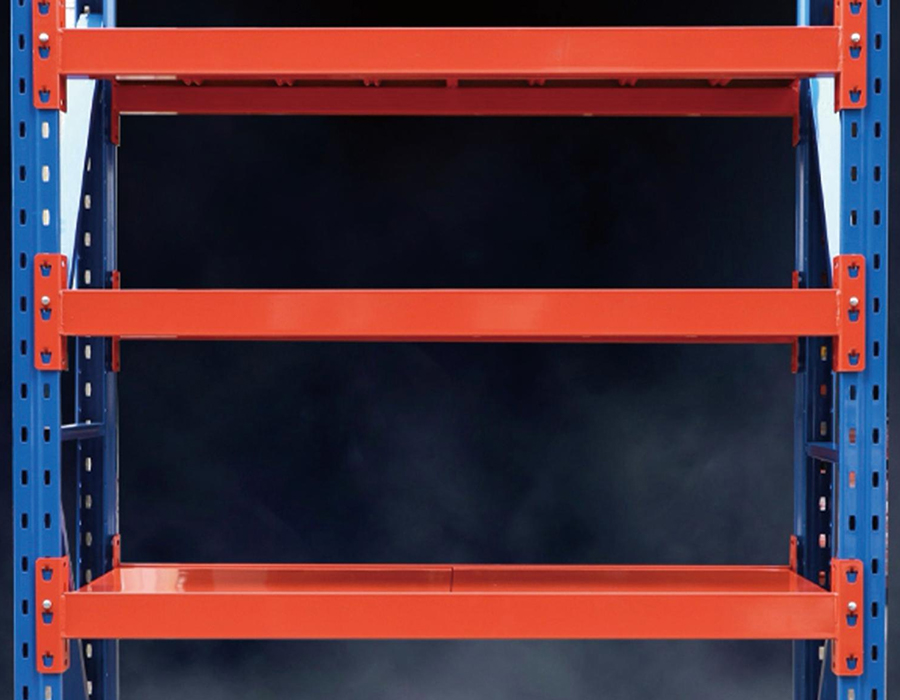 Heavy-Duty Boltless Racking with 800 kg Shelf CapacitySupporting over 800 kg per level with reinforced uprights and safety locking pins, this tool-free adjustable shelving suits heavy case picking or residual stock, offering a cost-efficient alternative to full pallet racking for sub-800 kg loads.View Product →
Many warehouses run both systems side by side: pallet racks for full-pallet put-away, heavy duty boltless shelving for case picking, kitting, and residual stock. Define the heaviest real-world load in each zone, not the brochure maximum, and let that number drive the product choice.
Pallet rack safety is governed through workplace rules, structural standards, and building codes in most markets. Even where local regulations are less developed, the operating principles are identical, because the risk is identical: a loaded rack is a structural asset holding heavy weight above people and equipment.
A rack that has been struck hard by a forklift is a structural hazard even when it still looks straight. Transfer the load, mark the damaged area, and have the manufacturer or a qualified engineer assess it before returning it to service. For a closer look at load limits, inspection intervals, and repair thresholds, see our heavy duty industrial pallet rack guide.
Before requesting quotations, collect the measurements that will drive both price and performance:
For non-standard building heights, clearances, or load combinations, request a custom-engineered layout. A manufacturer with an in-house engineering center can adapt standard rack modules to your ceiling profile without re-inventing the structural concept. That is the difference between working around a building limitation and removing it.
Pallet racks look like a commodity until something fails. A rack system has a design life measured in decades, and the differences between suppliers show up in steel gauge, punching consistency, finish quality, and the accuracy of the holes that beams lock into. None of these are visible from the end of an aisle.
Anhui Huijian Intelligent Equipment Co., Ltd. is a warehouse shelving manufacturer with its own 58,000 m² production base in the Guangde Economic Development Zone. Six production lines support an annual capacity of 180,000 sets of warehouse racks. The plant operates under ISO 9001:2015 and applies three-stage quality control: inspection of incoming raw materials, in-process checks during each production step, and a final comprehensive inspection before shipment. For a buyer, that translates into consistent frame geometry, beams that lock in cleanly, and a protective finish that still looks credible after a year of daily forklift traffic.
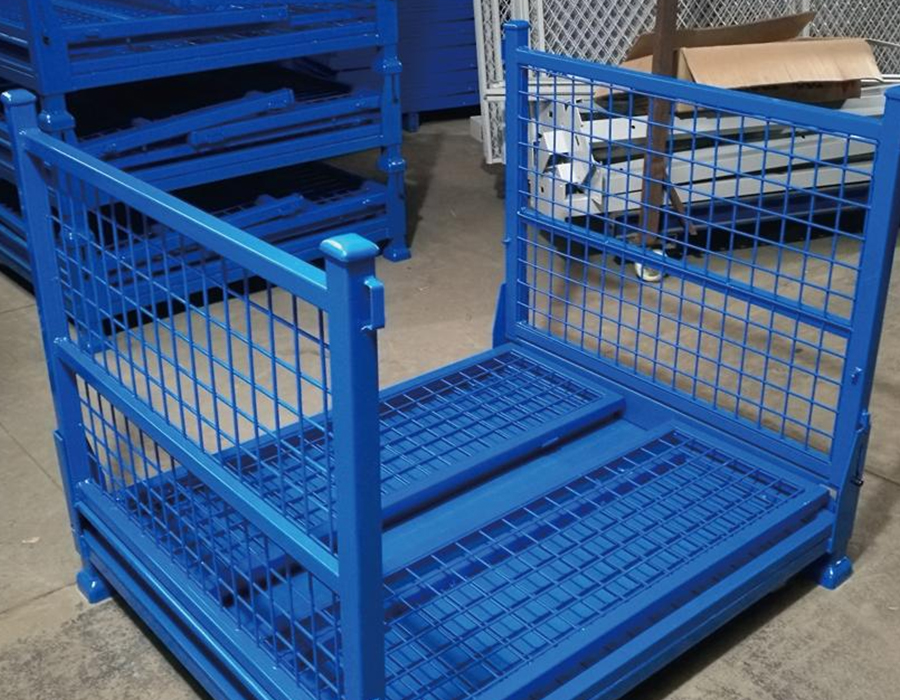
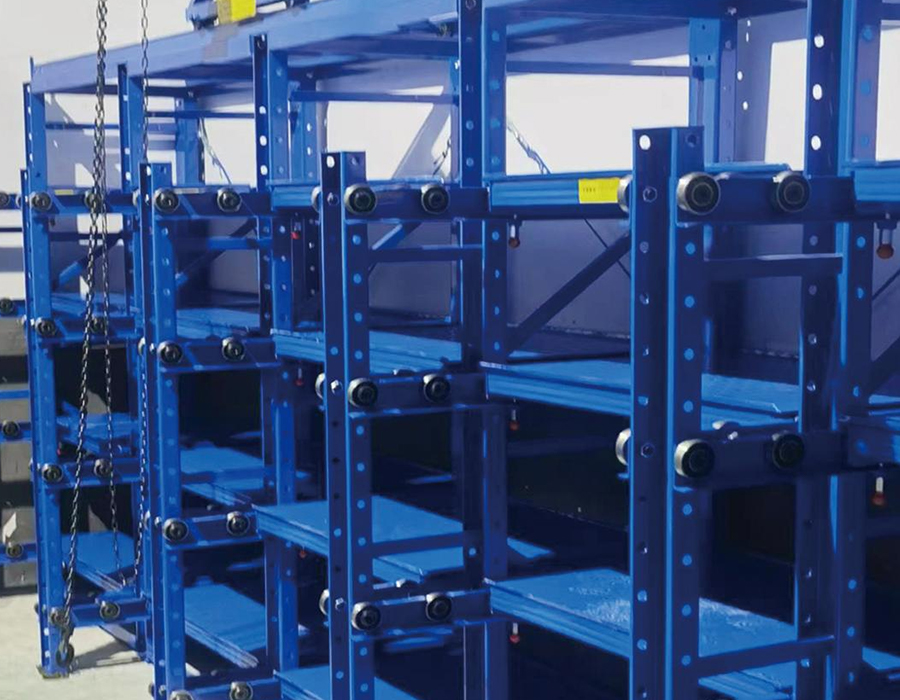
Working directly with a manufacturer also makes consolidation easier. The same factory that builds heavy duty pallet racks also produces heavy duty boltless shelving, industrial workshop material racks, metal pallets, stackable racks, and steel platforms. When a project needs more than one rack family, one supplier can coordinate production and delivery instead of leaving you to integrate products from multiple vendors.
If rack height passes the point where forklift-only picking becomes slow, a steel platform in the same project gives workers a fixed access level and expands usable area without enlarging the building footprint.
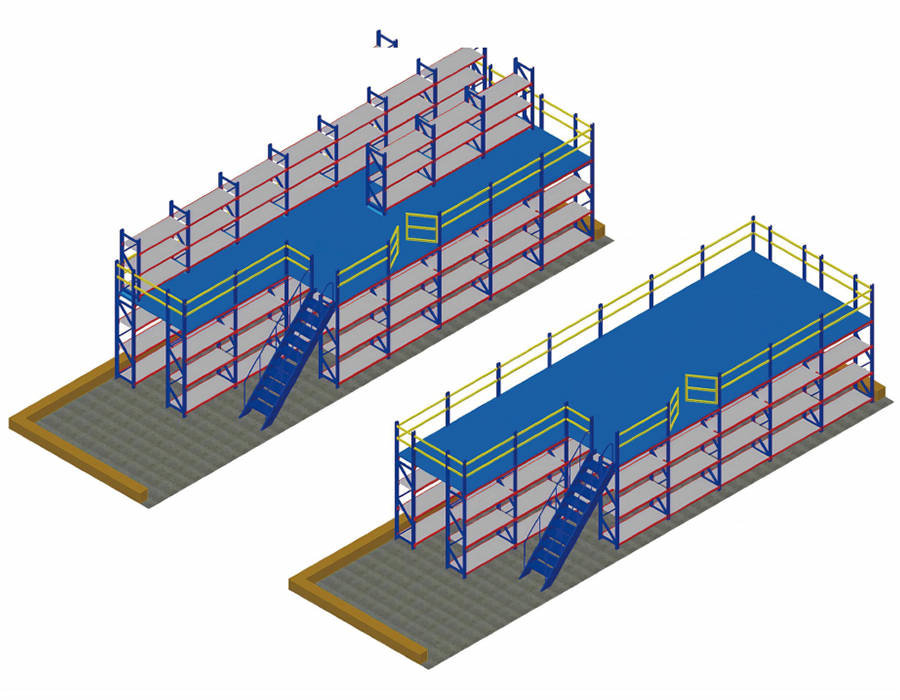 Steel Platform Mezzanine for Expanded Usable Floor SpaceA fully engineered steel platform with interlocked columns, hot-rolled beams, and locking floor slabs provides fixed access for workers and adds usable area without enlarging the building. Ideal when rack heights slow forklift-only picking.View Product →
Ask how the platform connects to the rack structure, how stairs and guardrails comply with local safety rules, and whether the whole assembly is covered by one engineering calculation. A supplier that designs racks, platforms, and pallets under one roof keeps the load path consistent from the concrete floor to the top beam.
The right heavy duty industrial pallet rack system pays for itself in measurable ways: more pallet positions per square meter, shorter travel times, and a calmer warehouse when orders peak. Start with the real pallet, measure the building, choose the access strategy, and verify the supplier's manufacturing and quality credentials. Do that, and the system you install today will still be earning its floor space a decade from now. To compare rack families for your operation, browse the full product range.
Our Professional Team
Is Ready to Support You.


 Warehouse Storage Racks Manufacturers




 English
 Español