 2026.06.03
 Industry News
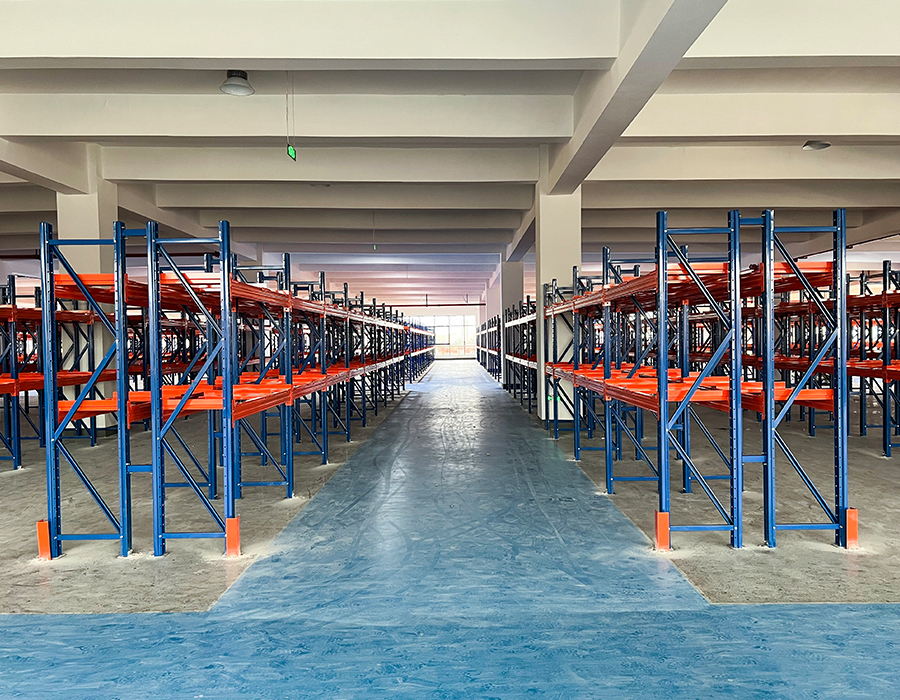
Standard pallet racking handles the majority of warehouse storage requirements. But when you are storing heavy machinery components, dense raw materials, steel coils, automotive parts, or bulk industrial goods, standard systems run out of margin quickly. Heavy duty industrial pallet racks are engineered specifically for the loads, environments, and operational intensity that exceed what roll-formed light-gauge systems were designed to handle. This guide covers what sets heavy duty racking apart, how to read and apply load capacity specifications correctly, which configuration suits which application, and what to verify before committing to a system that will anchor your warehouse operations for a decade or more.
Content
The term "heavy duty" is applied loosely across the racking industry, and not all products marketed under that label are genuinely built for demanding industrial conditions. A rack qualifies as heavy duty by meeting three specific criteria simultaneously: elevated load capacity, impact-resistant construction, and material specifications that go beyond standard cold-rolled light-gauge steel.
In practice, heavy duty industrial storage racks typically support between 5,000 and 10,000 lbs per beam level — compared to 2,500 to 4,000 lbs for standard selective pallet rack configurations. Frame (upright) capacities on heavy duty systems start at 20,000 lbs per upright pair and can exceed 50,000 lbs on fully structural configurations. The uprights themselves are manufactured from thicker steel profiles — typically 7 to 11 gauge rather than the 12 to 14 gauge common in standard roll-formed systems — and feature double-welded column construction and reinforced bracing to resist both static overload and dynamic impact forces from forklift traffic.
The environment matters as much as the load. Heavy duty warehouse racking systems are expected to perform reliably in high-traffic facilities where forklift contact is frequent, in cold storage environments where material properties change under sustained low temperatures, in outdoor or semi-outdoor locations where galvanized or specially coated steel is required, and in seismic zones where standard anchor specifications are insufficient. A rack that is "heavy duty" in name but built to standard material and connection specifications fails in each of these conditions.
Understanding the difference between structural and roll-formed steel is the most important technical concept in heavy duty pallet rack selection. These two manufacturing methods produce steel with fundamentally different structural properties — and the right choice for your application depends on matching those properties to your operational reality.
Roll-formed rack is manufactured by feeding cold steel sheet through a series of roller dies that progressively bend it into the target profile — typically a teardrop or keyhole-punched column. The cold-rolling process adds tensile strength through the bends and folds, and the resulting system is lighter, faster to install, and easier to reconfigure than structural steel. Standard roll-formed uprights handle 15,000 to 35,000 lbs per upright pair depending on height and gauge. Beam connections are typically clip-in or drop-in, making beam height adjustments a tool-free, one-person operation.
The limitation is impact resistance. Roll-formed columns — particularly in lighter gauges — are vulnerable to permanent deformation from forklift contact. A single impact that bends an upright beyond 3mm deviation from plumb requires that column to be taken out of service immediately under RMI safety standards. In high-traffic industrial environments where forklift interaction is constant, this creates a maintenance liability that accumulates over time. Heavier-gauge roll-formed systems (10 or 11 gauge) improve this substantially, but when load requirements or impact frequency push further, structural steel is the engineering answer.
Structural pallet rack is fabricated from hot-rolled steel — raw iron shaped at high temperature into C-channels and I-beams, then welded into finished components using bolted connections rather than clip connectors. This manufacturing process produces significantly thicker, denser profiles with higher inherent rigidity. Structural uprights routinely support column loads exceeding 50,000 lbs per pair, and structural beam capacities range from 3,000 to over 20,000 lbs per pair depending on beam depth and span. The bolted connections are rigid joints — unlike the clip-in connections of roll-formed systems — which distributes load more evenly across the entire frame assembly.
The practical advantages show up in environments where roll-formed systems fail. Structural racks withstand forklift impacts that would permanently deform roll-formed columns. They are the mandatory choice for drive-in and drive-through configurations, where forklifts operate inside the rack structure and upright contact risk is inherent. They are also preferred for cold storage and freezer environments — their hot-rolled steel can be more easily galvanized to a consistent coating depth, and bolted connections do not rely on clip-in tolerances that tighten or loosen under repeated thermal cycling. Installation requires more skilled labor and takes longer than roll-formed systems, and the per-unit cost is higher — but for operations that justify their use, the longer service life and lower maintenance frequency produce a superior total cost of ownership over a 15 to 20 year lifespan.
A growing number of industrial facilities use hybrid configurations that combine structural uprights with roll-formed step beams. The structural uprights provide the column strength and impact resistance needed at the frame level, while step beams allow wire decking to be fitted more effectively than on purely structural systems. This approach delivers the critical strength where it matters most — at the upright, where forklift impact damage concentrates — while retaining the beam-adjustment flexibility of roll-formed systems. Hybrid configurations are particularly common in food and beverage distribution facilities and multi-temperature warehouses where both durability and operational flexibility are required.
Load capacity in heavy duty industrial racking is governed by three interdependent specifications. Getting any one of these wrong — even when the other two are correctly sized — creates a safety risk that is not always visible until a structural failure occurs.
| Specification | Definition | Heavy Duty Typical Range | Critical Note |
| Beam Pair Capacity (UDL) | Max total weight across one pair of beams at one shelf level, assuming evenly distributed load | 5,000–20,000+ lbs (2,300–9,000+ kg) | Beam capacity drops significantly as span length increases — a beam rated for 8,000 lbs at 8ft may carry only 4,000 lbs at 12ft |
| Frame (Upright) Capacity | Total combined weight all beam levels can apply to one upright pair | 20,000–50,000+ lbs per pair | Frame capacity decreases as upright height increases, even with the same steel gauge — tall frames require heavier profiles |
| Point Load vs. UDL | Whether load is evenly distributed or concentrated at a single point on the beam | Point load capacity is typically 50–60% of published UDL rating | Irregularly shaped industrial loads (machinery, coils) often concentrate weight at contact points — verify with point load specifications, not UDL |
A practical calculation for heavy duty applications: identify the maximum weight of a single loaded pallet or storage unit, multiply by the number of positions per beam level, verify this total falls below beam pair UDL capacity with a minimum 25% safety margin, then sum all beam levels to confirm the total does not exceed the frame capacity. For industrial loads that are irregular — coiled steel, machinery components, bundled materials — always consult the manufacturer's point load data rather than relying on UDL ratings. OSHA requires that the load capacity placard displaying both beam and frame ratings be displayed prominently and legibly on each rack bay.
Heavy duty industrial pallet rack systems are not universal — they are specified for applications where standard racking would be operating at or beyond its safe limits. The following industries and storage scenarios represent the most common use cases.
Heavy duty industrial racking is not a single product — it encompasses several configuration types, each suited to different storage strategies and operational requirements.
The most common heavy duty configuration: individual pallet positions accessible from the aisle without moving adjacent loads. Available in both structural and heavy-gauge roll-formed versions. Best for facilities with diverse SKUs requiring direct access to each pallet, operating with reach trucks, counterbalance forklifts, or very-narrow-aisle equipment. Beam heights are adjustable in 2-inch increments on structural systems.
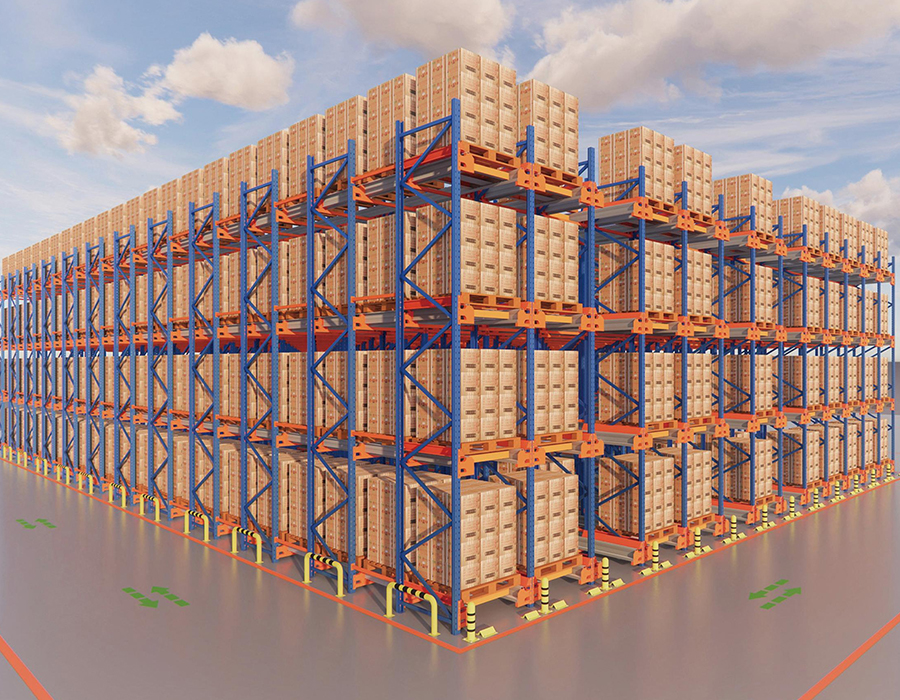
Drive-in configurations require structural steel — the nature of the system, where forklifts enter the rack structure and travel inside it, makes upright impact resistance non-negotiable. Drive-in rack stores pallets 3 to 10 positions deep per lane on guide rails, operating on LIFO rotation. It delivers storage density 75–85% higher than selective racking in the same footprint. Mandatory structural construction means drive-in heavy duty rack represents a higher initial investment per pallet position, offset by the floor space efficiency it achieves at scale.
Heavy duty cantilever systems store long, heavy, or irregularly shaped loads — structural steel, lumber, pipes, bar stock — on horizontal arms extending from a central vertical column without front uprights obstructing loading. Industrial cantilever arms are rated from 500 kg to several tonnes per arm depending on arm length and steel specification. Single-sided configurations are used against walls; double-sided back-to-back installations maximize aisle efficiency. Heavy duty cantilever systems in manufacturing environments are typically engineered to order, with arm spacing and column height specified to match the specific material lengths and weights being stored.
Double-deep racking stores pallets two positions deep per aisle, accessed with a pantograph or deep-reach attachment on the forklift. It increases storage density by approximately 40% compared to standard selective racking while maintaining direct access to the front position. For heavy duty applications, the second-position pallet must be within the beam capacity for both the front and rear positions combined — a load calculation step that is frequently overlooked during specification and leads to overloading of the rear beam position.
Purchasing heavy duty industrial pallet racking based on catalog capacity ratings without verifying the following parameters is one of the most common causes of post-installation compliance failures and structural underperformance.
Heavy duty racks carry larger loads, which means the consequences of structural failure are proportionally greater than with standard systems. A rigorous inspection and maintenance regime is not optional — it is the operational practice that keeps the capacity ratings valid over the rack's service life.
Formal rack inspections should be conducted every 6 to 12 months by a qualified rack safety inspector, with documented findings and corrective action records retained on-site. In high-traffic industrial facilities — where forklift cycles are frequent and heavy — monthly visual inspections by designated warehouse personnel using a standardized checklist are considered best practice between formal audits. Any upright showing visible bending, twisting, or deformation should be unloaded and evaluated immediately; do not wait for the next scheduled inspection.
The most effective investment in rack longevity in industrial environments is upright protection equipment installed at commissioning, not retrofitted after the first incident. End-of-aisle structural column guards, floor-level bollards at aisle approaches, and post protectors on all uprights within the forklift travel path cost a fraction of replacing a damaged structural upright — which requires unloading the affected bay, sourcing a matched replacement column, and professional reinstallation before the position can return to service. In facilities with 24-hour forklift operations, rack protection equipment pays back its purchase cost in avoided repair incidents within the first year of operation in most cases.
Heavy duty industrial pallet racks are a specialized infrastructure investment that requires precise specification to deliver the safety, compliance, and operational performance that industrial storage demands. The distinction between structural and roll-formed steel determines your system's impact resistance and service life in demanding environments. The three-part load capacity framework — beam UDL, frame capacity, and point load — determines whether your system is genuinely rated for the loads it will carry. And the pre-purchase verification checklist — steel grade, column gauge, seismic design, surface treatment, and compliance documentation — determines whether the rack you receive actually matches the rack you specified.
For industrial applications where loads are heavy, environments are demanding, and forklift traffic is constant, the difference between a correctly specified heavy duty system and an undersized standard system is not a matter of marginal performance — it is the difference between a rack that serves your facility reliably for 15 to 20 years and one that accumulates damage, generates compliance risk, and requires premature replacement. Invest the time in specification now to avoid the cost of getting it wrong later.
Our Professional Team
Is Ready to Support You.


 Warehouse Storage Racks Manufacturers




 English
 Español