 2026.06.03
 Industry News
Walk into almost any distribution center, manufacturing plant, or fulfillment warehouse and you will find the same fundamental infrastructure holding it together: rows of steel racking stretching toward the ceiling, loaded with pallets, bins, and long goods. Warehouse storage racks are the backbone of modern inventory management — and yet choosing the wrong type, specifying the wrong load capacity, or ignoring safety requirements can turn that backbone into a liability. This guide covers everything you need to make the right decisions the first time, from rack type selection through load ratings, safety compliance, and long-term maintenance.
Content
Not all warehouse racking systems serve the same purpose. The right type depends on your product mix, inventory turnover rate, available floor space, and the material handling equipment your team operates. Here is a breakdown of the most widely used systems.
Selective pallet racking is the most common warehouse storage solution globally, and for good reason. Every pallet position is directly accessible via forklift without moving other loads, which makes it ideal for facilities with a wide variety of SKUs and high product turnover. Standard configurations stack two to six beam levels high, with bay widths typically sized to hold two standard pallets per level. The trade-off is storage density: because every aisle provides access to only one row of racks on each side, selective racking uses more floor space per pallet stored than high-density alternatives. For warehouses where picking speed and inventory accessibility outweigh space efficiency, it remains the default choice.
Drive-in racking eliminates the aisle-per-row requirement by allowing forklifts to enter the rack structure itself to deposit or retrieve pallets stored three to ten positions deep. This dramatically increases storage density — often by 75 to 85% compared to selective racking in the same footprint. Drive-in systems operate on a Last-In, First-Out (LIFO) basis, meaning the last pallet loaded is the first one available. Drive-through racking adds a second entry point at the opposite end to enable First-In, First-Out (FIFO) rotation. Both configurations are best suited for large volumes of the same SKU with lower turnover frequency, such as seasonal goods, raw materials, or cold storage products where rotation is less critical.
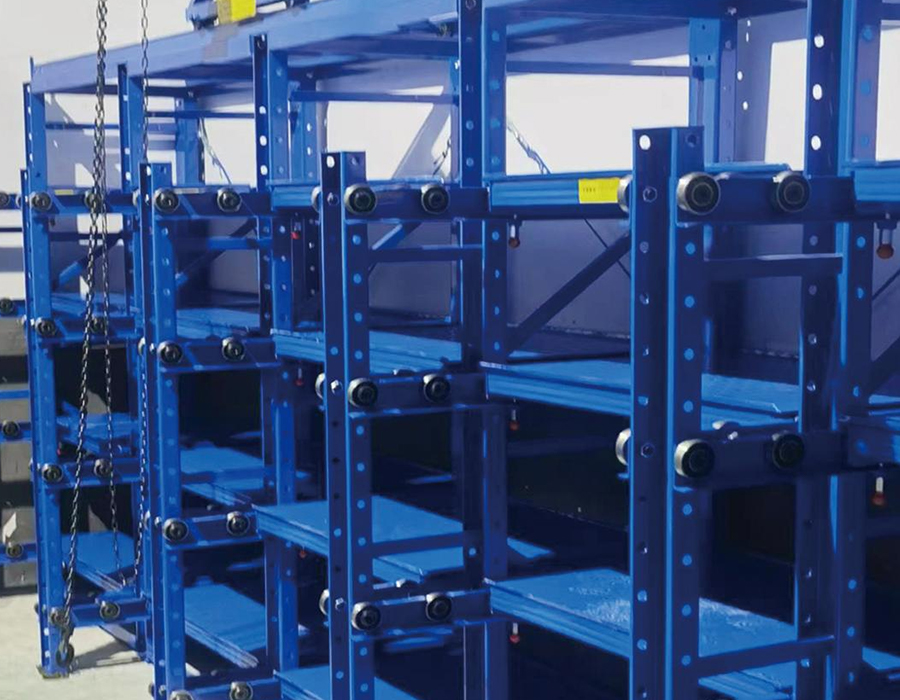
Push-back racking stores pallets two to six positions deep on inclined rails fitted with wheeled carts. Loading a new pallet pushes the existing ones back; when the front pallet is removed, gravity brings the next one forward automatically. This gives operations a high-density storage solution with LIFO product rotation and a significantly reduced aisle requirement compared to selective racking. The system suits applications with multiple pallets of the same SKU stored per lane, and is particularly popular in food and beverage distribution where space efficiency and organized rotation are both priorities. Unlike drive-in racks, forklifts never enter the rack structure — which reduces the risk of upright damage from forklift contact.
Pallet flow racking uses gravity-fed roller or wheel conveyor lanes angled slightly downward from the loading end to the picking face. Pallets are loaded at the high end and travel by gravity to the front, delivering strict FIFO rotation automatically. This system is the preferred choice for perishable goods, pharmaceuticals, and any inventory where date-controlled rotation is a compliance requirement rather than a preference. Pallet flow lanes can be configured 5 to 20 positions deep, yielding storage densities approaching drive-in systems while maintaining proper FIFO access — a combination that drive-in racks cannot achieve.
Cantilever racking is purpose-built for long, bulky, or irregularly shaped items that do not fit on standard pallet beams: steel bars, timber, pipes, furniture, rolled flooring, and lumber are the most common applications. The design uses a central vertical column with horizontal arms extending outward — no vertical front uprights to obstruct loading. Arms can be adjusted in height and configured for single-sided (wall-mounted) or double-sided (aisle-facing) layouts. Cantilever systems are available in light, medium, and heavy-duty arm ratings to match load weights ranging from a few hundred kilograms up to several tonnes per arm.
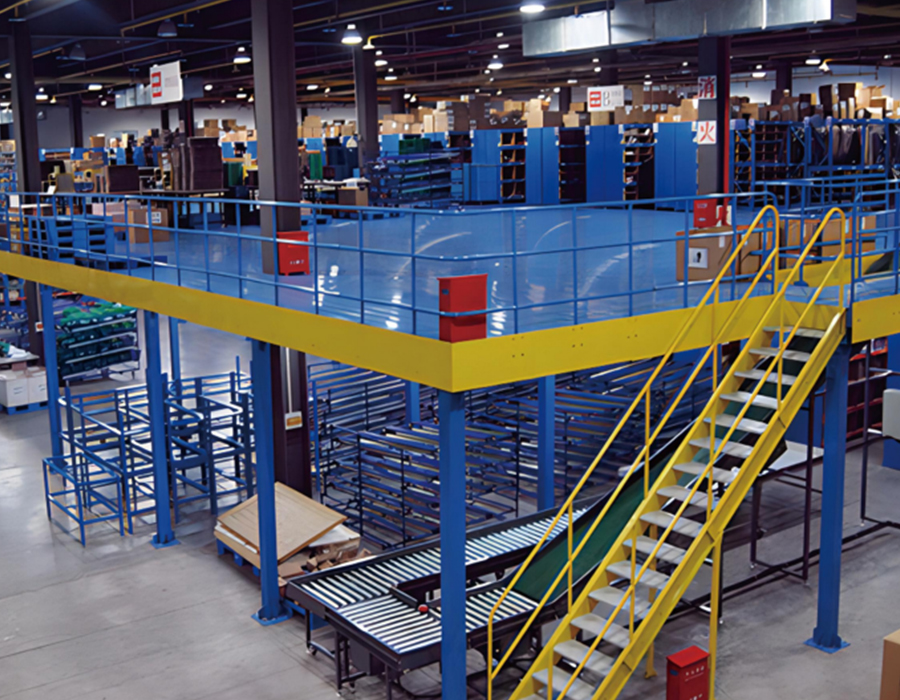
Mezzanine floors are a structurally supported elevated platform installed within an existing warehouse to effectively double or triple usable floor space without building expansion. When combined with pallet racking beneath and shelving or pick bins above, a mezzanine system transforms underutilized vertical space into productive storage and work area. Mezzanines can be dismantled and relocated if operational needs change, making them a semi-permanent solution that preserves capital flexibility. They are particularly valuable in high-ceiling facilities where the upper volume would otherwise go entirely unused.
Load capacity is one of the most misunderstood specifications in warehouse racking — and misreading it is one of the leading causes of rack collapse accidents. There are two distinct ratings to understand: beam capacity and frame capacity, and they must both be respected independently.
| Rating Type | What It Measures | Typical Range | Common Mistake |
| Beam (Shelf) Capacity | Max weight per pair of horizontal beams at one level | 2,500–5,000 lbs (1,100–2,300 kg) standard; up to 8 tonnes heavy-duty | Treating it as weight per single pallet, not total weight across both pallets on the level |
| Frame (Upright) Capacity | Total weight the vertical frame can carry across all beam levels | 9 tonnes (standard) to 20+ tonnes (heavy-duty) per frame pair | Loading all levels to beam maximum without checking combined frame limit |
In practical terms, a typical selective pallet rack compartment holds two pallets on a pair of beams — the combined weight of both pallets must not exceed the beam pair rating. A commonly cited benchmark is 4,000 lbs (approximately 1,800 kg) per beam level for a standard two-pallet bay. To calculate total safe load for a rack bay, multiply the beam pair capacity by the number of levels, then verify that the resulting total does not exceed the upright frame's rated capacity. Always apply a working safety buffer below the stated maximums: operating at or near the rated limit leaves no margin for the dynamic loads generated by forklift impacts or uneven weight distribution.
OSHA regulations in the United States require that load capacity ratings be displayed prominently on the rack structure itself, and that Load Application and Rack Configuration (LARC) drawings be maintained on-site and made available to safety inspectors on request. Failure to maintain these records is a compliance violation independent of whether overloading has actually occurred.
The best warehouse storage rack system for a given facility is determined by four variables working together: product type, throughput rate, floor footprint, and budget. The table below maps common operational scenarios to the most appropriate racking type.
| Operational Scenario | Recommended Rack Type | Key Reason |
| Many different SKUs, frequent picking | Selective pallet racking | Direct access to every pallet without moving others |
| High-volume single-SKU bulk storage, LIFO acceptable | Drive-in racking | Maximum density; fewer aisles needed |
| Medium SKU range, need density + LIFO | Push-back racking | High density without forklift entry into rack structure |
| Perishables, pharmaceuticals, strict FIFO required | Pallet flow racking | Automatic gravity-fed FIFO rotation |
| Long or irregularly shaped products (pipes, timber) | Cantilever racking | No front uprights; full-length load support |
| High-ceiling facility needing more floor-level storage | Mezzanine system | Converts unused vertical space without building expansion |
Most high-performing warehouses use a combination of rack types rather than a single system throughout. A common configuration pairs selective racking in the primary pick zone — where product variety and access speed matter most — with drive-in or push-back systems in the bulk reserve area, and cantilever sections for oversized inventory. Planning the layout as a hybrid from the outset, rather than retrofitting as needs evolve, produces a more efficient and cost-effective result.
Rack collapse is one of the most serious hazards in warehouse environments. OSHA estimates that structural failures and falling objects from racks cause significant injuries and billions of dollars in inventory damage annually. The following safety requirements and practices apply to any warehouse storage racking installation.
Before finalizing any warehouse storage rack purchase, verify the following specifications against your operational requirements. Missing any of these details during procurement frequently leads to costly reconfiguration or compliance issues post-installation.
The purchase price of warehouse industrial storage racks is only one component of total cost of ownership. The decisions made during planning have a larger cumulative impact on operating costs over a 10 to 15-year rack lifespan than the initial unit price.
Start with a professional rack layout drawing that optimizes aisle widths for your specific forklift type. Reach trucks operate efficiently in narrower aisles than counterbalance forklifts, and specifying the wrong aisle width wastes significant floor area permanently. A rack layout drawn against your actual forklift specifications can recover 15 to 25% more storage positions in the same footprint compared to a generic layout.
Invest in quality upright protection from the outset rather than retrofitting after the first forklift impact. Column guards and end-of-aisle protectors cost a fraction of replacing a damaged upright and the associated downtime, insurance claims, and potential injury investigation that follow a rack incident.
Finally, plan for growth at the specification stage. Purchasing uprights rated for two additional beam levels above your current configuration costs minimally more at the time of purchase but eliminates a major capital expense when storage capacity needs to expand. Similarly, choosing a beam connector system compatible with your supplier's future product range protects against obsolescence during any future reconfiguration.
Warehouse storage racks are a long-term infrastructure investment, not a commodity purchase. The type you choose determines your storage density, operational workflow, and inventory rotation capabilities for a decade or more. The load specifications you verify — or fail to verify — determine whether your facility is safe and compliant or exposed to serious risk. And the planning decisions you make before the first rack is installed determine how efficiently your warehouse operates every day thereafter.
Use the rack type comparison, load capacity framework, and pre-purchase specification checklist in this guide to anchor your decisions in operational specifics rather than catalog browsing. The right warehouse racking system is the one that fits your products, your processes, your compliance environment, and your growth trajectory — not simply the cheapest option that meets today's minimum requirements.
Our Professional Team
Is Ready to Support You.


 Warehouse Storage Racks Manufacturers




 English
 Español