 2026.09.23
 Industry News
If your warehouse moves pallets by the dozen, a heavy duty pallet racking system is more than steel and shelves. It is the quiet engine behind fast receiving, safe storage, and accurate order picking. At Huijian Intelligent, we have spent years helping businesses turn vertical space into dependable storage. This guide walks you through the parts, load ratings, layout choices, safety details, and integration options that make a pallet racking system work for the long haul.
Whether you are expanding a distribution center or reorganizing a manufacturing plant, the same principle applies: the racking must match your pallets, your handling equipment, and your daily flow. Get that match right, and every aisle, beam level, and pick face supports your operation instead of slowing it down.
Content
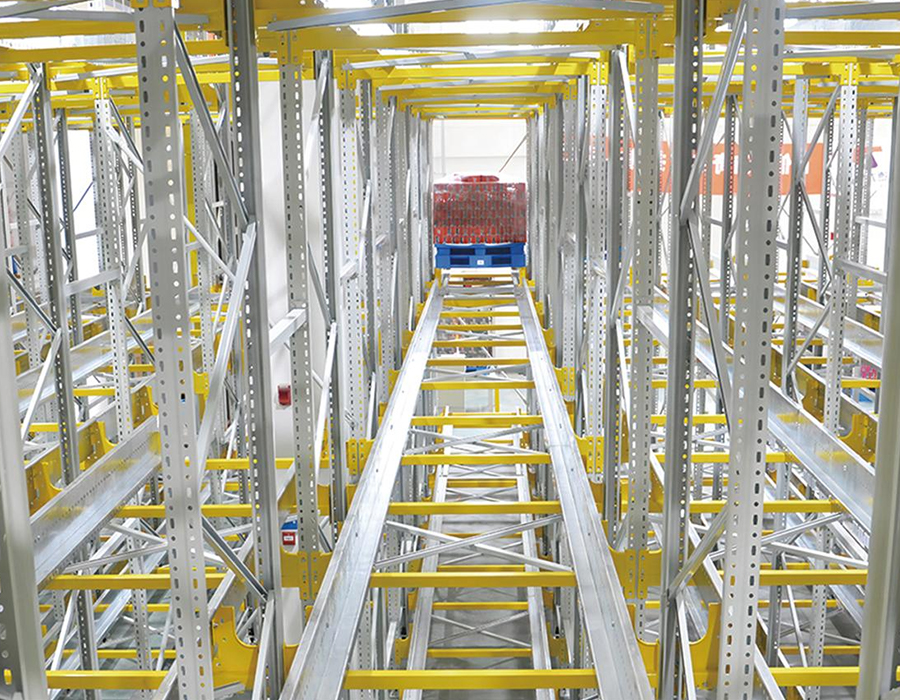
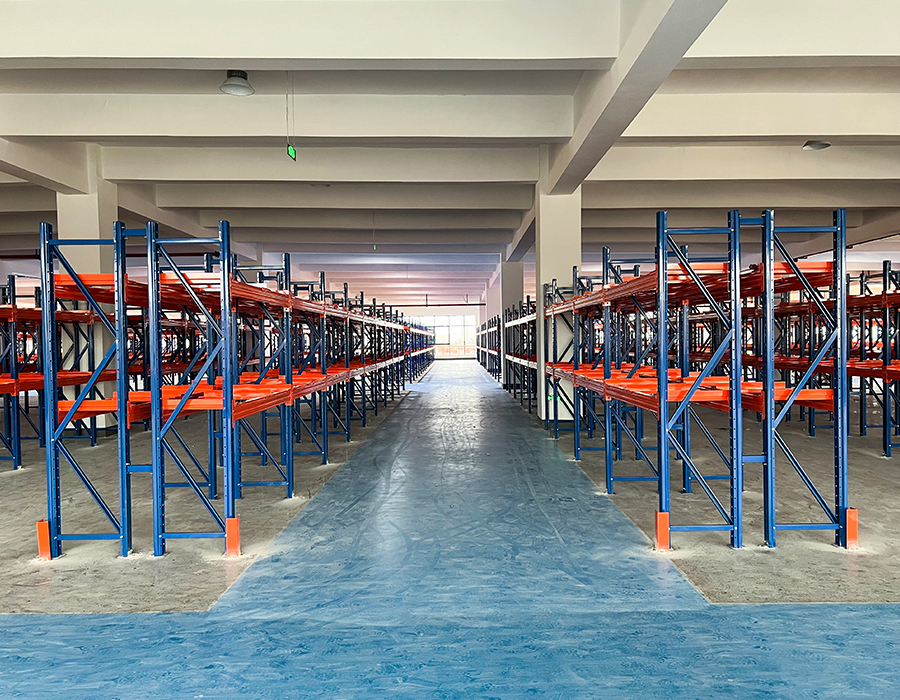
Heavy duty pallet racking is built for palletized loads and forklift access. The upright frames are engineered to carry substantial weight, while the horizontal beams are sized to span between frames without excessive deflection. Unlike light-duty boltless shelving, which is often loaded by hand, a heavy duty pallet racking system is designed around pallet dimensions, fork entry, and high-turnover storage.
The core idea is simple: keep loads off the floor, use vertical space, and allow direct access to each pallet position. But the details matter. A system that is undersized for the load, poorly anchored, or fitted with the wrong decking can become a safety risk and a bottleneck.
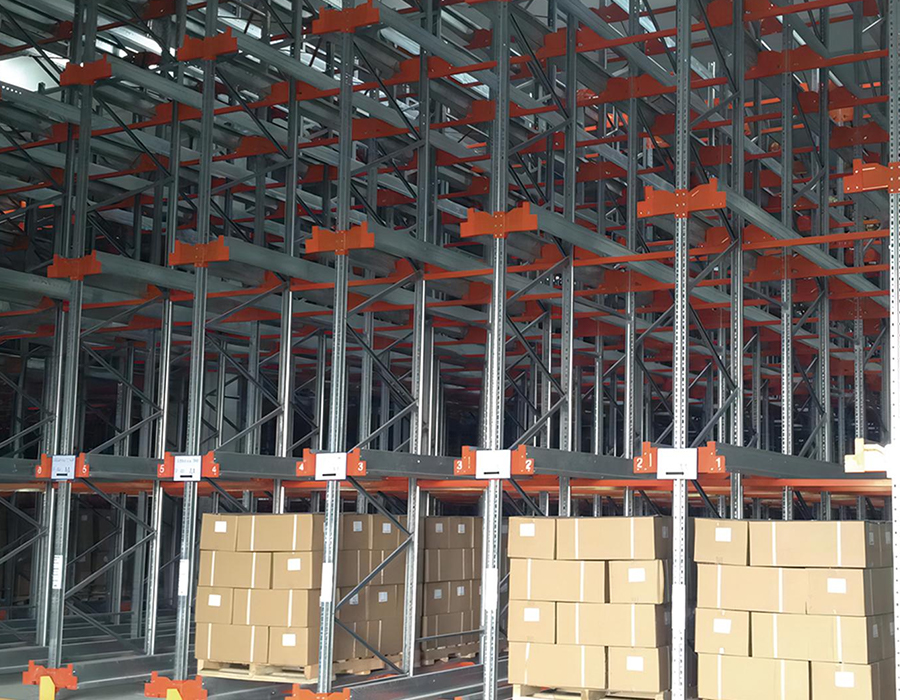 Heavy-Duty Pallet RackingHeavy-duty pallet racking encompasses a full range of industrial-grade storage systems built around the pallet as the primary storage unit — including selective, doubl...View Product →
| Component | Primary Function | Specification Check |
|---|---|---|
| Upright frame | Supports beams and transfers load to the floor | Frame capacity, depth, height, and steel gauge |
| Horizontal beam | Carries pallets at each storage level | Beam capacity, length, profile, and deflection |
| Beam locking pin | Keeps beams engaged with frames | Proper engagement and regular inspection |
| Decking | Provides a stable surface for pallets or loose loads | Wire mesh, steel deck, or none, plus capacity |
| Column guard | Protects uprights from forklift impact | Placement at high-traffic corners and end aisles |
| Floor anchor | Secures frames to the slab | Slab thickness, anchor type, and seismic requirements |
Heavy duty is not a single number. It is a relationship between the frame, the beam, the decking, and the load. A rack may have a high frame capacity but a lower beam capacity, and the system is only as strong as the lowest rated component in the load path.
When you review a quote or specification, look at how capacity is expressed. Beam capacity is often stated as a uniformly distributed load per pair of beams. Frame capacity is stated as a maximum load per upright frame. If pallets are placed unevenly, if the load is concentrated on a small area, or if decking is missing, the effective capacity can drop.
For operations that need heavy storage without palletized handling, boltless shelving can be a practical companion. For example, our heavy duty boltless shelving is rated for 800 kg per layer, making it useful for dense hand-loaded storage. However, for forklift-served pallet positions, a purpose-built pallet racking system remains the correct choice.
If you want a deeper technical walkthrough, our article on heavy duty industrial pallet racks covers additional selection points.
A heavy duty pallet racking system succeeds or fails in the layout. The goal is to balance storage density with access speed. Too many aisles waste floor space; too few aisles slow down forklifts and increase damage risk.
A common starting point is to choose a frame height around four feet below the ceiling, but that is only a starting point. Real projects need to account for beam levels, pallet heights, and the reach height of your lift equipment.
Heavy duty racking is strong, but it is not indestructible. Safety comes from good design, proper installation, and daily discipline. Beam locking pins must be fully engaged. Uprights need protection in busy aisles. Loads must be stable, and damaged pallets should be removed from service.
Wire decking is a popular load containment option because it allows water from sprinklers to pass through, supports smaller items, and reduces the chance of products falling through the rack. Steel mesh panels, netting, and solid decking are also used depending on the load and fire strategy. Column guards and rack end barriers protect frames from impact.
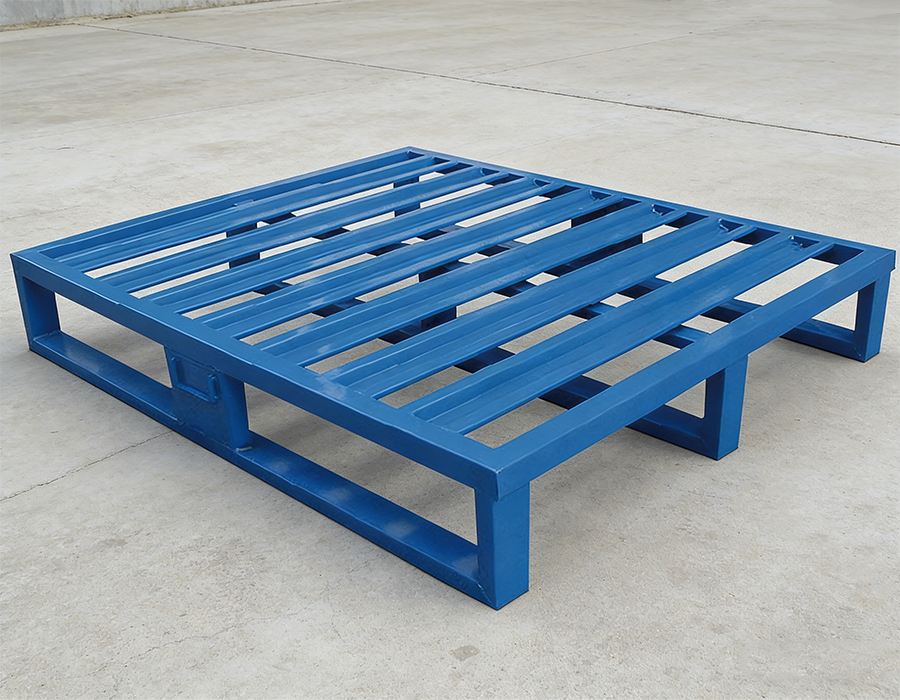
Metal pallets are another practical layer of safety and efficiency. They provide a rigid, repeatable base for heavy loads, resist moisture and pests, and can be designed to suit automated or forklift handling. Using the right pallet with the right rack reduces load shifting and extends the life of both assets.
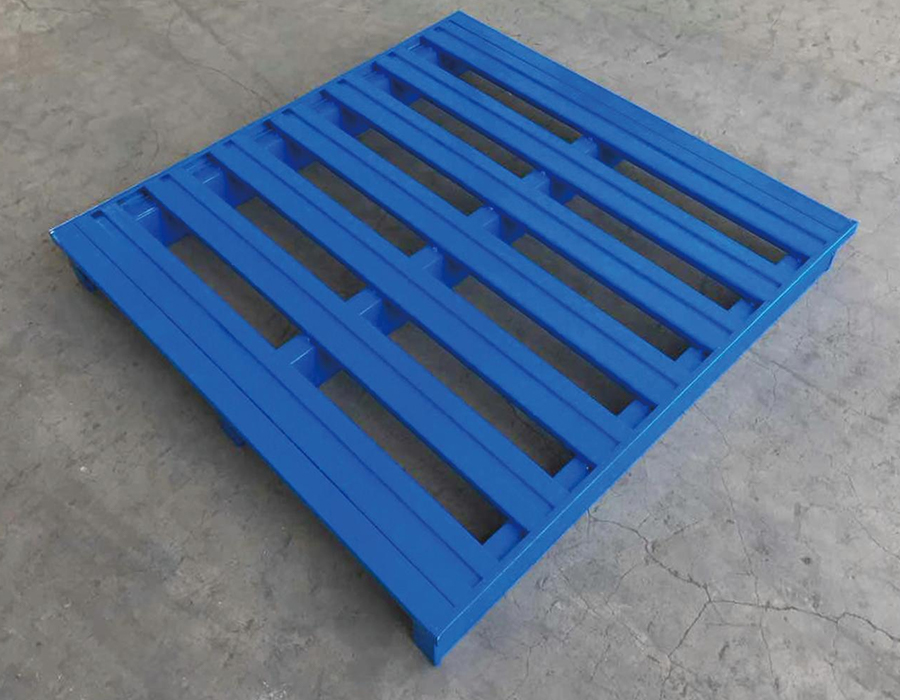 Metal PalletMetal pallets are fabricated from structural steel or galvanised steel plate, delivering a static load capacity of 5 tonnes per unit, a service life three times that o...View Product →
Most warehouses do not rely on one type of racking alone. A heavy duty pallet racking system often works alongside other storage equipment to cover different flows. Fast-moving SKUs may sit in selective pallet racking, while slower or bulkier items move to high-density or overflow areas.
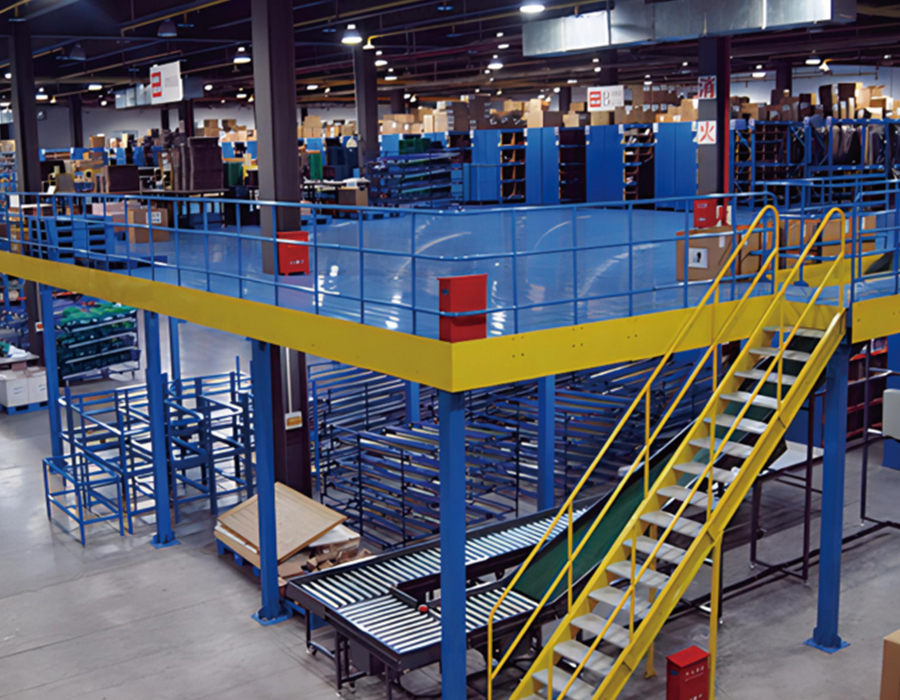
Steel platforms and mezzanines can add a second or third working level without expanding the building footprint. Stackable racks support temporary storage and turnover. Industrial workshop material racks keep tools, dies, and components organized at the point of use. Together, these systems create a more complete storage environment.
If you are reviewing options, our warehouse racking portfolio shows the range of products we manufacture for different storage and workshop needs.
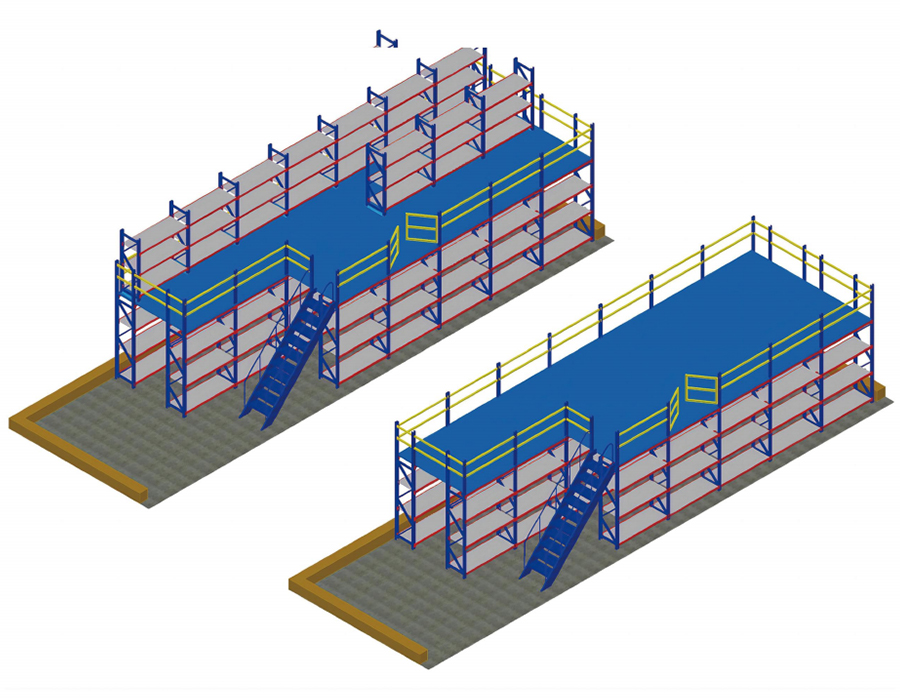 Steel PlatformThe structure is fully assembled. The columns are usually made of square tubes, round tubes and U-shaped columns. The main and secondary beams are usually made of hot-...View Product →
Specifications matter, but so does the supplier behind them. Anhui Huijian Intelligent Equipment Co., Ltd. is a warehouse shelving manufacturer based in Guangde, Anhui. We combine research, production, sales, and after-sales service in one operation. Our facilities include a 1,500 square meter R&D center, 58,000 square meters of factory space, six production lines, and an annual capacity of 180,000 sets of intelligent warehouse shelving.
We follow ISO9001:2015 quality management practices and inspect materials at receiving, each production step, and final shipment. That structure helps us deliver consistent racking components and respond to customized requirements. From selective pallet racking to workshop material storage, our team focuses on practical layouts that fit real workflows.
You can read more about how we adapt storage systems to different needs in our update on customized warehousing solutions.
A heavy duty pallet racking system is a long-term investment. The right system starts with accurate load data, a thoughtful layout, and safety features that protect people and products. It ends with a supplier who can deliver consistent quality and support your operation as it grows.
At Huijian Intelligent, we believe good storage is not about filling space. It is about creating order, speed, and confidence in every aisle. If you are planning a new racking project or upgrading an existing warehouse, start with the load, plan the flow, and choose components that work as a system.
Visit our Yiwu showroom:
No. 983-985, Chouzhou North Road, Yiwu, Zhejiang, China
Bring your project details:
WeChat ID: Patrick01. Search this ID in WeChat to add us directly.
Our Professional Team
Is Ready to Support You.


 Warehouse Storage Racks Manufacturers






 English
 Español