 2026.09.08
 Industry News
When a forklift drops a full pallet onto a rack beam, the structure receives more than static weight. The fork tines can strike a beam, the load can shift, and repeated cycles can cause fatigue. Many warehouse managers discover the limits of their racking only after a frame starts bending or a beam begins to sag. To avoid that scenario, you need to make decisions based on concrete data before you purchase heavy duty industrial pallet racking. This guide walks through the load factors, manufacturing considerations, and procurement steps that matter.
Content
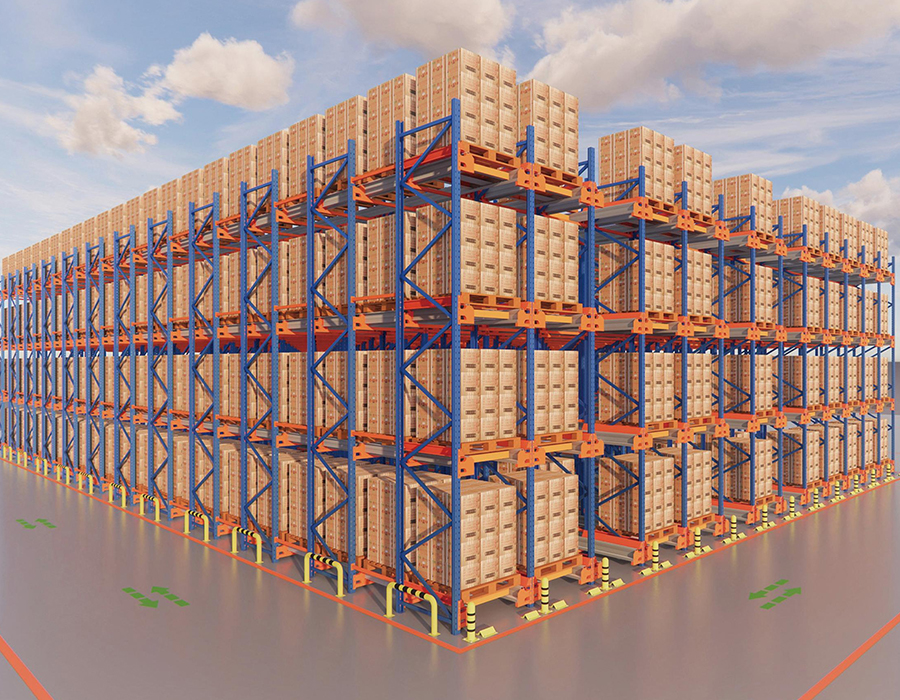
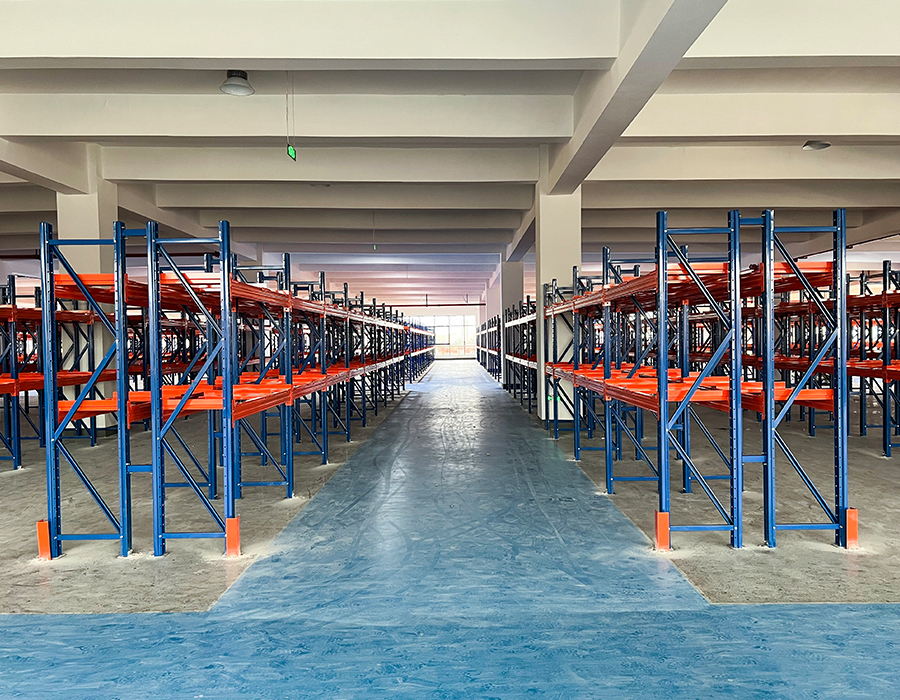
Heavy duty industrial pallet racking is a structural system engineered to store palletized goods and to handle the stress of forklift operations. It consists of vertical uprights, horizontal beams, and base connections that distribute the load to the floor. Unlike light duty shelving, which is typically assembled with single-piece panels and relies on manual picking, heavy duty racking is designed around the dimensions of a pallet and the wheelbase of a material handling vehicle.
A typical heavy duty system will have a beam load rating of 1,000 kg or more per level, while the complete upright frame is rated to support the combined load of several beam levels. The exact figure depends on the steel section, the length of the beam, and the type of load. A shorter beam can often carry more weight than a longer one at the same cross-section. That is why a supplier must know your pallet size before they can give a meaningful load calculation.
Common components of a heavy duty pallet racking system include upright frames, horizontal beams, beam locks, safety pins, base plates, and protective guards. Some manufacturers also provide wire mesh decking or steel panels to support loose items. These accessories help prevent small cartons from falling and protect the structure from accidental collisions.
| Racking Type | Typical Load per Level | Common Handling Method |
|---|---|---|
| Light duty boltless shelving | Up to 150 kg | Manual picking |
| Medium duty boltless shelving | Up to 500 kg | Manual or cart |
| Heavy duty industrial pallet racking | 1,000 kg or more | Forklift / reach truck |
Several numbers determine whether your racking will remain safe over its useful life. Focus on the following three areas before approving a quotation.
The beam load rating is the maximum weight that a pair of beams can support when the load is evenly distributed across the full length. In practice, stress can be concentrated by oddly shaped pallets or uneven load placement. A pallet sitting on a defective pallet board, for instance, creates a point load that can exceed the beam's safe stress. A prudent safety margin is to select a beam whose rated capacity is at least 20 percent above your heaviest pallet weight. This margin also helps you stay on the safe side when forklift operators position loads a little too quickly.
Uprights are the vertical columns that carry the load down to the floor. They are rated for a maximum compression load, which declines as the height increases. The same frame that is perfectly safe at 5 meters may need a heavier or thicker section if you install it at 8 meters. Check the upright frame capacity against the total number of beam levels and the average pallet weight you intend to store. Do not forget to include the impact of wind when the racking is placed near an open bay door. The same principles are covered in more detail in this industry guide to heavy duty industrial pallet racking.
Heavy duty racking relies on a flat and solid floor. Concrete that is uneven by a few centimeters per 3 meters can cause frames to lean, which reduces the load capacity and affects the accuracy of beam levels. Ask your contractor to measure floor flatness before installation. The racking is usually anchored with expansion bolts or chemical anchors to prevent it from tipping. If you have a floor with a high level of moisture or oil, choose the appropriate fasteners and protective coatings.
Pallet racking is most useful when the warehouse handles full-case pallet loads with mechanical equipment. Manufacturing plants often use it to keep raw materials close to production lines while still allowing forklift access. Distribution centers depend on high-density storage to increase the number of pick faces per square meter. Third-party logistics providers need racking that can adapt to different customer pallet sizes and weights.
In each of these environments, the racking is not just a place to put things. It shapes the flow of material through the building. If the beam height is too low or the frame spacing is too wide, operators lose time walking long distances. If the loading aisle is too narrow, forklifts have to make risky turns. That is why an experienced supplier will ask about your pallet dimensions, forklift turning radius, and required throughput before recommending a configuration.
After the load calculations are finished, the actual quality of the manufactured racking determines what you get on site. A supplier with in-house production can control the steel thickness, the welding quality, and the surface treatment. A trading company that outsources to several factories may struggle to keep the same quality level and tolerances.
Anhui Huijian Intelligent Equipment Co., Ltd. has its own production base in Guangde Economic Development Zone, with a 58,000-square-meter factory and six production lines. The company reports an annual capacity of 180,000 sets of warehouse racking. It also runs a 1,500-square-meter R&D center to develop and refine its products. These numbers do not automatically mean every rack is perfect, but they do give you a better starting point for consistency and lead times.
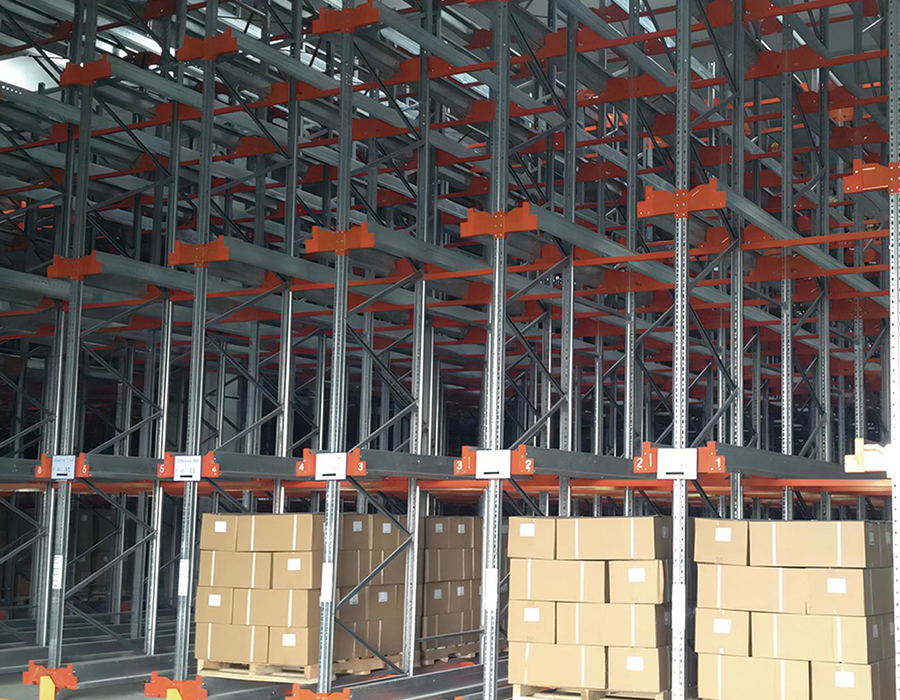 Heavy-Duty Pallet Racking for Industrial StorageThis racking range supports various configurations and inventory rotation methods, built in a large in-house facility. Its manufacturing scale and R&D center suggest reliable quality and flexible customization, making it worth considering for your warehousing needs.View Product →
With in-house production, it is also possible to produce non-standard sizes without depending on a third party. If you need a specific beam length to fit against a wall or a custom frame height to clear a duct, a manufacturer that owns its tools can respond more flexibly. Ask your supplier about customization limits and the additional lead time for custom orders.
Even experienced buyers can make avoidable errors when purchasing heavy duty industrial pallet racking. The following issues appear frequently in warehouse upgrades.
The cheapest racking often uses thinner steel or less-expensive surface treatment. If the rack fails earlier, you spend more on repairs and replacements. A slightly higher initial investment in a thicker upright can be cheaper over five years.
Warehouse layouts change as inventory grows. If you buy a racking system that cannot be extended vertically or from each bay, you may need to tear it down and start over. Look for racking that uses adjustable beams and compatible components.
A supplier should be able to provide load test reports, material certificates, and installation instructions. You do not need an engineer to draw these up, but you do need concrete documents. A manufacturer that cannot answer whether its rack meets ISO9001:2015 quality management principles is not ready to support a serious project.
Use this checklist to guide your final comparison of heavy duty industrial pallet racking suppliers.
A heavy duty pallet racking system is a structural investment. The extra 30 minutes you spend confirming load ratings and checking a manufacturer's capabilities can prevent a costly failure. By focusing on real load data rather than general descriptions, you will end up with a racking system that fits your products, your equipment, and your future.
Our Professional Team
Is Ready to Support You.


 Warehouse Storage Racks Manufacturers




 English
 Español