 2026.06.10
 Industry News
Content
Mezzanine shelving is a structural storage solution that creates an additional elevated level within an existing building, effectively doubling or even tripling usable floor space without the cost or disruption of a full construction project. Rather than expanding outward — which requires permits, land, and significant capital — mezzanine storage systems build upward, taking advantage of the vertical clearance that most warehouses, distribution centers, factories, and retail back-of-house spaces already have but rarely use. The elevated platform is supported by a steel column and beam framework, and shelving or racking systems are installed both on the mezzanine level above and in the space beneath it.
Unlike permanent building additions, most mezzanine shelving systems are modular and semi-permanent, meaning they can be reconfigured, expanded, or even relocated if your business moves or your storage needs change. This flexibility, combined with their ability to dramatically increase storage density, makes them one of the most cost-effective investments a facility manager or business owner can make when floor space becomes a bottleneck.
Mezzanine floor shelving isn't a one-size-fits-all solution — but it comes remarkably close. The concept adapts to an impressive range of industries and building types, and the core value proposition remains the same across all of them: use the air above your head to store more without touching your existing footprint.
Warehouses are the most common environment for industrial mezzanine shelving. As SKU counts grow and inventory volumes increase, floor-level racking quickly runs out of room. A mezzanine level allows facilities to separate fast-moving and slow-moving stock, create dedicated pick zones above the main floor, or house packing and processing stations on the elevated deck while keeping bulk storage below. Many large fulfillment operations install multiple mezzanine tiers — two, three, or even four levels — to achieve extraordinary storage density within a single building envelope.
Retail environments with high ceilings — think big-box stores, auto parts retailers, or wholesale clubs — use mezzanine shelving to display additional product, house overstock close to the sales floor, or create administrative office space above the selling area. This keeps back-room inventory accessible without consuming valuable square footage that could otherwise be used for customer-facing displays.
In manufacturing plants, mezzanine racking systems are used to store raw materials, work-in-progress components, tooling, and finished goods close to the production line. This reduces material handling time significantly. The under-mezzanine space is often used for production equipment, quality control stations, or machinery that doesn't require overhead clearance, while the mezzanine deck above handles organized parts storage with shelving or bin systems.
Auto dealerships, fleet maintenance facilities, and independent repair shops use elevated shelving mezzanines to organize parts, fluids, tires, and seasonal inventory above the workshop floor. The raised storage area keeps the working area clear and safe while ensuring parts are still close at hand for technicians.
Understanding what makes up a complete mezzanine shelving installation helps you evaluate quotes accurately and communicate effectively with suppliers. Most systems share the same fundamental structural elements, though material specifications and load ratings vary considerably based on application.
Load capacity is the most critical technical specification in any mezzanine storage system, and it's one of the most commonly misunderstood. Mezzanine load ratings are expressed in pounds per square foot (PSF) — not total platform weight — and must account for all loads placed on the deck including shelving, stored products, personnel, and any machinery or equipment.
Standard mezzanine shelving installations are typically engineered for 125 PSF to 250 PSF for shelving and light storage applications. Heavy-duty industrial mezzanines designed to support pallet racking or machinery can be engineered to 500 PSF or higher. It's essential to calculate your actual load requirements before specifying a system — underbuilding is a serious safety risk, and overbuilding unnecessarily increases costs and structural complexity.
Keep in mind that load capacity is not uniform across the entire platform. Point loads — the concentrated weight of a shelving unit leg or machinery foot — are different from uniformly distributed loads and require specific engineering attention. Always work with a qualified structural engineer or a reputable mezzanine supplier who provides stamped engineering drawings as part of the installation package.
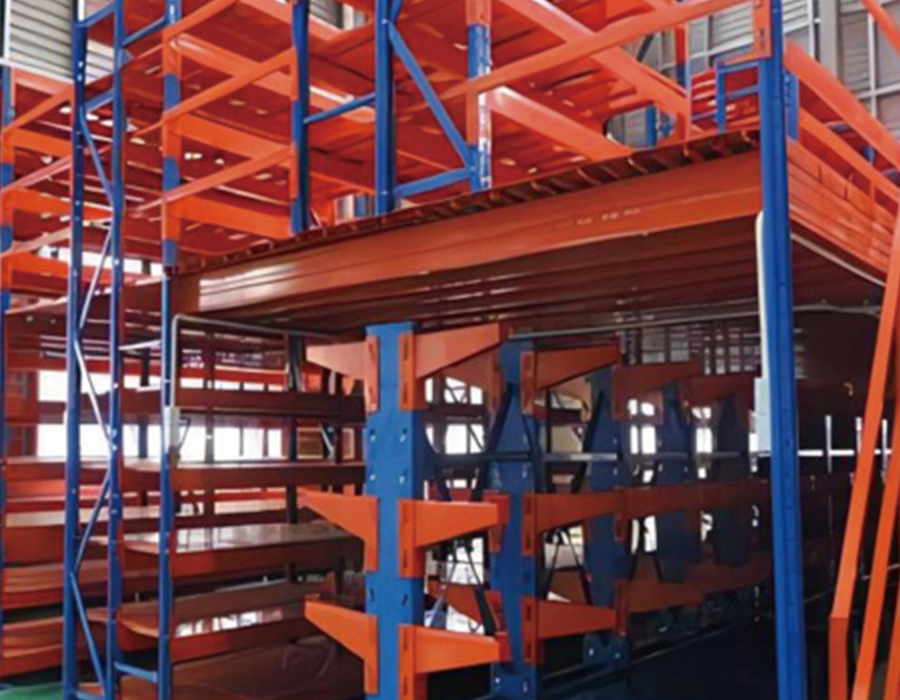
There are several distinct configurations of mezzanine shelving systems, each suited to different storage scenarios, ceiling heights, and operational workflows. The table below summarizes the most common types and their ideal applications.
| Mezzanine Type | Best For | Typical Load Range | Key Advantage |
| Rack-Supported Mezzanine | Warehouses with existing pallet racking | 250–500+ PSF | Uses racking as structural support; maximizes both levels |
| Freestanding Steel Mezzanine | General industrial and commercial use | 125–300 PSF | Versatile, relocatable, widely available |
| Shelving-Supported Mezzanine | Parts storage, retail back-of-house | 100–200 PSF | Lower cost; shelving serves dual purpose as structure and storage |
| Multi-Tier Mezzanine | High-ceiling facilities needing maximum density | 125–250 PSF per tier | 3–4 storage levels in one footprint |
| Modular Mezzanine | Leased facilities or growing businesses | 100–250 PSF | Fully reconfigurable; minimal site disruption |
A well-planned mezzanine shelving layout balances storage capacity with operational workflow, safety compliance, and future scalability. Rushing through the planning phase is one of the most common and costly mistakes facility managers make. Taking the time to work through these steps systematically will save you money, prevent redesigns, and deliver a system that actually works the way your team needs it to.
Mezzanine shelving requires a minimum clear height — measured from the finished floor to the lowest obstruction (beams, sprinklers, lights, HVAC ducts) — of typically 14 to 16 feet to achieve a usable mezzanine deck height of 7 feet above floor level. If your ceiling height is below 14 feet, a mezzanine may still be feasible for storage-only use (without personnel working on the deck), but this must be evaluated carefully. Measure at multiple points, as industrial buildings often have irregular roof profiles.
The nature of what you plan to store dictates almost every aspect of the mezzanine design — from load capacity and decking type to column spacing and access equipment. Are you storing small parts in bins that pickers will hand-select? Palletized goods moved by forklift? Long-length materials that need cantilever racks? Will operators walk the mezzanine level, or will goods be moved by conveyor or goods lift only? Defining these operational details before contacting a supplier ensures you get accurate quotes and an appropriate design rather than a generic one.
Before finalizing any mezzanine layout, walk the proposed footprint and identify existing floor drains, in-ground utilities, column locations, fire suppression sprinkler heads, and overhead obstructions. Mezzanine columns cannot be placed over floor drains or utility access points. Fire sprinkler systems often need to be extended or modified to provide coverage both above and below the mezzanine deck — a significant cost that must be included in your budget.
In most jurisdictions, installing a mezzanine floor shelving system above a certain size (often 50 square feet) requires a building permit, structural engineering drawings stamped by a licensed engineer, and a final inspection before use. Fire codes — particularly those related to sprinkler coverage, emergency egress, and occupancy load — are strictly enforced and must be addressed in the design. Reputable mezzanine suppliers will handle permit applications and provide stamped drawings as part of their service offering. Be cautious of suppliers who suggest you can skip the permit process.
Mezzanine shelving costs vary widely depending on size, load rating, access configuration, and regional labor rates. Understanding where the money goes helps you evaluate quotes and identify areas where you might value-engineer without compromising safety or function.
When floor space runs out, mezzanine shelving is one of several vertical storage strategies available. Understanding how it compares to alternatives helps you confirm it's the right solution — or identify situations where a different approach might serve you better.
| Solution | Space Efficiency | Cost Level | Flexibility | Best Scenario |
| Mezzanine Shelving | Very High | Medium–High | High (modular) | High-ceiling buildings with ongoing storage growth |
| Tall Pallet Racking | High | Low–Medium | High | Forklift-accessible pallet storage in tall buildings |
| Vertical Carousel / AS-RS | Very High | Very High | Low | High-value small parts with rapid retrieval needs |
| Building Expansion | Unlimited | Very High | Low | Long-term owned facilities with land available |
| Mobile Shelving | Medium–High | Medium | Medium | Low-ceiling spaces needing aisle consolidation |
Safety compliance is non-negotiable for mezzanine shelving installations. Beyond the legal obligations, meeting and exceeding safety standards protects your employees, reduces liability exposure, and prevents costly enforcement actions or mandatory shutdowns. In the United States, mezzanine installations must comply with a combination of federal OSHA regulations, local building codes, and fire authority requirements.
The mezzanine shelving market includes a wide spectrum of suppliers — from national turnkey solution providers to regional fabricators and equipment dealers who resell imported systems. Choosing the wrong supplier can result in under-engineered structures, permit delays, poor installation quality, and inadequate after-sales support. Here's what to look for when evaluating potential partners.
A mezzanine storage system is a significant capital investment, but when designed and utilized effectively, it can deliver a return that outperforms almost any other facility improvement. The key is treating it not just as a storage addition but as an operational tool that changes how your team works.
Start by calculating your cost per square foot of usable storage space before and after the mezzanine installation. In most cases, a mezzanine system delivers additional storage at 20–40% of the cost per square foot of leasing or building new space. If the mezzanine allows you to avoid relocating to a larger facility, the payback period can be measured in months rather than years.
Beyond raw storage capacity, consider workflow efficiency gains. A well-designed mezzanine shelving layout that puts slow-moving inventory above and fast-moving stock at ground level can meaningfully reduce picker travel distance, cut order fulfillment time, and reduce errors. Combine this with proper labeling, bin systems, and inventory management integration, and the mezzanine becomes a genuine productivity multiplier — not just extra square footage stacked on top of your existing operation.
Our Professional Team
Is Ready to Support You.


 Warehouse Storage Racks Manufacturers




 English
 Español