 2026.06.17
 Industry News
Content
Light-duty boltless shelving is a type of freestanding storage rack that snaps or locks together without the need for nuts, bolts, or special tools. Instead of threaded fasteners, these units rely on a rivet-style or clip-in connection — usually a metal beam that hooks directly into slotted steel uprights. The result is a sturdy, adjustable shelf that most people can assemble in under 30 minutes using nothing more than a rubber mallet.
The "light-duty" designation typically refers to units rated to hold between 150 and 600 pounds per shelf (or 500 to 2,000 pounds total capacity, depending on the model). This makes them perfectly suited for a wide range of everyday storage needs — from office supplies and pantry goods to toolboxes, seasonal décor, and small equipment. They are a step below heavy-duty industrial racking, which is designed for pallet loads or industrial warehouses, but considerably more robust than flimsy wire shelving or particle-board bookcases.
The core engineering behind boltless shelving is elegant in its simplicity. Each unit consists of four corner posts (uprights) with rows of pre-punched holes or slots at standard intervals — typically every 1.5 or 3 inches. Horizontal beams have small tabs or rivets on each end that lock into these slots when tapped into place. The shelf panel — usually made of particle board, steel decking, or wire mesh — then rests on top of the beams.
This design has two major practical benefits. First, it makes installation genuinely fast: an average 5-shelf unit can be assembled by one person in 20–30 minutes. Second, it makes reconfiguration simple. If your storage needs change, you can tap out the beams, move them to a different height, and snap them back in — no wrenches needed. This level of flexibility is something fixed-bolt shelving simply cannot match.
One of the biggest reasons boltless no-bolt shelving has become so popular is its versatility. The same basic design works in a surprising range of environments. Below are the most common use cases, along with what makes this type of shelving a good fit for each.
The garage is probably the single most popular setting for light-duty boltless steel shelving. It can handle paint cans, power tools, sports gear, automotive supplies, and storage bins with ease. Open steel shelving works especially well in garages because it doesn't trap moisture the way enclosed cabinets can, and it's easy to hose down or wipe clean. Most garage-grade units are coated with a powder-coat finish that resists rust and chipping over time.
Adjustable boltless shelving units fit perfectly in pantries and utility closets. Because shelf heights can be customized in small increments, you can organize tall cereal boxes, short canned goods, and bulky appliances all on the same unit with minimal wasted vertical space. Wire mesh shelf decking is a popular choice here because it allows air circulation and makes it easy to see what's stored underneath.
Small businesses, offices, and retail back rooms use boltless open shelving units to organize paper supplies, binders, inventory, and small merchandise. The clean, orderly appearance of a well-organized boltless unit also makes them suitable for storage areas that are visible to customers or clients. Many units are available in neutral gray, black, or chrome finishes that blend into professional environments.
Crafters, woodworkers, and hobbyists use light-duty boltless racking to keep supplies within easy reach. The open design means you can grab items quickly without opening doors or drawers. Shelves can be loaded with bins, jars, fabric rolls, or small machinery like label makers and heat guns. Many workshop users pair boltless shelving with labeled storage bins for a fully organized system.
Weight capacity is one of the most important specs to understand when shopping for light-duty boltless shelving, and it's also one of the most commonly misunderstood. There are two separate numbers to consider: per-shelf capacity and total unit capacity. These are not the same thing, and loading a shelf beyond its rating — even if the total unit rating hasn't been exceeded — can cause shelf deflection or failure.
| Capacity Range | Typical Use Case | Common Shelf Material |
| 150–250 lbs per shelf | Office supplies, light boxes, pantry goods | Particle board, wire |
| 300–400 lbs per shelf | Tool storage, paint, automotive supplies | Steel decking, heavy particle board |
| 500–600 lbs per shelf | Small equipment, bulk storage, stockrooms | Steel decking |
Always distribute weight evenly across the shelf surface rather than concentrating heavy items in the center. Center loading is where most sagging problems occur. If you're storing particularly dense items like books, water jugs, or metal parts, consider choosing a unit with steel decking rather than particle board — it handles concentrated loads significantly better.
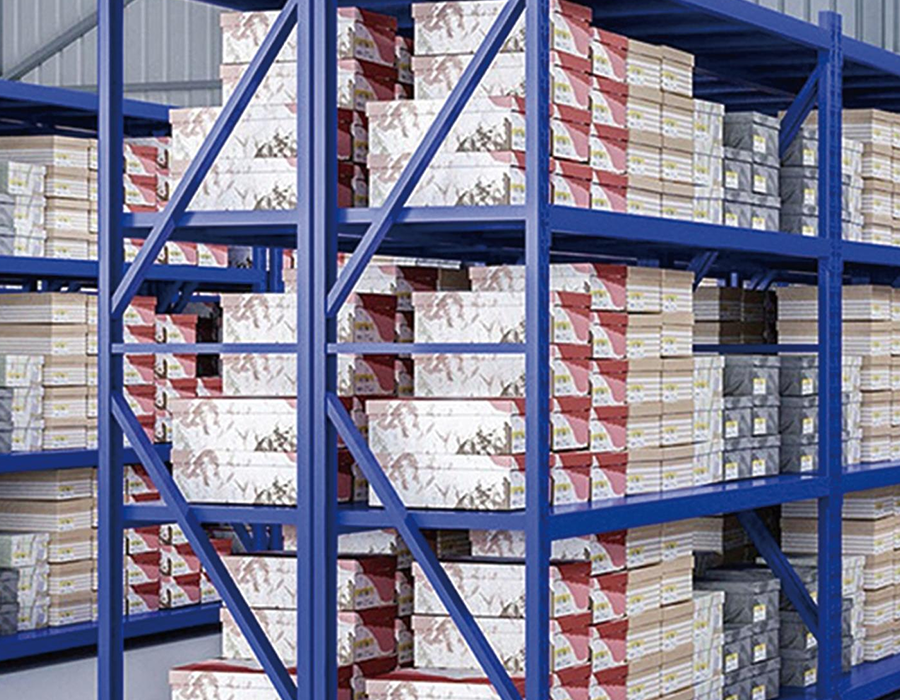
The shelf panel itself matters just as much as the frame. Different decking materials have different strengths, and the right choice depends on what you're storing and where. Here's a breakdown of the three most common options found on light-duty boltless shelving units:
Particle board is the most common decking found on residential light-duty boltless shelves. It's smooth, affordable, and provides a stable surface for boxes and bins. However, it is vulnerable to moisture — extended exposure to humidity can cause it to swell, warp, or crumble. For dry indoor spaces like closets and offices, particle board works great. For garages, basements, or anywhere with fluctuating humidity, a sealed or laminated particle board panel is a better choice, or you may want to upgrade to steel.
Steel shelf panels (also called steel decking or corrugated steel decking) are the most durable option. They resist moisture, support heavier loads without deflection, and have a much longer lifespan than wood-based panels. Steel decking is the go-to choice for garage workshops, commercial stockrooms, and any application involving heavy or irregular-shaped items. The tradeoff is that steel decking can add to the weight of the unit itself, making it harder to move once assembled.
Wire decking allows air to circulate freely through the unit, which is ideal for food storage, sprinkler compliance (in commercial spaces), and areas where dust accumulation is a concern. Many fire codes for commercial storage spaces actually require wire decking because it allows overhead sprinklers to reach stored goods. On the downside, small items can slip through the gaps, so bins or trays are usually needed when storing loose parts.
Getting the right size boltless shelving unit requires a little planning. Before you order, take measurements of your space and consider what you'll be storing. Here are the key dimensions to evaluate:
Even the best light-duty boltless shelving unit can become a safety hazard if installed or used incorrectly. Follow these practical guidelines to get the most out of your unit while keeping everything secure.
Always assemble your shelving unit on a flat, level floor. If you assemble it on uneven ground and then move it to its final location, the frame may be slightly twisted, which puts uneven stress on the connections and can cause wobbling. If the floor in your storage space isn't perfectly level, use adjustable leveling feet (many units include these) to compensate.
Any shelving unit taller than 5 feet should be anchored to a wall stud to prevent tipping. This is especially important in homes with children, in earthquake-prone areas, or in commercial spaces where OSHA regulations may require it. Most units include anti-tip brackets or mounting holes in the uprights for this purpose. Use appropriate wall anchors or screws into studs for a secure hold.
Place your heaviest items on the bottom shelves and lighter items higher up. This lowers the unit's center of gravity and dramatically reduces the risk of tipping. It also makes heavy items easier to access without straining your back from reaching overhead.
Over time — especially in environments with vibration or frequent loading and unloading — rivet-style connections can work slightly loose. Every six months or so, give each beam connection a gentle check and tap any loosened rivets back into place with a rubber mallet. This takes under five minutes and keeps the unit structurally sound for years.
Not sure if boltless shelving is the right solution for your needs? Here's a straightforward comparison with the most common alternatives:
| Storage Type | Assembly | Adjustability | Durability | Best For |
| Light-duty boltless shelving | Fast, tool-free | High | Good | Garages, offices, pantries |
| Heavy-duty industrial racking | Moderate, may need tools | Moderate | Excellent | Warehouses, pallet storage |
| Wire shelving (chrome) | Very fast | Moderate | Fair | Kitchens, closets, bathrooms |
| Particle board shelving | Slow, requires tools | Low | Low–Fair | Living rooms, bedrooms |
| Plastic shelving units | Very fast, snap-together | Low | Fair | Light indoor or garage use |
The biggest advantage boltless steel shelving holds over most competitors is the combination of fast assembly, good load capacity, and real adjustability — all at a price point that's accessible for both home users and small businesses. Plastic shelves are cheaper but far less durable. Industrial racking is stronger but overkill and expensive for everyday household use.
With so many brands and models on the market, knowing what to prioritize makes the buying process much simpler. Here are the factors that matter most:
Most light-duty boltless shelving units require only a rubber mallet to tap the rivet connectors into place. No wrenches, screwdrivers, or drills are needed. Some lighter residential models snap together entirely by hand. Always check the manufacturer's instructions before assuming you need (or don't need) any tools.
In most cases, yes. As long as you stay within the total unit weight capacity and purchase shelf panels and beams that match your upright post dimensions, you can add additional shelf levels to almost any boltless unit. Many manufacturers sell add-on shelf kits specifically for their upright systems.
Standard light-duty boltless shelving is not designed for outdoor exposure. Rain, UV light, and temperature fluctuations will degrade particle board panels and eventually rust steel components even with a powder-coat finish. If you need outdoor storage, look for units specifically rated for outdoor use, or use a covered porch or carport to provide some protection.
First, make sure all beam connections are fully seated — a partially inserted rivet tab is the most common cause of wobble. Second, ensure the unit is on a level surface. Third, anchor the unit to a wall using the included anti-tip hardware. If wobbling persists after all connections are secure, add cross-bracing if your model supports it, or contact the manufacturer.
Our Professional Team
Is Ready to Support You.


 Warehouse Storage Racks Manufacturers




 English
 Español