 2026.08.13
 Industry News
Content
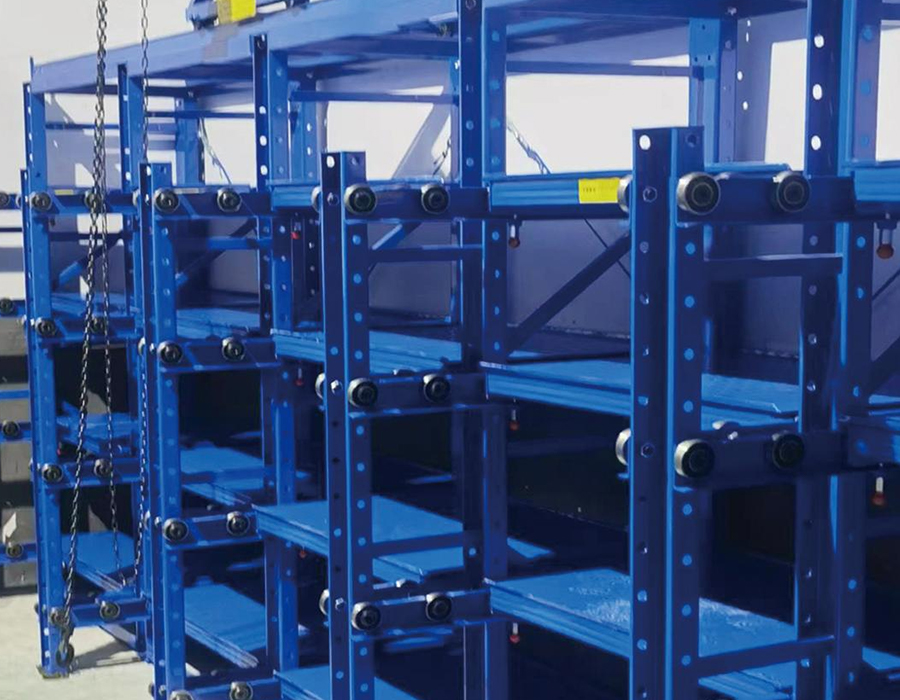
Drawer-Type Mould Racks are storage systems designed specifically to hold injection molds, stamping dies, and other heavy tooling in a compact, pull-out drawer format. Unlike open shelving where molds sit exposed on flat surfaces, a drawer-type rack lets workers slide each drawer out horizontally, load or retrieve a mold, and push it back in without lifting the tool over a high ledge or squeezing between narrow shelf gaps. This design has become the standard choice in injection molding plants, die-casting workshops, and tool rooms because it solves two problems at once: it protects expensive molds from impact damage and it keeps a cluttered warehouse floor organized and searchable.
Because molds can weigh anywhere from a few kilograms to several tons, the drawers themselves are built from heavy-gauge steel and mounted on reinforced rollers or track systems. Most Drawer-Type Mould Racks are also modular, meaning a factory can stack multiple drawer units vertically and horizontally to match the available floor space, whether that space is a small tool room or a multi-story mold warehouse.
Not all drawer racks are built the same, and the difference often shows up after a few years of heavy use. Below are the features that separate a durable, factory-grade rack from a flimsy one.
A well-built drawer is rated to carry anywhere from 500 kg to over 5,000 kg per drawer, depending on the frame thickness and the roller bearing quality. Factories working with large automotive or appliance molds should always confirm the per-drawer weight rating before purchase.
The sliding mechanism is what makes a drawer-type rack practical. Quality units use industrial ball-bearing rollers or V-groove tracks that allow a fully loaded drawer to be pulled out with minimal effort, even by a single operator using a pry bar or hand pump.
Because a fully extended drawer shifts the rack's center of gravity forward, safety-rated racks include anti-tip stops, locking pins, or interlock systems that prevent more than one drawer from opening at a time.
Beyond protecting tooling, the real value of a drawer-type mould rack shows up in daily operations. Here is how it changes the workflow on a shop floor:
Selecting a rack isn't just about picking the biggest one available. Factories should match the rack specification to their actual mold inventory and floor conditions. Consider the following before ordering:
Always size the rack drawers around your largest and heaviest mold, not your average one. A rack that only fits 80% of your inventory creates a permanent bottleneck where oversized molds are left sitting on the floor.
A fully loaded multi-drawer rack can weigh several tons once stacked. Before installation, confirm with a structural engineer or the building's floor rating documentation that the concrete slab can support the combined static load.
Lighter drawers can be pulled manually with a handle or hand pump, while heavier configurations often use hydraulic or electric assist systems to extend and retract the drawer safely.
| Rack Type | Typical Load per Drawer | Best Use Case |
| Light-Duty Manual Drawer Rack | Up to 1,000 kg | Small molds, tool rooms, prototype shops |
| Medium-Duty Roller Drawer Rack | 1,000–3,000 kg | General injection molding facilities |
| Heavy-Duty Hydraulic Drawer Rack | 3,000–8,000 kg | Automotive, appliance, and large die-casting molds |
A drawer-type mould rack is a long-term investment, often expected to last 15 to 20 years under continuous industrial use. Routine maintenance keeps the rollers, tracks, and frame in working order and prevents small issues from becoming safety hazards.
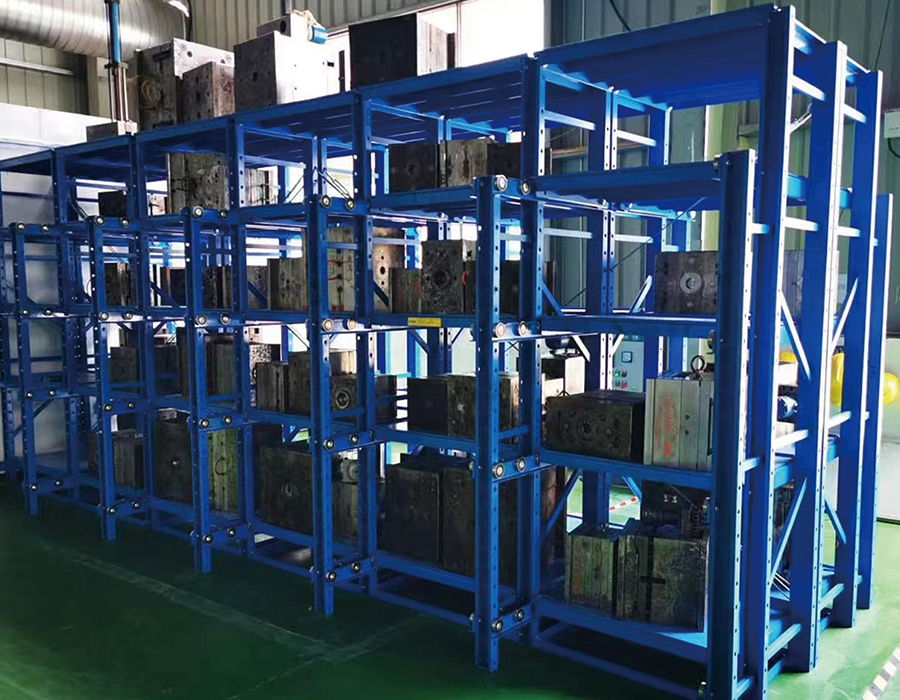
Many facilities still rely on open steel shelving for mold storage simply because it was the original setup. Once molds and production volume grow, though, the limitations of open shelving become clear. Drawer-type systems address these gaps directly by combining protection, density, and safer handling in one structure.
| Factor | Open Shelving | Drawer-Type Mould Racks |
| Mold Protection | Exposed to dust and impact | Enclosed and shielded when closed |
| Retrieval Method | Forklift lifts from open shelf | Slide-out drawer at working height |
| Space Efficiency | Requires wide forklift aisles | Narrower aisles, higher density storage |
| Worker Safety | Higher risk of falling tools | Molds stay secured until drawer is opened |
For any facility managing more than a handful of molds, Drawer-Type Mould Racks quickly pay for themselves through reduced damage, faster retrieval times, and safer daily handling. The upfront cost is higher than basic shelving, but the return shows up in fewer mold repairs, less downtime searching for tooling, and a workshop floor that stays organized as production scales up. When paired with proper labeling and a regular maintenance routine, a quality drawer rack system can serve a factory reliably for well over a decade.
Our Professional Team
Is Ready to Support You.


 Warehouse Storage Racks Manufacturers




 English
 Español